China
Harbin
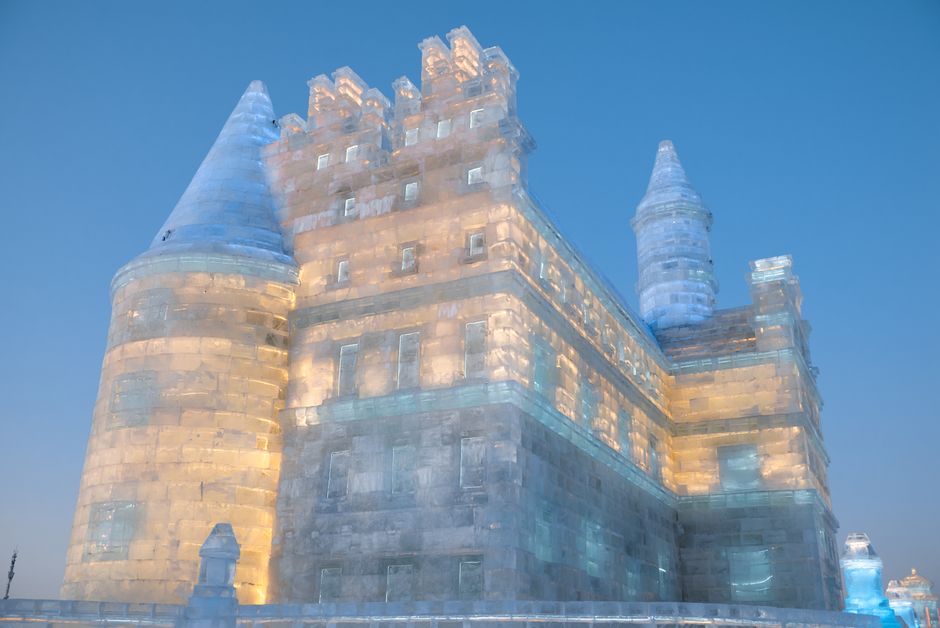
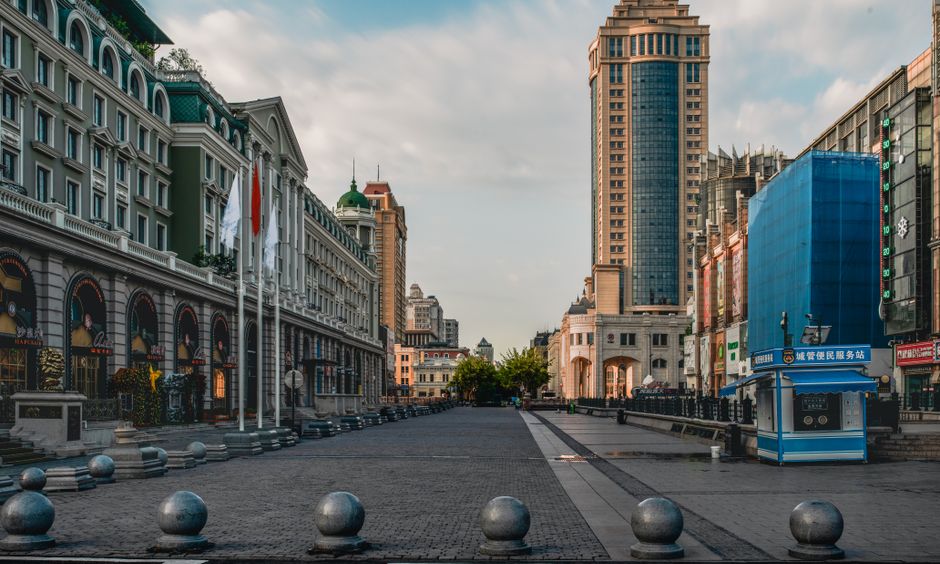
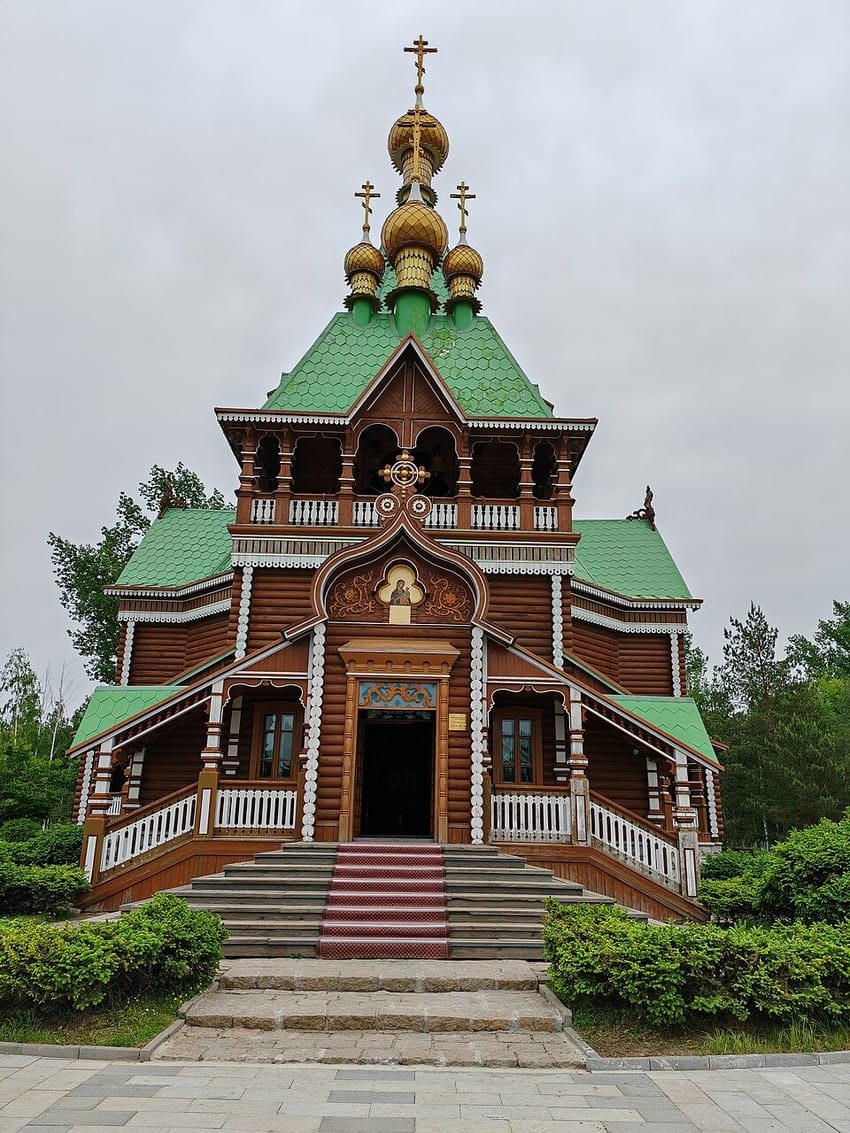
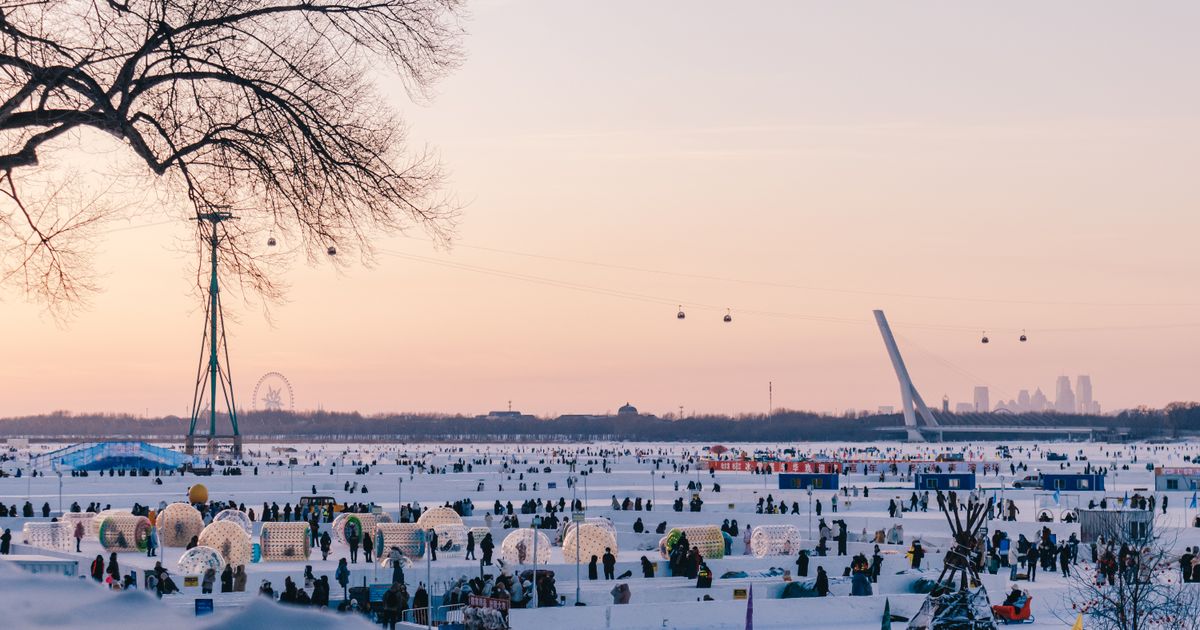
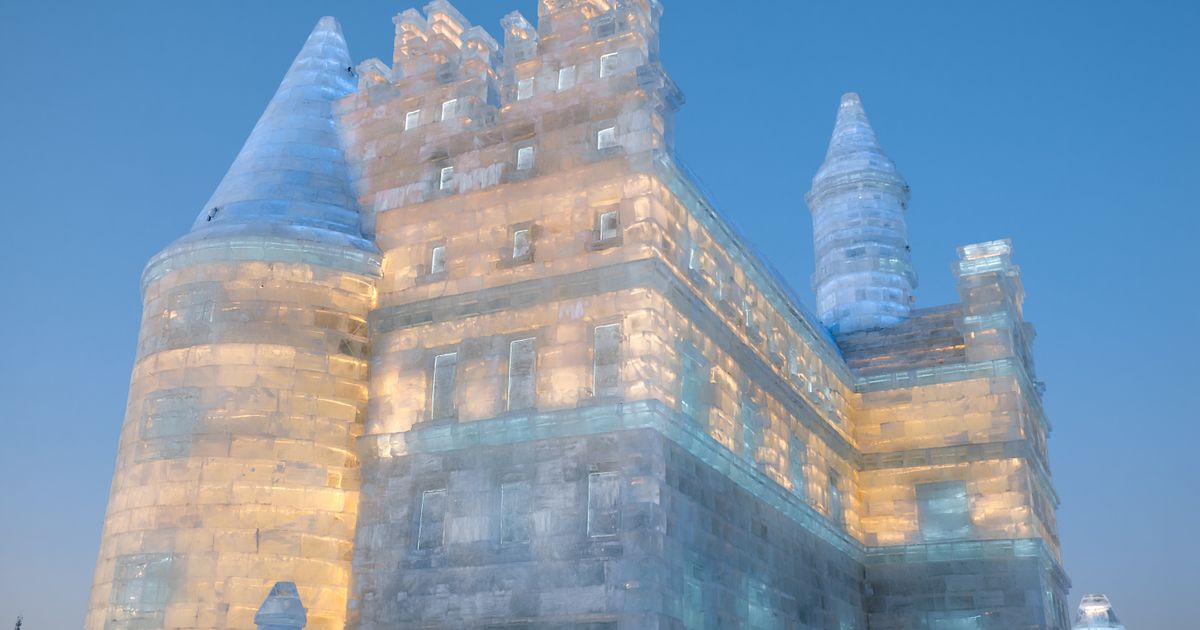
Most people who fly into Harbin in January are here for one thing: a festival built almost entirely out of a frozen river. Crews cut blocks straight from the ice-locked Songhua River, stack them into buildings several storeys tall, and light them from inside after dark. Russia is the other half of the story. Engineers and traders arrived in the late 1890s to build the Chinese Eastern Railway, and the onion domes, cobbled streets and bakeries they left behind still give the city centre a look you won't find anywhere else in China.
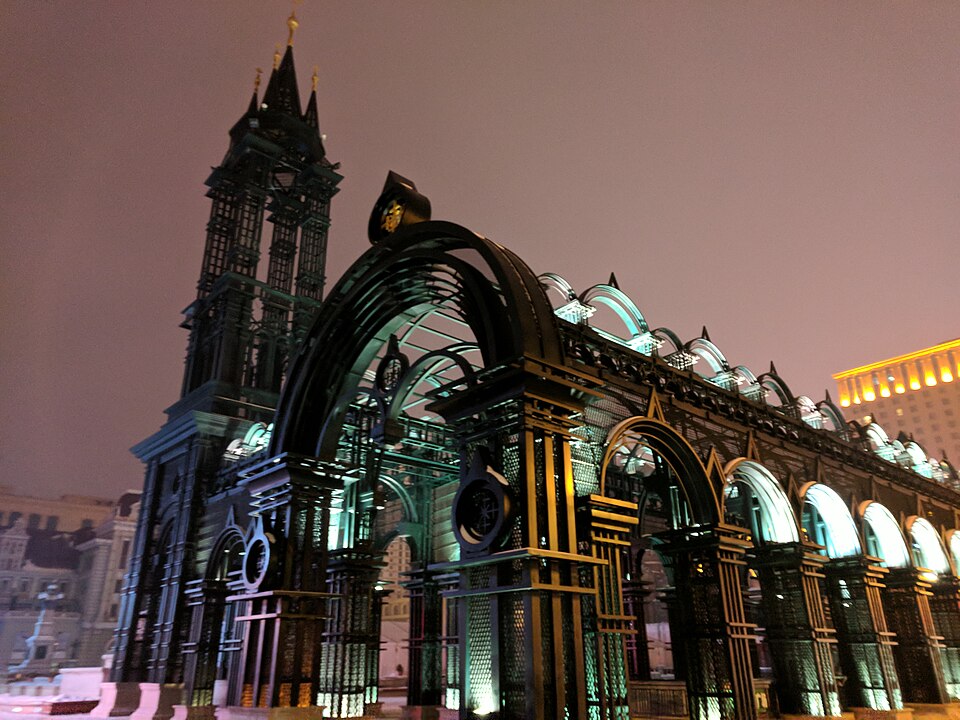
The layout splits along the river. South of it, Daoli and Nangang districts hold the historic core: Central Street and St. Sophia Cathedral in Daoli, and the newer Harbin West rail hub in Nangang's Haxi area. Cross the Songhua north into Songbei District and you're in ice-festival territory, home to both Ice and Snow World and Sun Island. East of the old centre, Daowai District (old Fujiadian) is a third Harbin again: this was the Chinese quarter when Daoli and Nangang were foreign concessions, and its restored streets mix European shopfronts with Chinese courtyard houses behind them, a hybrid style locals call Chinese Baroque.

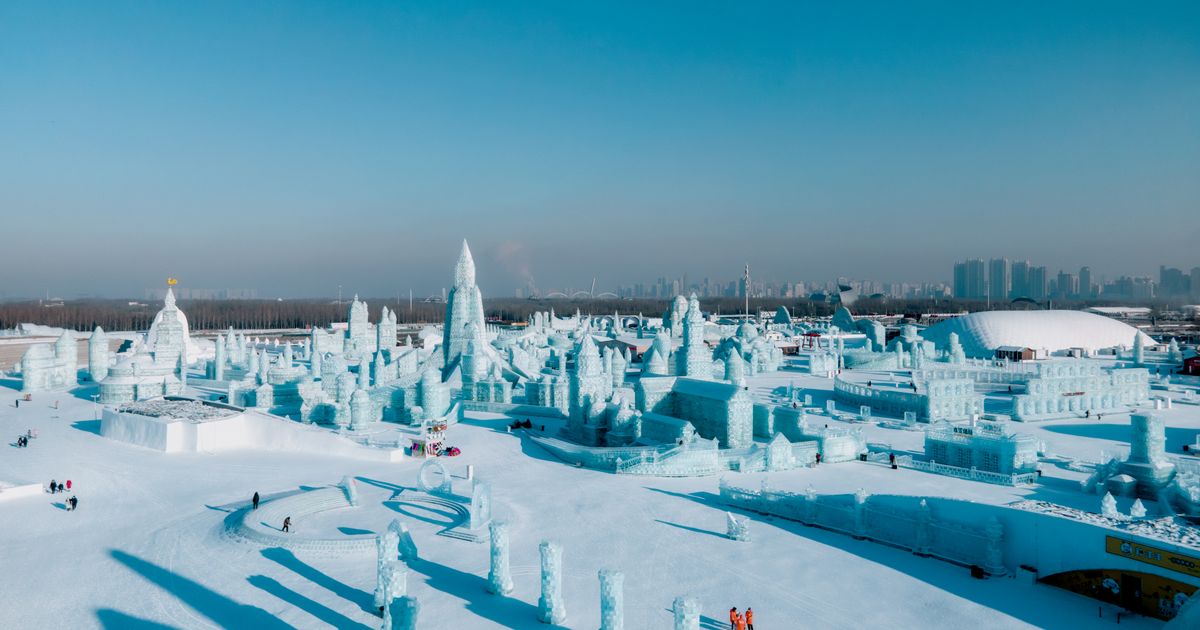
Aerial view of the illuminated Harbin Ice and Snow World
Best time to go
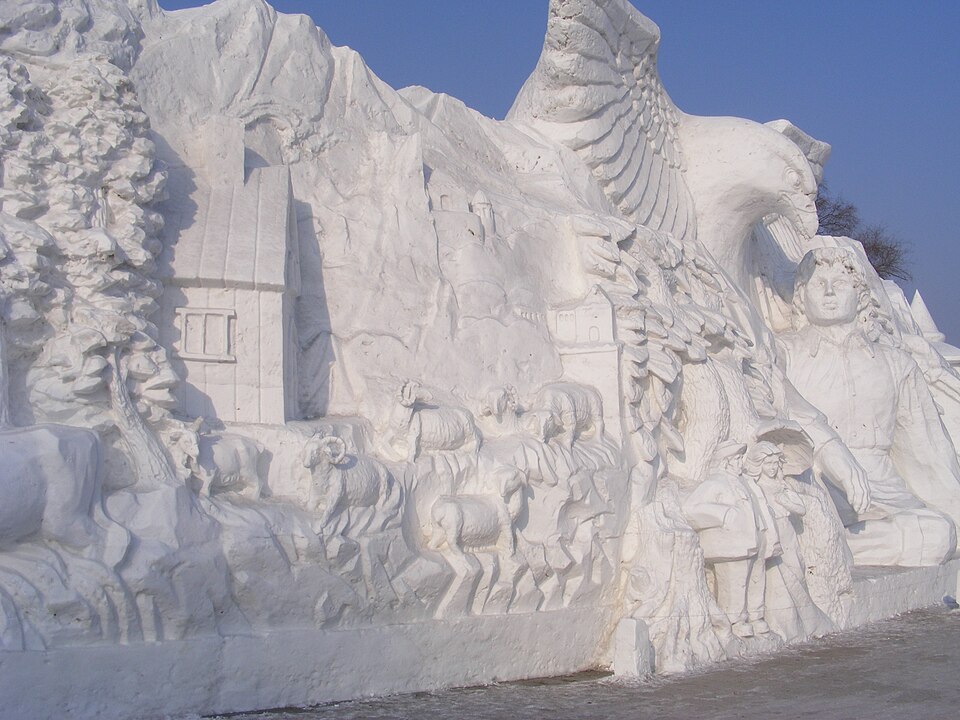
The Harbin International Ice and Snow Festival runs roughly from late December to late February, but "the festival" is really two separate, separately ticketed sites: Ice and Snow World's illuminated ice city, and Sun Island's Snow Sculpture Expo across the river, carved from packed snow rather than ice blocks. For both at their best, aim for early January to mid-February, once the sculptures are finished and lit but before the late-winter thaw sets in. The opening ceremony around January 5 and the New Year holiday days before it draw the thickest crowds; if you'd rather skip the crush, the back half of January is generally calmer while everything is still fully built. Within a single day, queues build through the afternoon, so most visitors either go in soon after the late-morning opening or return after dark for the lit-up views, since one ticket covers both. Daytime highs sit near -15C and nights can fall below -25C, so a heavy down jacket, insulated boots, and hand warmers are essential rather than optional.
Central Street and St. Sophia Cathedral don't depend on any of this: both are open, and arguably more pleasant to walk around, whatever the season. June to September is mild and green, good for the riverside parks and the old Russian architecture without the winter crowds, if deep cold isn't your idea of a holiday.
Getting there and around
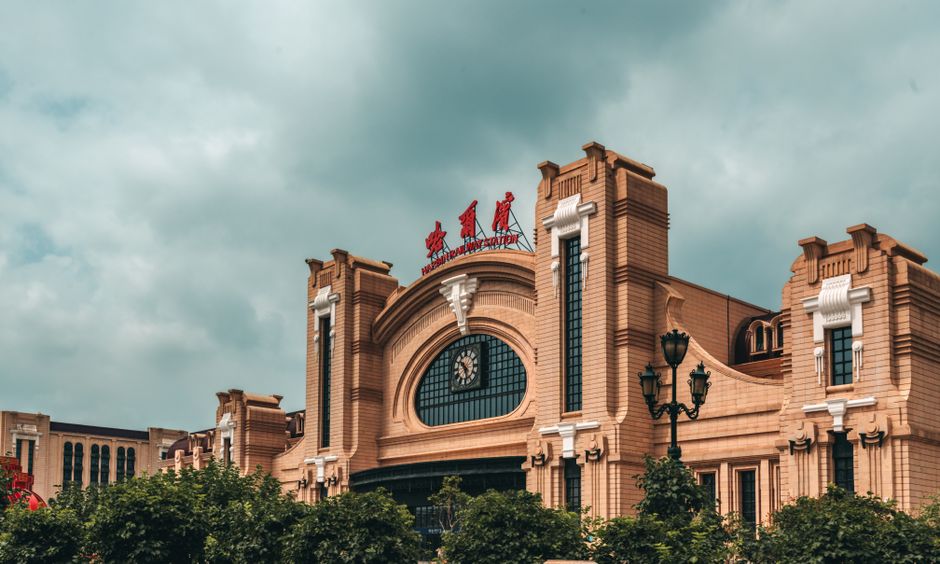
Harbin has more than one train station, and they aren't interchangeable, so check which one your ticket names. Harbin Railway Station, the older and more central of the two, sits close to Daoli and connects to Metro Line 1; Harbin West Railway Station, about 8 km away in Nangang's Haxi district, is the newer high-speed hub and sits on Metro Line 3. Bullet trains reach Beijing in around five hours and Shenyang in under two. Harbin Taiping International Airport, roughly 40 km southwest of downtown, isn't yet on the metro network: airport shuttle buses run into the centre (one route heads straight for Central Street), and a taxi takes about 45 minutes.
Around town, the Metro now runs three lines. Line 2 is the one that matters most for sightseeing: it crosses the river into Songbei with dedicated stops for both Ice and Snow World and Sun Island, and the two adjoining stations offer a free transfer between them. The same line's Shangzhi Street stop is the closest metro station to St. Sophia Cathedral, an easy walk from Central Street too. Outside the metro's reach, Didi and metered taxis cover the rest, and the historic centre itself is compact enough to walk once you're bundled up.

Harbin city skyline on a frosty winter evening
Tickets, passports and the 240-hour question
Foreign visitors can book Ice and Snow World tickets before they even land: the official WeChat account, Trip.com, Douyin and Meituan all sell to passport holders, and Trip.com's app lets you reserve from outside China. On site, self-service machines offer a language menu, read a passport or foreign permanent residence ID directly, and take foreign currency at the kiosk, so there's no need to change money first. Whichever channel you use, each winter's final hours and prices are usually only confirmed in early December, so treat anything you read before that as a rough guide, and book through an official channel rather than a scalper to avoid the ticket-hall queue.
Harbin is also unusual in China's visa landscape: as of 2026, Taiping Airport is Heilongjiang province's only port of entry for the 240-hour (10-day) visa-free transit scheme, in effect since December 2024. It works for citizens of around 54 countries who fly into Harbin with a booked onward ticket to a third country or region, not back to where they started, and the visa-free stay is limited to Harbin's city area specifically, not the wider province. You register with the border police at the airport on arrival; nothing about it is automatic. If your itinerary fits that pattern, it can save a separate tourist visa; if it doesn't (say, you're flying home the way you came), it doesn't apply, so double-check before you plan around it.
Where to stay
Daoli keeps you within walking distance of Central Street and St. Sophia, with a metro ride across the river for Ice and Snow World; Songbei puts you closer to the festival grounds themselves but further from the old town's restaurants. Either way, rooms for the first two weeks of January tend to book out months ahead of the date, not weeks, so settle on dates early if you're coming for the festival.
Book hotels in Harbin
Trip.com: English listings, Daoli or Songbei
Some links are affiliate links; we may earn a commission at no extra cost to you.
Beyond the ice: old Fujiadian
Daoli and Nangang, next door, were the concession-era foreign district; Daowai, once called Fujiadian, was where Chinese merchants and residents built their own city instead. What they built survives today as Chinese Baroque Street: European shopfronts grafted onto traditional courtyard homes behind them, the largest surviving cluster of this hybrid style anywhere in China. The neighbourhood was restored and reopened to visitors in 2014, and it makes a good half-day away from the ice, especially for anyone who's noticed that most Harbin coverage only tells the Russian half of the story.
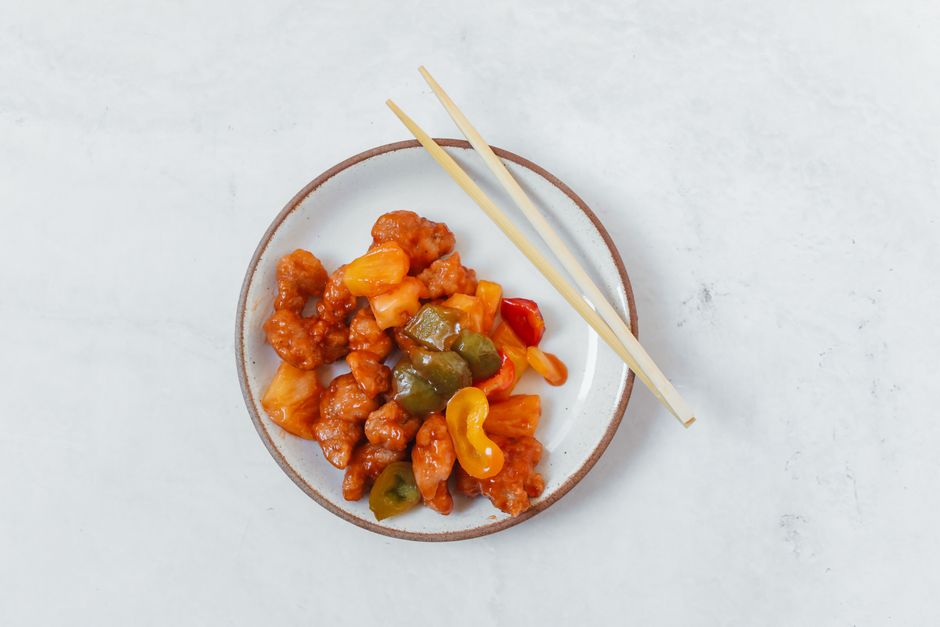
Harbin cooking leans hearty and faintly Russian. Order guobaorou (sweet-and-sour fried pork), grab a stick of Madie'er ice cream on Central Street even in January, and try the local red sausage and Russian-style bread from the old bakeries. Pay with Alipay or WeChat Pay, accepted almost everywhere, and carry a little cash only as backup.
Highlights
- Harbin International Ice and Snow Festival, the world's largest, from late December to late February
- Ice and Snow World, a glowing city of illuminated ice castles rebuilt every winter
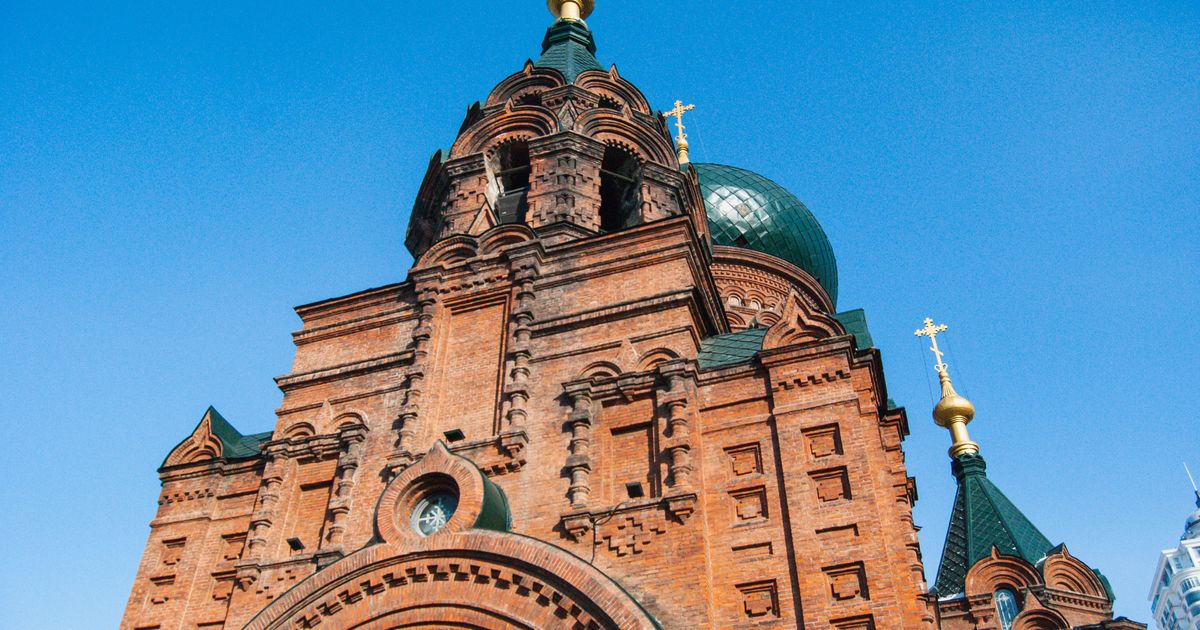
- St. Sophia Cathedral, a green-domed Russian Orthodox landmark now used as a museum
- Central Street (Zhongyang Dajie), a 1.45 km cobbled promenade of early-1900s European buildings and the longest pedestrian street in Asia
- Snow Sculpture Art Expo on Sun Island, carved entirely from packed snow rather than ice
- Chinese Baroque Street in Daowai District, the country's largest surviving cluster of this hybrid European-Chinese style
- Hearty northeastern food, from guobaorou to Russian-style red sausage and bread
- High-speed rail from Harbin West station reaches Beijing in around five hours
Travel Tips
Dress for real cold
January temperatures regularly fall below -20C. Bring a heavy down jacket, insulated boots, thermal layers, gloves and hand warmers, and keep your phone in an inner pocket because batteries drain fast in the cold.
Book festival tickets through an official channel
Ice and Snow World and Sun Island are separate, separately ticketed sites, and each winter's hours and prices are usually only confirmed in early December. Book through the official WeChat account, Trip.com or another trusted channel; on-site kiosks also take foreign currency and read a passport directly, so you don't need cash in RMB first.
Use the same-day re-entry to dodge the afternoon crush
Tickets cover re-entry, so go in soon after the late-morning opening when it's quietest, take a break, and come back after sunset for the lit-up sculptures rather than fighting the thickest afternoon crowds.
Know which station you're arriving at
Harbin Railway Station (central, Metro Line 1) and Harbin West Railway Station (Nangang's Haxi area, Metro Line 3, about 8 km away) aren't the same place. Check which one your ticket names before you plan the first taxi or metro ride.
Check the 240-hour transit rule before you rely on it
It only applies if you enter through Harbin's airport with a booked ticket onward to a third country, and it only covers Harbin's city area, not the rest of Heilongjiang. If you're flying home the way you came, it doesn't apply and you'll need your usual visa.