Quanzhou
Quanzhou Kaiyuan Temple: Free Entry, Twin Pagodas & Visit Guide (2026)
Quanzhou Kaiyuan Temple visitor guide for 2026
Reading time: 7 minutes.
Quanzhou Kaiyuan Temple stands directly on West Street in the old city, but its broad courtyards feel removed from the busy pedestrian lanes outside. Come for the twin stone pagodas, then slow down for the carved pillars, flying musicians and Buddhist spaces along the central axis. The complex was founded in 686 during the Tang dynasty and received the Kaiyuan name in 738.
Kaiyuan Temple is also part of the serial World Heritage property “Quanzhou: Emporium of the World in Song-Yuan China,” inscribed by UNESCO in 2021. It should be understood as one component of that larger heritage system, not as a separately inscribed World Heritage site.
What should you know before visiting in 2026?
| Practical question | Answer |
|---|---|
| Where is it? | West Street, Licheng District, central Quanzhou. Search for Quanzhou Da Kaiyuan Temple in a Chinese map app. |
| Is there an entrance fee? | No general admission ticket is required. A 2025 Quanzhou municipal guide lists Kaiyuan Temple among the city’s A-rated attractions that visitors can enter without a ticket. |
| What are the opening hours? | Check the latest municipal notice or the information posted at the entrance. This guide does not repeat older hours as if they were confirmed for 2026. |
| Is a reservation required? | Verify this shortly before visiting. Reservation arrangements can change around religious observances, maintenance or major holidays. |
| How long should you allow? | Leave enough time to walk the central axis and examine both pagodas without rushing. Add West Street afterward if you want a longer old-city walk. |
Carry your passport or another accepted identity document even when admission is free. Staff may introduce temporary entry checks during busy periods. This is planning advice, not a statement that identification is routinely inspected.
Why is Kaiyuan Temple connected to maritime Quanzhou?
UNESCO describes Song-Yuan Quanzhou as a maritime emporium whose religious buildings, production sites, administrative institutions, bridges, docks and navigation pagodas formed one connected urban system. Kaiyuan Temple represents the Buddhist community within that diverse port society.
The temple predates Quanzhou’s commercial peak. Its survival, rebuilding and imported decorative ideas help explain how an established Chinese religious complex absorbed influences circulating through the port. The municipal religious affairs account records a central sequence that includes Tianwang Hall, the worship courtyard, Mahavira Hall, the Ganlu Ordination Altar and the scripture repository. The Zhenguo and Renshou pagodas rise in the eastern and western grounds.

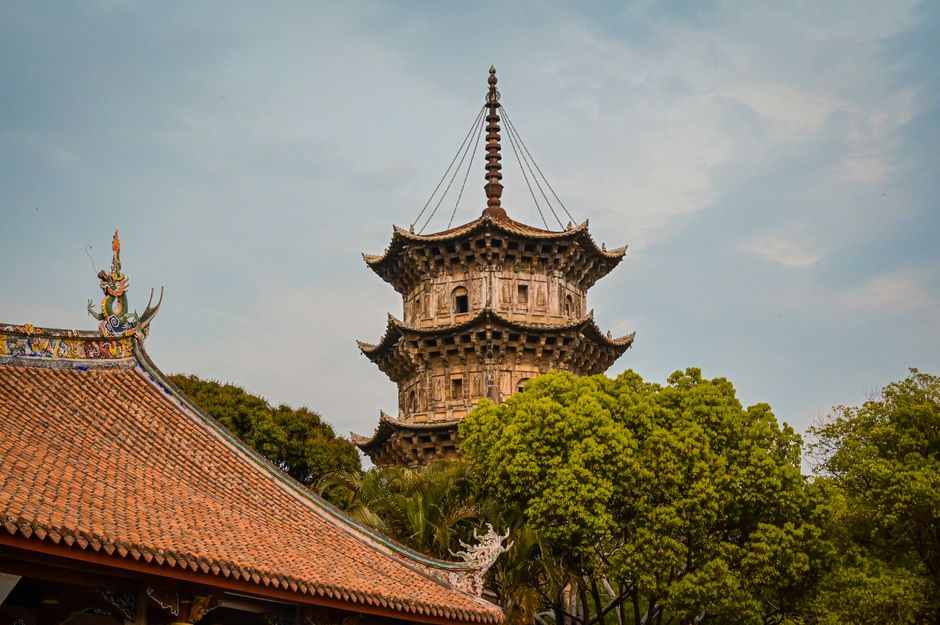
The twin stone pagodas at Quanzhou Kaiyuan Temple
Photo: Windmemories, CC BY-SA 4.0, via Wikimedia Commons.
What makes the twin pagodas special?
The eastern Zhenguo Pagoda and western Renshou Pagoda are the temple’s clearest landmarks. Quanzhou’s municipal government identifies them as China’s tallest surviving pair of stone pagodas. Zhenguo is 48.27 metres high and Renshou is 45.06 metres high.
Both began as wooden towers and were rebuilt in other materials. Renshou took its present granite form between 1228 and 1237. Zhenguo followed between 1238 and 1250. Each is an octagonal, five-storey structure designed to echo timber architecture in stone.
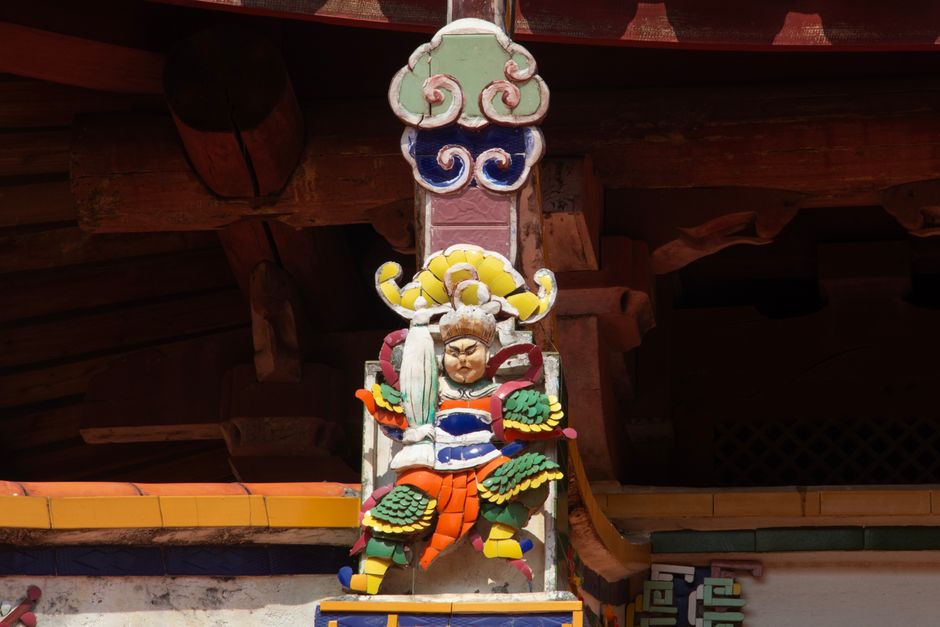
Walk around the bases instead of treating the towers as distant skyline objects. The official description notes carved Buddhist narratives and figures including warriors, heavenly kings, guardians and arhats. Their scale becomes clearer from the courtyards between them. The towers stand about 200 metres apart, so each offers a different view across the temple grounds.
Do not assume visitors may climb either pagoda. Historic descriptions mention internal stairs, but they do not confirm public climbing access in 2026. Follow barriers and instructions on site.
What should you notice in Mahavira Hall?
Mahavira Hall, also called the Hundred-Pillar Hall, anchors the central route. The municipal religious affairs bureau records 86 columns rather than a literal hundred. Look upward for 24 carved flying musicians set among the beams and brackets.
The same official account identifies a pair of rear-corridor stone columns with Corinthian-style elements and figures drawn from ancient Indian mythology. These details are useful evidence of cultural contact, but they are easy to miss if you only photograph the front elevation.
Behind the main hall stands the Ganlu Ordination Altar. The religious affairs account traces an altar here to 1019 and describes its layered ritual arrangement. Treat the hall and altar as worship spaces: step aside for worshippers, keep conversation low and obey any photography restrictions.

Mahavira Hall and Renshou Pagoda at Kaiyuan Temple
Photo: wanghongliu, CC BY-SA 3.0, via Wikimedia Commons.
What is the simplest walking route through the temple?
Start with Tianwang Hall and continue through the main worship courtyard to Mahavira Hall. Pause here for the roof structure, flying musicians and stonework. Continue toward the Ganlu Ordination Altar and scripture repository, then return through the side grounds.
Loop toward Zhenguo Pagoda in the east and Renshou Pagoda in the west. This route follows the documented central axis before treating the towers as separate architectural studies. It also keeps the religious core together instead of reducing the visit to two photographs.
The grounds contain active religious areas and historic thresholds. Visitors with limited mobility should ask staff which route avoids steps and raised door sills. Do not rely on a general map to indicate current step-free access.
How do you reach Kaiyuan Temple?
Use the Chinese name Quanzhou Da Kaiyuan Temple when searching Amap or showing the destination to a driver. The temple is on West Street in Licheng District.
A 2025 response from the Quanzhou Transport Bureau states that tourist express services and regular bus routes connect the railway station and airport with major landmarks including Kaiyuan Temple and West Street. It does not assign a specific route to each origin, so check live routing on the day rather than copying an undated bus number.
If you are already staying in the old city, plan the temple and West Street as one walking area. Keep vehicle pickup points outside the busiest pedestrian section and confirm the meeting place in Chinese.
When is the best season to visit?
Choose a dry forecast rather than building the trip around one narrow season. Quanzhou’s official city overview describes a warm, humid maritime monsoon climate with plentiful rainfall. The courtyards are exposed, while the principal halls provide limited shelter.
On wet days, stone paving and thresholds may be slippery. In hot weather, carry water and use the shaded edges of the courtyards. Weather alerts or religious events can affect access, so check locally before setting out.
How should visitors behave at an active Buddhist temple?
Kaiyuan Temple is a religious site as well as a protected monument. Dress in a way that is suitable for a place of worship, speak quietly near ceremonies and avoid blocking people who are praying. Ask before photographing monks, worshippers or interior ritual areas.
Do not touch carvings, lean on historic stonework or cross barriers for a cleaner photograph. Food, loud calls and posed shoots belong outside the worship halls. If incense is available, follow posted instructions rather than improvising.
What can you combine with the temple?
West Street begins outside the complex, making it the simplest continuation. Walk away from the busiest entrance section before deciding where to stop, and keep the temple visit separate from shopping or eating. For a wider plan linking Quanzhou’s religious buildings, bridges and port heritage, use the Quanzhou travel guide.
Frequently asked questions
Is Quanzhou Kaiyuan Temple free in 2026?
The most recent official municipal list cited here, published in 2025, places Kaiyuan Temple among attractions that do not require an admission ticket. Check for temporary changes before your visit.
Is Kaiyuan Temple itself a UNESCO World Heritage site?
It is a component of the serial property “Quanzhou: Emporium of the World in Song-Yuan China,” inscribed in 2021. The UNESCO designation covers a connected group of places rather than the temple alone.
Can visitors climb the East and West Pagodas?
Do not plan on climbing them unless current signage and staff explicitly permit it. Historical architectural descriptions are not proof of present public access.
Are the hours and reservation rules fixed?
No precise 2026 visitor notice is cited in this guide. Check an updated municipal source or the entrance notice shortly before going, especially during national holidays and religious observances.
Highlights
- See Zhenguo and Renshou, the 48.27-metre and 45.06-metre granite pagodas completed in the Southern Song period.
- Follow a temple history that begins with its foundation in 686 and adoption of the Kaiyuan name in 738.
- Visit an official component of the UNESCO-listed Quanzhou maritime emporium property.
- Look upward in Mahavira Hall for 24 flying musicians set among the timber structure.
- Find Corinthian-style and ancient Indian decorative elements recorded on the rear-corridor stone columns.
- Enter from Quanzhou’s West Street without a general admission ticket under the latest cited municipal listing.
Travel Tips
Verify the current entrance notice
The latest sources confirm free entry, but this guide does not present older hours or reservation rules as confirmed for 2026. Check again shortly before visiting.
Save the Chinese name
Keep `Quanzhou Da Kaiyuan Temple` on your phone for map searches, bus checks and conversations with drivers.
Walk the central axis first
See Tianwang Hall, Mahavira Hall and the Ganlu Ordination Altar before looping through the eastern and western pagoda grounds.
Treat it as a place of worship
Keep your voice low, give worshippers space and ask before photographing people or ritual interiors.