China
Pingyao
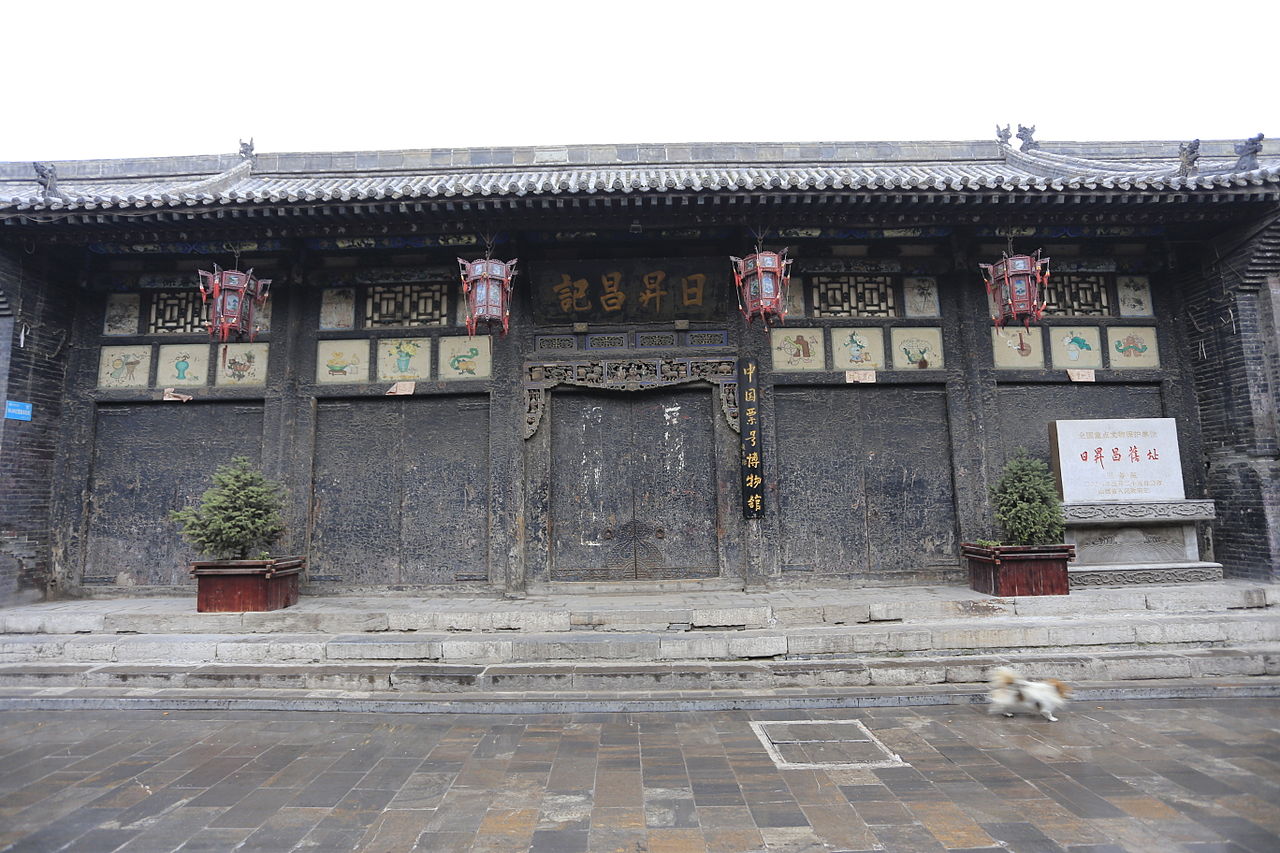
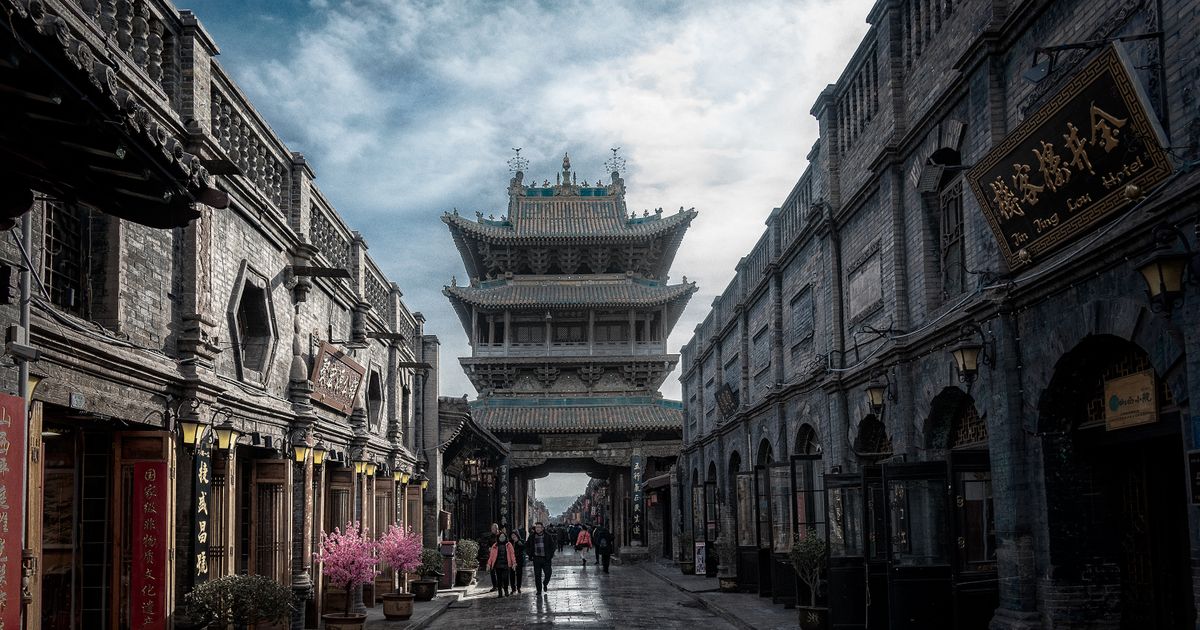
In the nineteenth century, a surprising share of imperial China's money moved through this small Shanxi county seat. Pingyao's piaohao (draft banks) pioneered remittance banking from 1823 onward, moving silver across the empire from sober grey-brick courtyards that still stand today. The town they paid for survived almost untouched: a complete Ming and Qing walled city, inscribed by UNESCO in 1997, where people still live and trade inside a six-kilometre rampart.
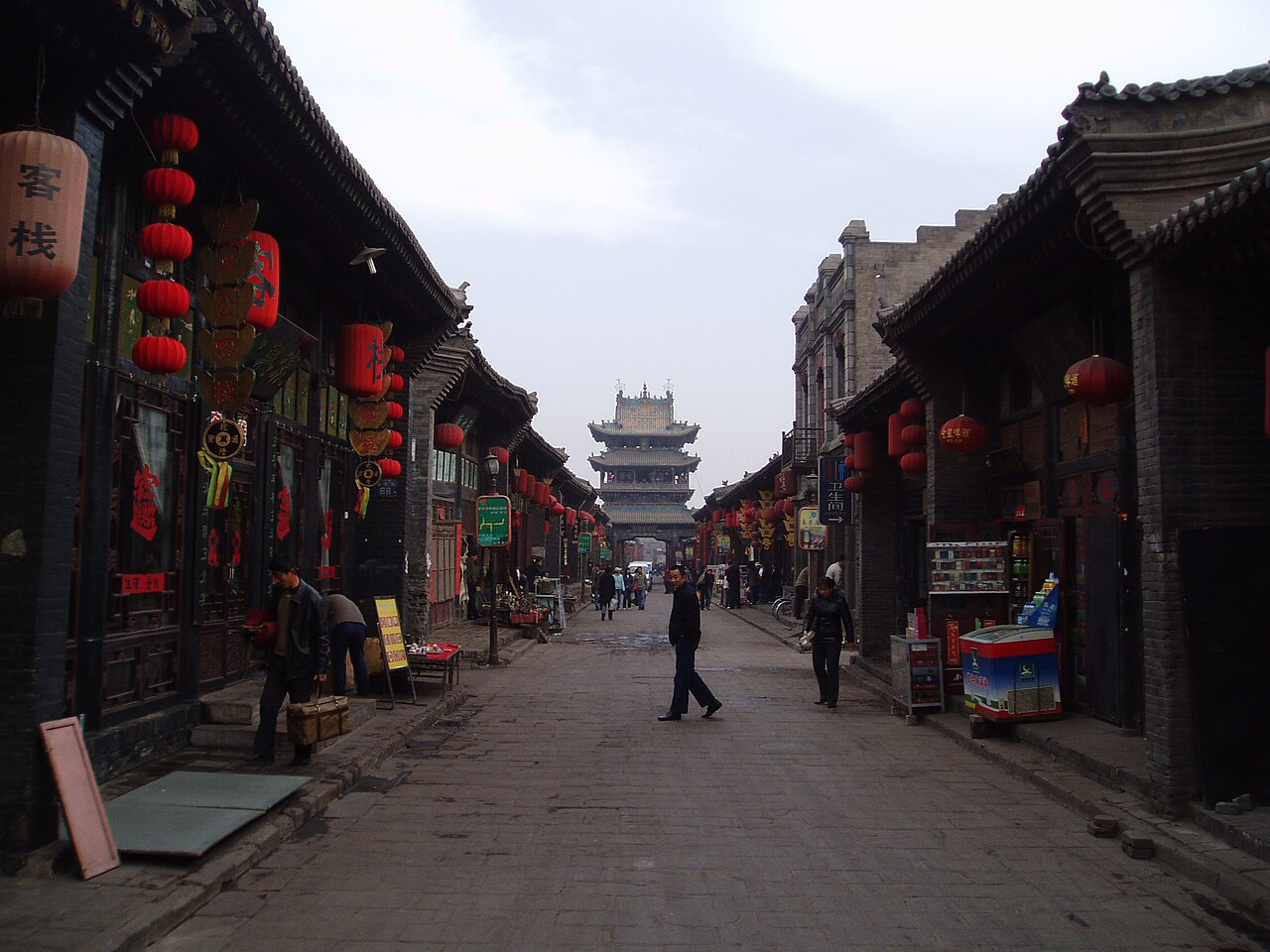
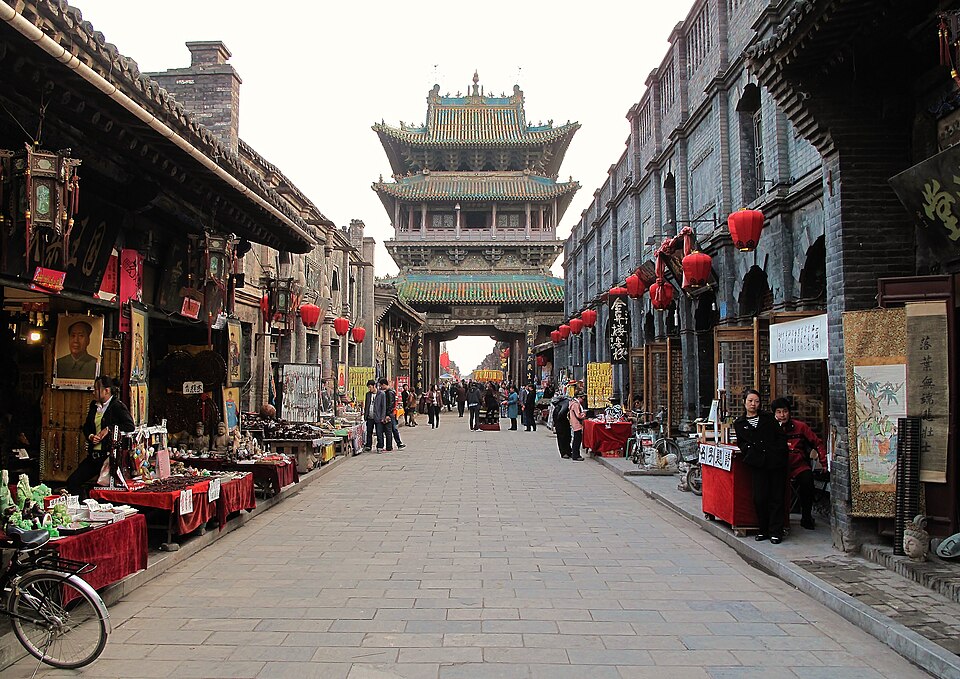
Pingyao South Street toward the Market Tower
Why visit Pingyao
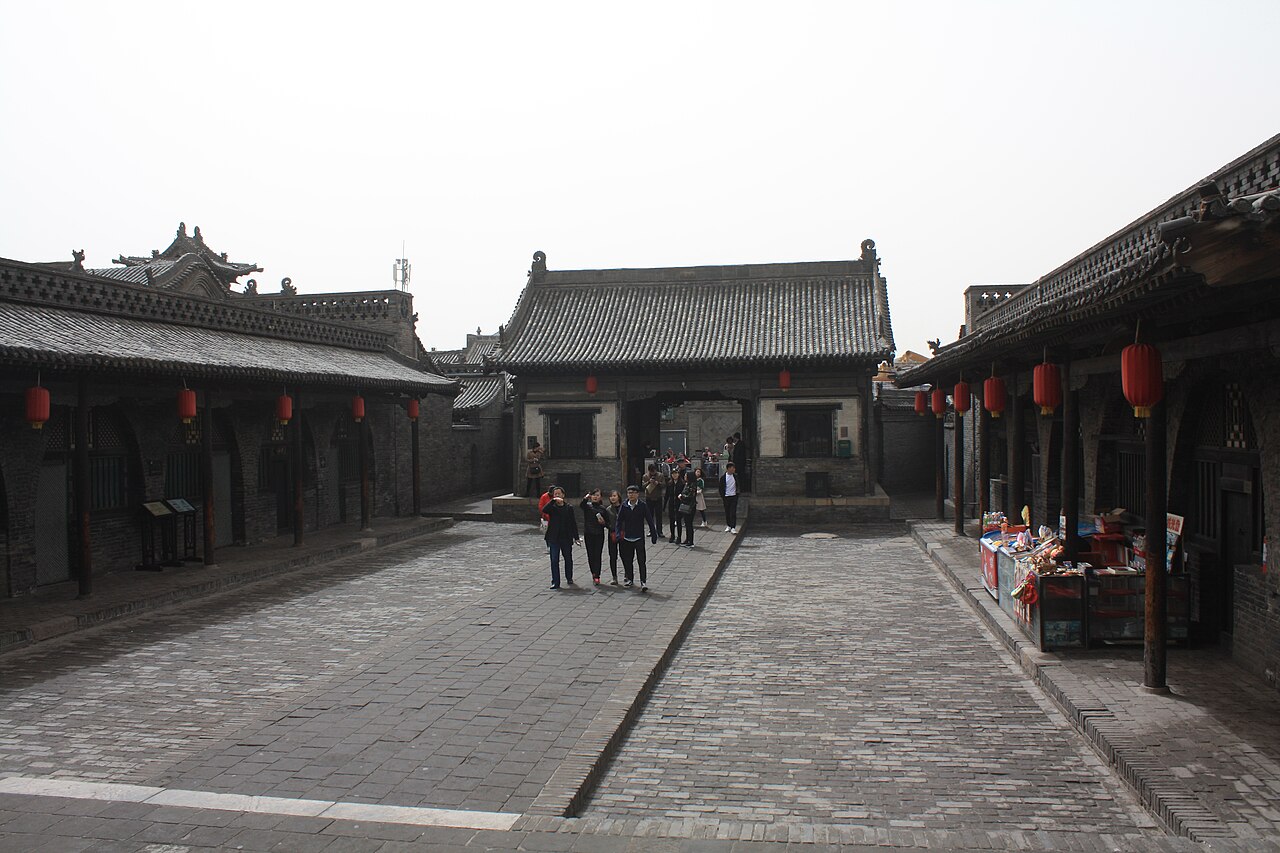
Unlike the rebuilt "ancient towns" scattered around China, Pingyao is the real thing. Walking the flagstone lanes you pass former bank headquarters, a Qing-era county courthouse, armed-escort agency compounds and family mansions, all in the austere grey brick that defines Shanxi architecture. Stay overnight and the town changes character: day-trippers leave, lanterns come on, and the streets go quiet enough to hear your own footsteps on the stone.
What to see
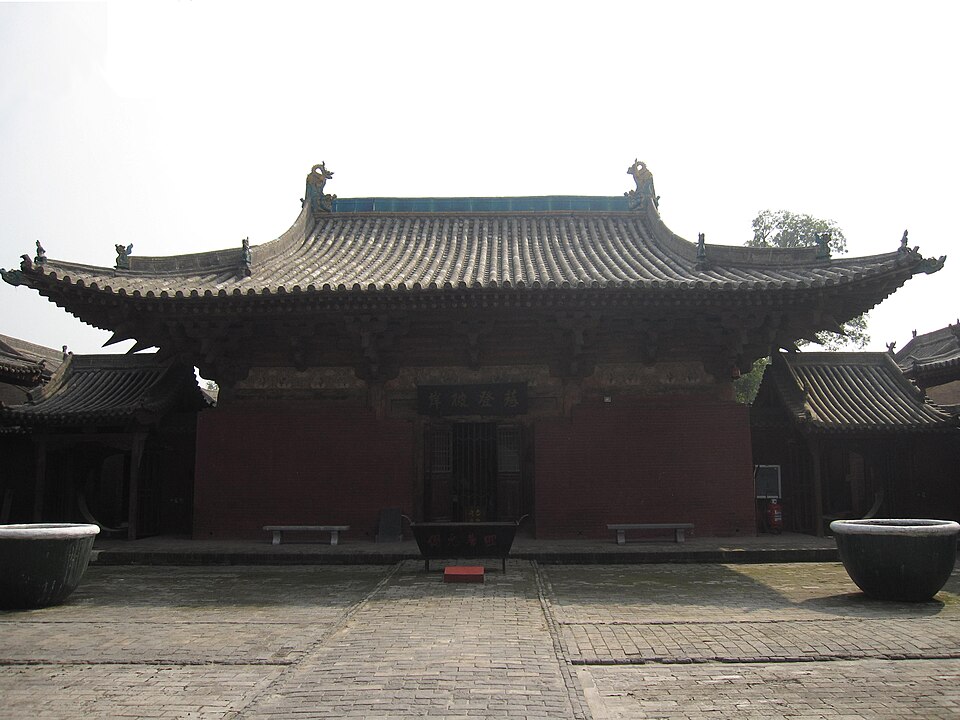
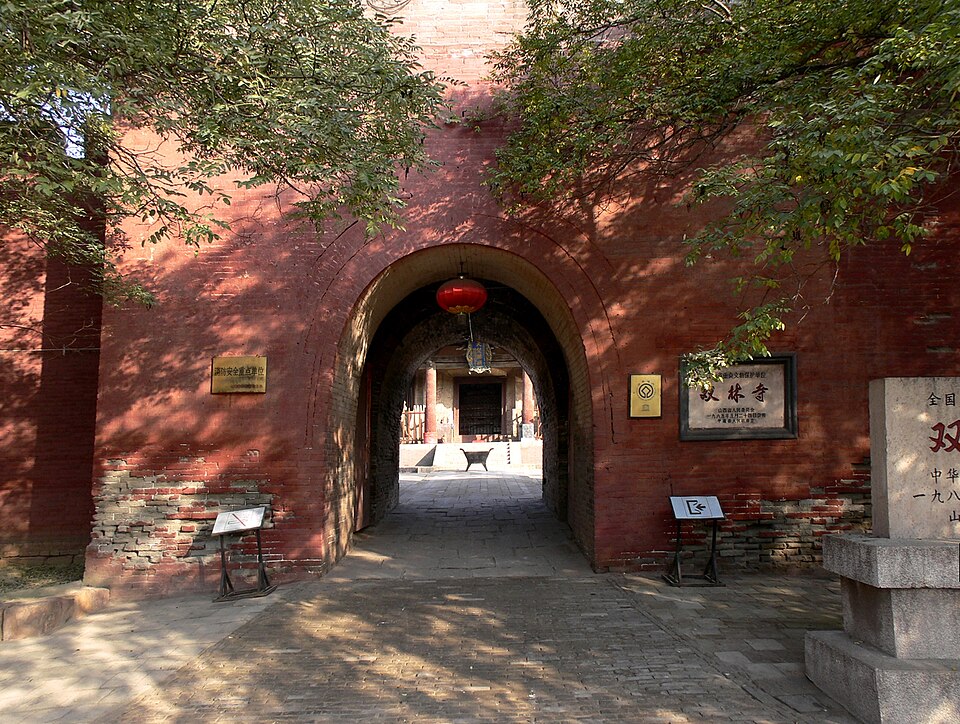
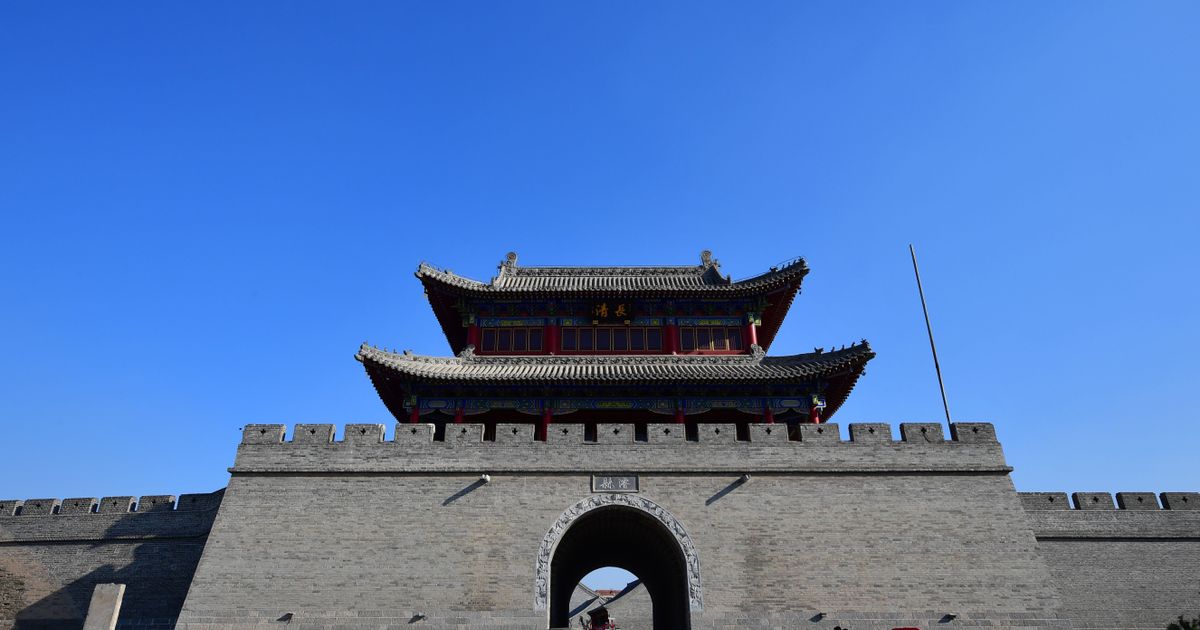
The City Wall is the obvious starting point. Raised in 1370, early in the Ming dynasty, it carries 72 watchtowers and is traditionally said to hold 3,000 crenels, one for each of Confucius' disciples, with a tower for each of his 72 sages. Climb up near the south gate and walk the ramparts for sweeping views over the tiled rooftops. The main Ming-Qing Street (South Street) runs to the central Market Tower, the tallest structure inside the walls. Don't miss Rishengchang, China's first draft bank and now the China Piaohao Museum, or the County Yamen, where costumed re-enactments of a magistrate's court are staged daily. Just outside town, the UNESCO-listed Shuanglin and Zhenguo temples hold some of China's finest painted clay sculptures and oldest surviving timber halls.
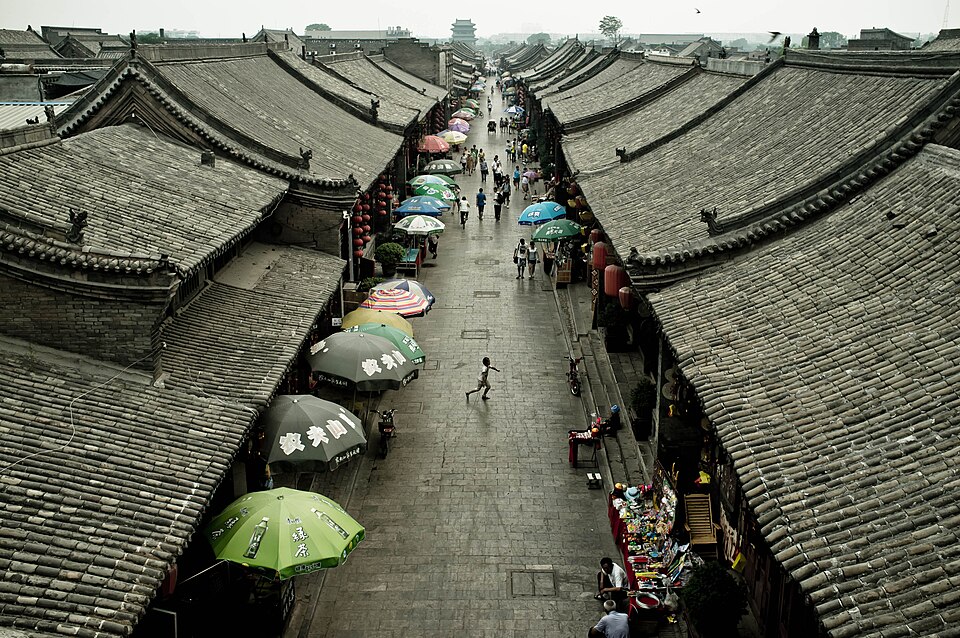
Rooftops and market street of old Pingyao
Getting there and around
Two stations serve Pingyao, and they are not interchangeable. High-speed trains on the Datong to Xi'an line stop at Pingyao Ancient City station (Pingyaogucheng), about 8.5 km from the walls, so budget a public bus or a roughly 20-minute taxi for the last stretch. Slower conventional trains use the old Pingyao station, which sits about a kilometre from the walls. Trains from Taiyuan take about 35 to 90 minutes depending on the service, and direct trains from Xi'an and Datong make it easy to slot Pingyao between the Yungang Grottoes and the Terracotta Army. Inside the walls everything is walkable (cars are restricted) and electric carts shuttle between the main sights. A single through-ticket, valid for three days, covers roughly twenty attractions and works out far cheaper than paying per site.
Trains and courtyard stays in one app
Book high-speed rail to Pingyao and walled-town guesthouses in English.
Some links are affiliate links; we may earn a commission at no extra cost to you.
Local food
Shanxi is noodle country, and Pingyao is a good place to eat your way through it. The local signature is Pingyao beef: braised, sliced thin and sold vacuum-packed all over town as a souvenir. Try wantuo, a chilled buckwheat jelly dressed with vinegar, chilli and garlic, and kaolaolao, hand-rolled oat-flour noodles steamed into little honeycomb rolls. Everything is seasoned with the region's famous aged black vinegar, which Shanxi people treat almost like a tonic. Small family restaurants along the side lanes are usually better value than the showy spots on the main street, and many will let you watch the noodles being pulled or cut to order.
Day trips
Pingyao makes a natural base for two of China's grandest merchant mansions. The Qiao Family Compound, about an hour north, is the sprawling courtyard estate made famous by Zhang Yimou's film Raise the Red Lantern. The even larger Wang Family Compound to the south, often called the "first manor in Shanxi", is a hillside maze of more than a hundred courtyards. Both show how the province's banking and trading dynasties lived at the height of their wealth.
Best time to visit
Spring (April to May) and autumn (September to October) are ideal, with mild days and clear skies. Summers are warm and can be busy; winters are cold but atmospheric, with far fewer crowds and red lanterns glowing against the grey walls. Whenever you come, plan at least one overnight: Pingyao is at its best after the day visitors leave.
Where to stay
Stay inside the walls in a converted courtyard guesthouse; many occupy genuine Qing-dynasty homes, complete with heated kang beds and timber galleries around a central courtyard. Most cluster along and just off the main streets, within easy walking distance of every major sight, so you can drop your bags and explore on foot. Book ahead in spring and autumn and over Chinese public holidays, when the best courtyards fill quickly.
Highlights
- Six-kilometre Ming-dynasty city wall encircling the entire old town
- Rishengchang, China's first draft bank and birthplace of modern Chinese banking
- Ming-Qing Street and the central Market Tower lined with courtyard shops
- Qing-era County Yamen with daily magistrate's-court re-enactments
- UNESCO-listed Shuanglin and Zhenguo temples just outside the walls
- Qiao and Wang family merchant compounds within day-trip range
Travel Tips
Buy the through-ticket
A single combined ticket, valid three days, covers roughly 20 sights inside the walls and works out far cheaper than paying per site.
Stay overnight inside the walls
Pingyao empties of day-trippers in the evening; a converted courtyard guesthouse lets you enjoy the lantern-lit lanes after dark.
Arrive by high-speed rail
Pingyao Ancient City station sits on the Datong-Xi'an line about 8.5 km from the walls; budget a bus or short taxi into town. Slower trains use the old station, much closer to the north gate.
Go in spring or autumn
April–May and September–October bring mild, clear weather; winter is cold but uncrowded and atmospheric.