Qingdao
Badaguan Scenic Area, Qingdao
Badaguan Scenic Area, Qingdao: How to Visit in 2026
Badaguan is a coastal neighborhood of tree-lined streets, protected villas, gardens, and sea views in Qingdao’s Shinan District. It is not a conventional attraction with one gate and a fixed route. You explore it by walking through public streets, looking at historic buildings from outside, and choosing whether to enter the few villas that operate as exhibition spaces.
The district itself is free to explore. Individual buildings may require tickets and follow their own schedules. This distinction matters when planning your visit: you can enjoy Badaguan without buying anything, but access to a particular villa should be checked again on the day.
Why is Badaguan called the Eight Passes?
Badaguan was developed mainly during the 1930s. Its name means Eight Great Passes and comes from streets named after famous fortified passes in China. Additional roads were later incorporated, so the historic district now extends beyond the original eight.
A Qingdao government overview places Badaguan between Taiping Cape and Huiquan Cape and gives its area as about 666,000 square metres. The same source describes more than 300 buildings influenced by architectural traditions from countries including Germany, Russia, Britain, France, Denmark, Greece, Spain, Switzerland, Japan, and the United States.
The protected architectural complex is more precisely documented as 236 individual heritage buildings. It is a National Key Cultural Relics Protection Unit, so many villas are preserved monuments rather than visitor attractions. Closed gates are normal and should be respected.
What should you see in Badaguan?
Start with the streets themselves. Mature trees, garden walls, red roofs, and changing views between villas create the character of the area. Slow down at intersections because the wider compositions are often more interesting than a close photograph of one façade.
Key stops include:
- Huashi Villa: This stone villa at 18 Huanghai Road was designed in 1930 and completed in 1931. Qingdao’s government describes it as a blend of Romanesque, Gothic, and European castle influences. Its tower and coastal position make it Badaguan’s most recognizable building.
- Princess Villa and Butterfly Villa: These colorful historic buildings are commonly used for exhibitions. They are useful stops for travelers who want to see interiors, but current admission arrangements should be checked locally.
- Zhengyangguan Road and the smaller cross streets: These are good places to appreciate how buildings, boundary walls, and planting work together as a planned district.
- Taiping Cape: Continue east if you want more historic villas and a quieter extension of the walk. A 2026 Qingdao government guide describes the wider Badaguan and Taipingjiao area as a concentration of modern heritage buildings from several national traditions.
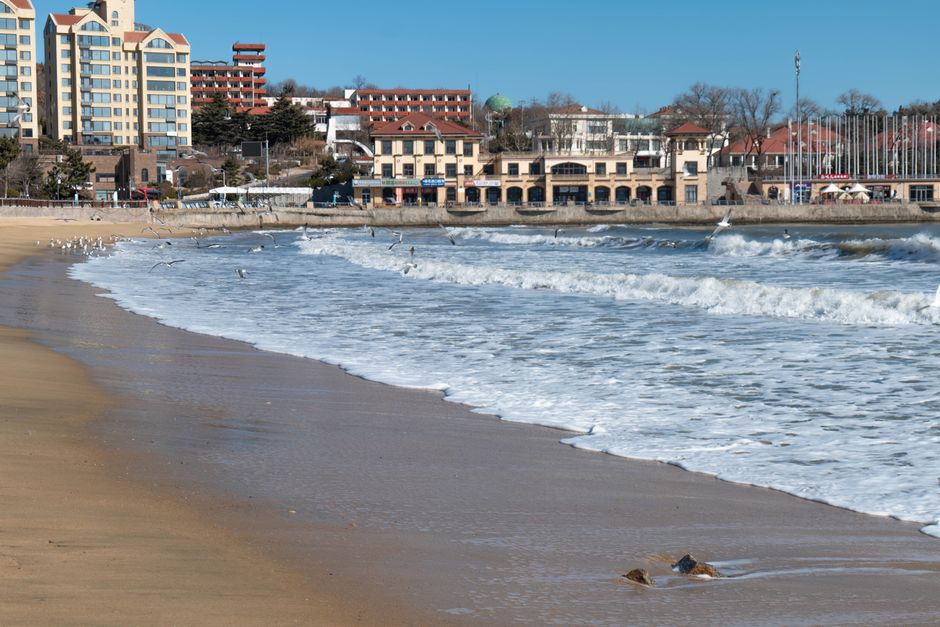
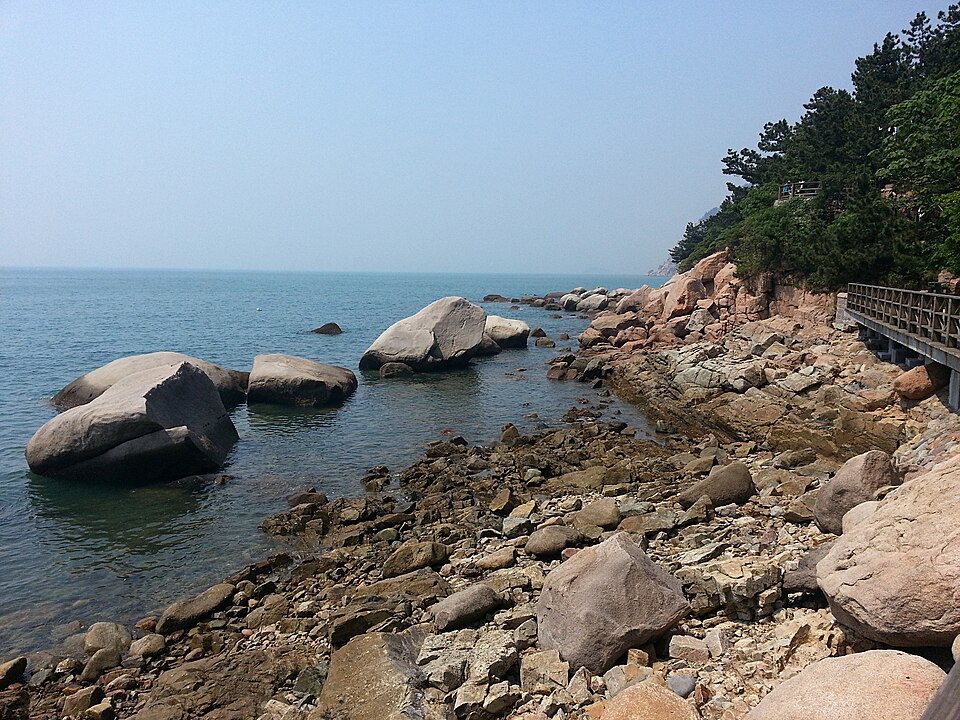
- No. 2 Bathing Beach: The beach beside Huashi Villa provides the clearest transition from architecture to Qingdao’s coastline. The municipal tourism authority places it inside Taiping Bay, next to the Badaguan area.
A practical walking route
Approach from the western side near Zhongshan Park and enter the district around Shaoguan Road or Wushengguan Road. Wander south and east through the villa streets, then make Huashi Villa and No. 2 Bathing Beach your coastal finish. From there, continue toward Taiping Cape if you still want to walk, or return north toward public transport.
Treat this as a flexible route rather than a checklist. Some of the pleasure comes from turning into a quiet side street when its trees or architecture catch your attention. A compact visit can focus on the central streets, Huashi Villa, and the beach. Add Taiping Cape if you want a longer architectural walk.
Do not plan to enter every attractive building. Many properties remain private, institutional, or otherwise closed. Photograph façades from public space, avoid blocking gates, and keep noise down near residences.
Badaguan tickets and opening hours
There is no general admission ticket for walking through Badaguan’s outdoor streets. The open district has traditionally been listed as accessible throughout the day. Daylight is still the useful visiting window because architectural details, signs, and garden views are easier to see.
Huashi Villa, Princess Villa, Butterfly Villa, and other exhibition buildings can have separate tickets, opening times, last-entry rules, or temporary closures. These arrangements change more often than access to the district. Check the notice at the building or a current official Qingdao tourism announcement before paying or organizing the rest of your day around an interior visit.
This approach also prevents a common planning error: online listings sometimes combine several buildings under the Badaguan name and present their operating hours as if they applied to the entire neighborhood.
How do you get to Badaguan by metro?
Qingdao Metro Line 3 is the most direct public-transport corridor. Zhongshan Park station works well for the western side of Badaguan, while Taipingjiao Park station is convenient for the eastern side and Taiping Cape. Use your map application after leaving the station rather than relying on an exit number, since station access arrangements can change.
Several city buses also serve the roads north and west of the district. The official scenic-area page lists routes including 26, 31, 202, 206, 223, 304, 316, 317, and 604, among others. Check live routing on the day because stops and services may be adjusted.
Public transport is usually simpler than trying to drive through the protected district. Local rules allow traffic controls inside the conservation area, and access can be managed during busy periods.
When is the best time to visit Badaguan?
Spring pairs historic façades with flowering trees. Qingdao’s 2026 spring tourism information specifically identifies Badaguan for peach blossom corridors and other seasonal flowers. Bloom dates depend on that year’s weather, so use municipal flower updates if blossoms are your main reason for visiting.
Late autumn and early winter bring yellow ginkgo, red maple, and brown plane-tree leaves. A November 2025 city report documented these colors across Badaguan. This is also a popular photography season, particularly on weekends.
Summer gives you the strongest combination of shaded streets and the nearby beach, but it also brings more visitors. In any season, an earlier start generally makes it easier to pause for photographs without obstructing other pedestrians.
What should first-time visitors know?
Wear shoes suitable for an extended urban walk and save the Chinese names 八大关, 花石楼, and 第二海水浴场 in your map app. Carry water in warmer months, but do not expect convenience shops on every residential street.
Badaguan rewards observation more than speed. Look for building plaques, roof shapes, stonework, garden walls, and the way the street grid opens toward the sea. Finish at the coast rather than leaving immediately after the famous villas. The relationship between architecture, vegetation, and Taiping Bay is the reason the district feels different from a collection of isolated monuments.
Frequently asked questions
Is Badaguan free to visit?
Yes. Walking through the public streets and viewing villa exteriors is free. Some exhibition buildings charge separate admission.
Do I need a reservation?
You do not need a single reservation for the outdoor district. A specific villa may set its own ticketing or entry procedure, so check current notices if an interior is important to you.
Can I visit Badaguan at night?
The outdoor streets are not operated like a gated museum, but daylight is better for architecture and garden views. Individual villas close according to their own schedules.
Is Huashi Villa the same as Badaguan?
No. Huashi Villa is one landmark within the larger Badaguan historic district. You can see Badaguan without entering the villa.
Can Badaguan be combined with the beach?
Yes. No. 2 Bathing Beach lies beside Huashi Villa on the southern edge of the district, making it the natural end of a walking route.
Highlights
- Walk through a nationally protected district containing 236 documented modern heritage buildings.
- See Huashi Villa, a 1931 landmark combining Romanesque, Gothic, and European castle influences.
- Explore public streets lined with mature trees, garden walls, and villas from several architectural traditions.
- Finish an architectural walk beside Huashi Villa at No. 2 Bathing Beach on Taiping Bay.
- Extend the route east through the historic villas and coastal scenery of Taiping Cape.
- Visit during spring blossoms or the colorful late-autumn and early-winter foliage season.
Travel Tips
Separate the district from the villas
Badaguan’s public streets are free, while Huashi Villa and other exhibition buildings may have separate tickets and changing schedules.
Use either side of Metro Line 3
Choose Zhongshan Park station for a west-to-east walk or Taipingjiao Park station for the eastern streets and Taiping Cape.
Save the Chinese place names
Store 八大关, 花石楼, and 第二海水浴场 in your map app so searches and navigation work more reliably.
Respect closed properties
Many protected villas are not public museums. Photograph them from public streets, keep entrances clear, and do not enter private courtyards.