Chinese Night Market Food Guide 2026: Order, Pay and Eat Safely
A Chinese night market works best as a sequence of small choices, not a race to eat every viral snack. Walk the whole row once, note which stalls cook to order, pick two savory dishes and one sweet item, then return for anything you missed. This approach reduces waste and gives you time to see how each stall handles food.
Google suggestions for “Chinese night market food” and “Chinese night street food” point to a broad craving, but there is no single national menu. Xi'an favors lamb, flatbread and wheat noodles. Chengdu adds chili, peppercorn and skewers. Xiamen and coastal cities lean toward seafood. Kaifeng, Changsha and many smaller cities have their own late-evening rhythm.
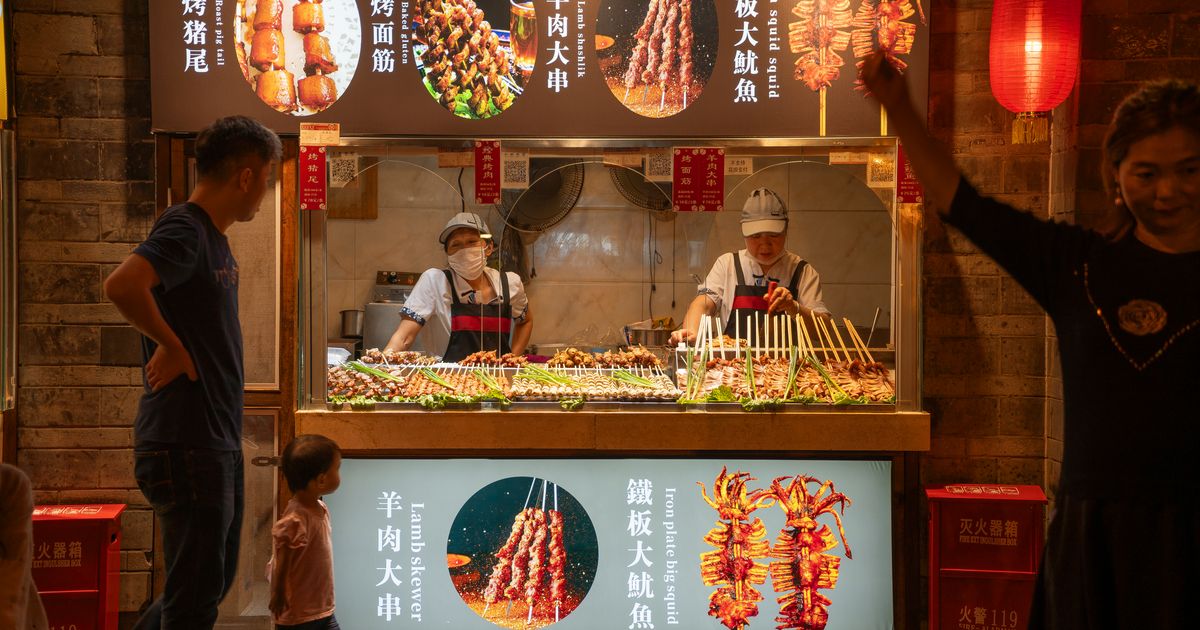
A skewer stall at a Chengdu night market
What should you eat at a Chinese night market?
Start with food that is made in front of you and tied to the region. A steaming basket, active grill or busy noodle station gives you useful information about heat, turnover and ingredients.
| Food | What it is | Where it is common | Useful warning |
|---|---|---|---|
| Chuan'r | Meat or vegetables grilled on skewers | North, west and nationwide markets | Confirm meat type and spice level |
| Baozi | Filled steamed bun | Across China | Filling may contain pork or meat stock |
| Jianbing | Thin breakfast-style crepe with egg and crisp cracker | North and many large cities | Sauce and fillings vary by stall |
| Tanghulu | Fruit on a hard sugar shell | Northern cities | Hot sugar and hard coating need care |
| Roujiamo | Chopped meat in flatbread | Xi'an and Shaanxi | Often pork unless labeled otherwise |
| Chou doufu | Fermented “stinky” tofu | Changsha and other cities | Strong smell, usually fried to order |
Do not expect every night market to be old or spontaneous. Some are planned food streets with permanent shops; others are temporary rows that move or close under local management. The food can still be good. Judge the stall in front of you, not an online label claiming “authentic.”
How to order without speaking Chinese
Pointing is normal, but a few phrases prevent the most common mistakes. Say “zhège” for “this one,” “yào yí fèn” for “one portion,” and “duōshao qián?” for “how much?” Ask “bú là” for no chili or “wēi là” for mild. In Sichuan and Hunan, mild can still taste hot to someone unused to chili.
Use a translation app for allergies and dietary restrictions. Show the full sentence before the cook starts, not after the dish reaches the counter. The guide to ordering food in China has more phrases and menu tactics.
Useful lines to save:
- Zhège duōshao qián? How much is this?
- Yào yí fèn. One portion, please.
- Bú là. No chili.
- Bú yào xiāngcài. No cilantro.
- Wǒ duì huāshēng guòmǐn. I am allergic to peanuts.
- Dǎbāo. Pack it to take away.
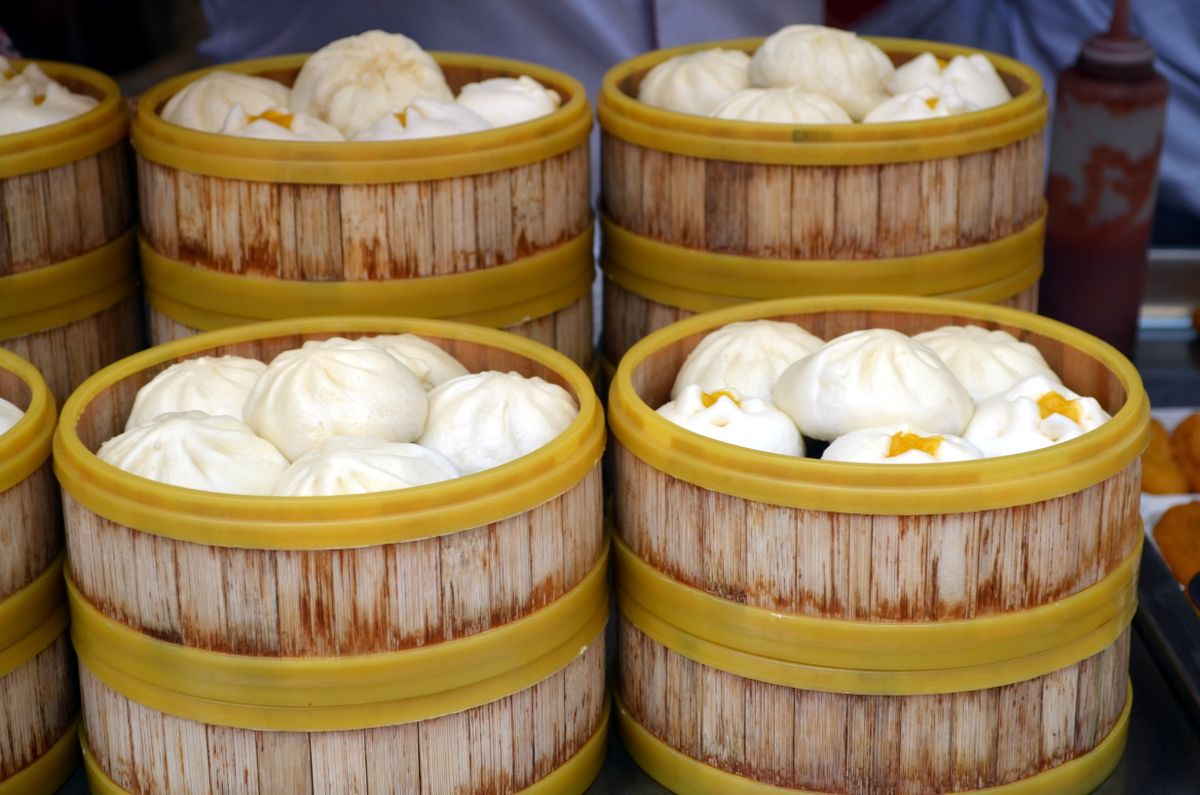
Steamed buns in bamboo baskets
How do you pay at a night market?
Mobile payment dominates many urban stalls. Set up Alipay from the official Alipay site or WeChat from the official WeChat site before arrival, link an eligible international bank card and complete any identity checks while you still have easy access to bank messages. Test the account with a small purchase.
Keep cash as a backup because a phone can lose power, a foreign card may trigger a security check, or a small vendor may use a payment setup that does not accept your wallet. Ask the price before ordering when it is not displayed. For weighted seafood or fruit, confirm whether the number is per item, per 500 grams or for the full plate.
Never scan a payment code from a photograph, social post or stranger's phone. Use the code displayed by the stall or ask the vendor to scan your wallet's payment code. Check the merchant name and amount before confirming.
Food safety: what can you check in 30 seconds?
Look for active turnover, separation between raw and cooked food, a hot grill or steamer, clean utensils and ingredients protected from handling. Pick items cooked through and served hot. A long queue is not proof of hygiene, but steady turnover is better than food that has been sitting uncovered for hours.
Avoid raw shellfish, lukewarm meat and cut fruit exposed for long periods if you have a sensitive stomach. Drink sealed water. Carry tissues and hand sanitizer because seating areas may be basic. The food allergy guide for China explains emergency wording and hidden ingredients.
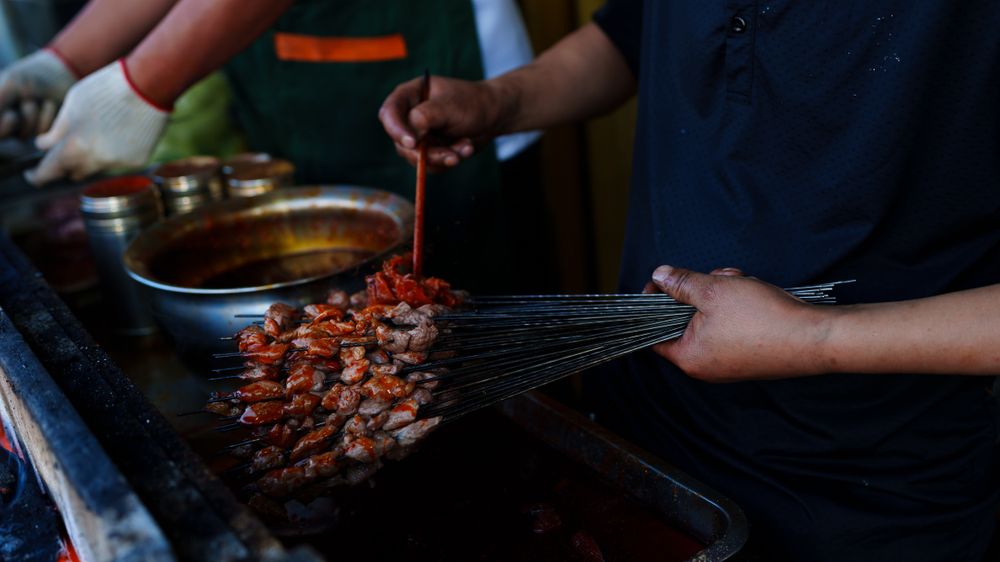
Fresh skewers arranged for grilling at a Chinese market
If you have a serious allergy, a night market is a high cross-contact environment. Shared oil, grills, tongs and sauces are normal. A translated card helps communication but cannot remove that risk. Choose a sit-down restaurant able to discuss ingredients when the consequence of exposure is severe.
Vegetarian, halal and other dietary needs
“Vegetable” does not always mean vegetarian. Broth, lard, oyster sauce, shrimp paste or minced meat can appear in a dish that looks plant-based. Say “wǒ chī sù” and show a detailed sentence that excludes meat, fish, seafood stock and lard. Read the vegetarian and vegan food guide before the trip.
For halal food, look for Qingzhen signs and ask about the specific dish. In Xi'an's Muslim Quarter, many stalls serve beef or lamb, but the sign and vendor remain the best evidence. Do not assume every stall in a famous neighborhood follows the same standard.
Which cities have useful night-market experiences?
Xi'an's Muslim Quarter is accessible for first-time visitors, though the busiest central lanes are crowded and commercial. Chengdu's food streets are strong for skewers, noodles and spice. Changsha is known for late-night snacking and fried fermented tofu. Kaifeng has a long association with evening food markets. Xiamen pairs seafood with Fujian snacks.
Choose by route rather than flying across China for one market. A good evening near your hotel beats a famous lane that requires a two-hour return trip. Search the current Chinese name in Amap and check recent opening information on the day, since stall locations and management rules change.
A sensible three-stop tasting plan
First, choose a staple such as noodles, baozi or flatbread. Second, add a regional item such as lamb skewers in Xi'an or fermented tofu in Changsha. Third, finish with fruit or a small sweet. Share portions so you can try more without creating waste.
Take one photo before eating, then move aside. Do not block the counter while filming. Return bowls, sticks or baskets where the stall indicates and use public bins. Busy markets work because customers keep the narrow lane moving.
Common night-market mistakes
- Ordering from the first stall without checking prices or portions.
- Saying “not spicy” only after the sauce has been added.
- Assuming a vegetable skewer was cooked on a separate grill.
- Scanning an unofficial payment image without checking the merchant.
- Buying more food than the group can finish.
- Treating every market as an attraction instead of a working place to eat.
Your plan for tonight
Charge the phone, carry a small amount of cash, save dietary phrases and choose a market near your route. Walk once before ordering. Start with freshly cooked food, share portions and stop when you are full. The goal is to understand a local evening, not to complete a checklist.
Frequently asked questions (FAQ)
What is the best Chinese night market food?
The best choice is a regional dish cooked to order. Try lamb skewers or roujiamo in Xi'an, spicy skewers in Chengdu, fermented tofu in Changsha or seafood snacks in Xiamen.
Are Chinese night markets safe to eat at?
Many travelers eat without problems, but no stall is risk-free. Choose high-turnover food cooked thoroughly and served hot, and avoid raw or lukewarm items if you are sensitive.
Can foreigners use Alipay at street-food stalls?
Many foreign visitors can link eligible international cards to Alipay. Acceptance still varies, so complete setup before arrival and carry cash plus a physical card as backups.
How do I ask for non-spicy food in Chinese?
Say “bú là” and show the words “no chili.” In a chili-heavy region, explain your tolerance with a translation app because “mild” is subjective.
Are Chinese night markets open every night?
Not always. Weather, local management, season and holidays can change operating days. Check the current Chinese listing in Amap or ask your hotel on the same day.
Sources
- China improves payment services for overseas visitors · State Council of the People’s Republic of China
- Five keys to safer food · World Health Organization
- Food Allergy Reactions: Restaurant Food Safety · Centers for Disease Control and Prevention