Food Allergies in China 2026: Translation Card and Safer Ordering
A food allergy changes how you should order in China. Menus may not list every sauce, stock, garnish, or cooking oil, and “I don’t eat peanuts” can sound like a preference rather than a medical warning. Carry a checked Chinese allergy card, speak to a manager or cook, and keep your prescribed emergency medication with you.
This is travel risk guidance, not medical advice or a guarantee that any dish is safe. Ask your allergy specialist for a personal action plan before departure. Food Allergy Research & Education provides a Simplified Chinese chef-card template that you can adapt and have reviewed by a fluent speaker.
What should a Chinese food allergy card say?
Keep the message short enough for a busy kitchen. State that the allergy is medical, list exact ingredients, include oils or sauces derived from them, and warn about shared cookware if cross-contact can cause a reaction.
Useful core wording:
| English | Chinese transliteration | Pinyin |
|---|---|---|
| I have a serious food allergy | Wo you yanzhong de shiwu guomin | Wǒ yǒu yánzhòng de shíwù guòmǐn |
| Eating this could require emergency care | Chi dao zhe zhong shiwu wo keneng xuyao jijiu | Chī dào zhè zhǒng shíwù wǒ kěnéng xūyào jíjiù |
| Does this contain [ingredient]? | Zhe dao cai han you [shicai] ma? | Zhè dào cài hányǒu [shícái] ma? |
| Please call an ambulance | Qing jiao jiuhuche | Qǐng jiào jiùhùchē |
Add your allergen in Chinese transliteration, a local emergency contact, and the medicine you carry. Have a native or professional translator check the final card. Keep one laminated copy, one phone image, and one copy with your travel companion.
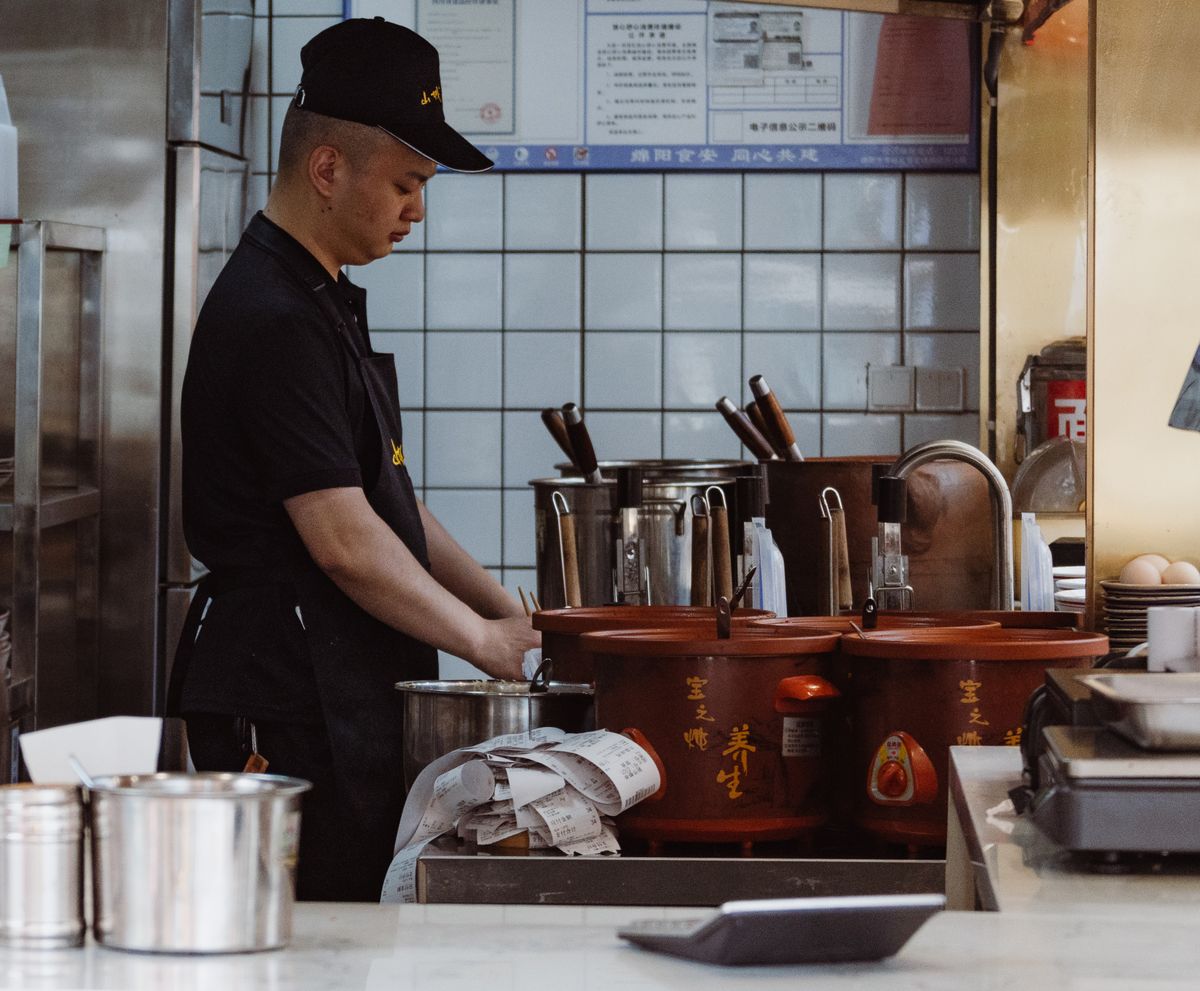
Cook working in a Chinese restaurant kitchen
Which ingredients cause the most ordering problems?
Peanut oil may be used in a wok even when peanuts are not visible. Soy appears in soy sauce, fermented bean pastes, tofu, stocks, and marinades. Wheat can appear in regular soy sauce, noodles, dumpling wrappers, buns, and thickened sauces. Sesame oil or seeds may be added as a final garnish. Fish sauce, oyster sauce, dried shrimp, and seafood stock can be hidden in a dish described mainly as vegetables.
Vocabulary to save offline:
- Peanuts: huasheng
- Tree nuts: jianguo
- Sesame: zhi ma
- Soybeans: dadou / huangdou
- Wheat: xiaomai
- Milk or dairy: niunai / ruzhipin
- Eggs: jidan
- Fish: yu
- Shellfish: beilei
- Crustaceans: jiake lei
Do not use “I do not like” or only “I cannot eat.” Pair the ingredient with yanzhong guomin, meaning serious allergy, and explain the consequence. A restaurant that seems uncertain is information, not an invitation to keep negotiating.
How do you reduce cross-contact in a Chinese kitchen?
Shared woks, ladles, steamers, chopping boards, oil, and condiment bottles are common in fast service. Ask whether the dish can be cooked in a clean pan with clean utensils and separate oil. If that cannot be confirmed, choose another restaurant or eat a sealed backup meal you already checked.
Lower-complexity choices are easier to discuss: plain steamed rice, whole fruit you peel yourself, plainly cooked vegetables, or a simply prepared protein. They are not automatically allergen-free. Confirm stock, sauce, oil, seasoning powder, and shared equipment each time.
For complex or life-threatening allergies, contact a higher-end hotel or restaurant before arrival and ask for written confirmation from a manager or chef. A busy night market stall with one wok may not be able to control cross-contact, even if staff want to help.
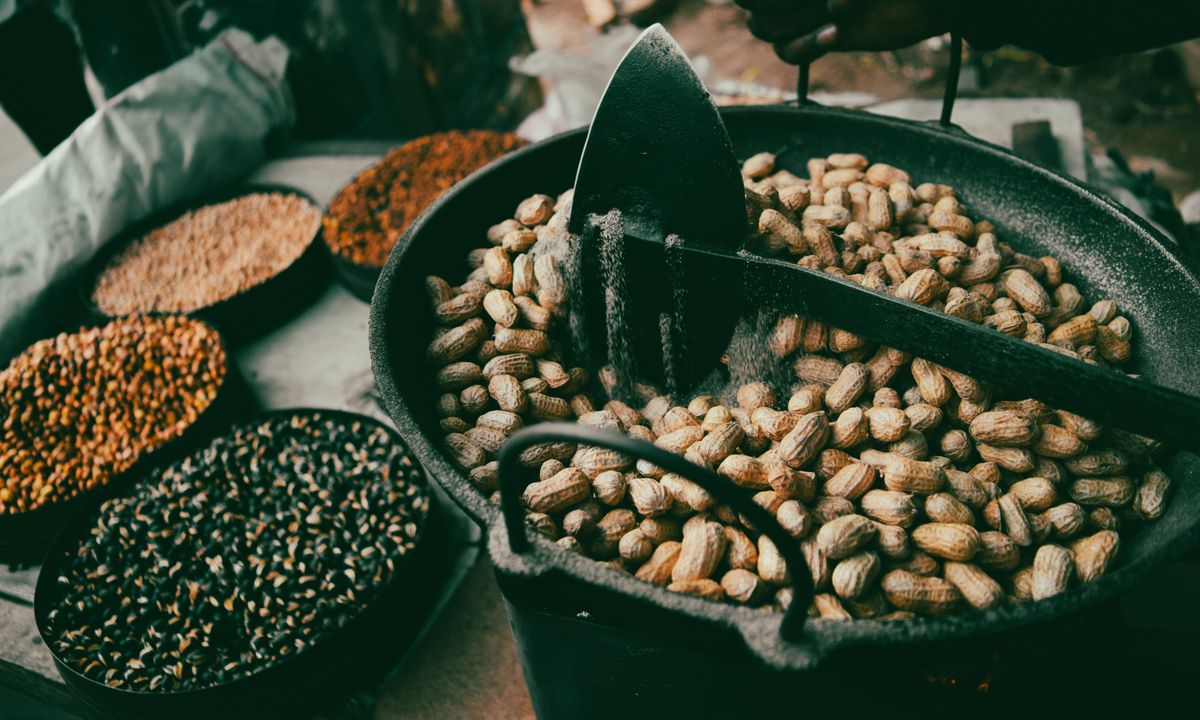
Peanuts and other grains displayed as cooking ingredients
A safer daily eating plan
Start each city with a supermarket visit for packaged backup food that you can assess. Photograph ingredient panels for translation, but do not rely on an app alone for a life-threatening decision. Ask your hotel to write the nearest appropriate hospital name and address in Chinese. Save 120 for ambulance services and 110 for police emergencies.
Before a train day or attraction visit, carry enough safe food for delays. On restaurant days, go outside peak meal times so staff can read the card and answer questions. Our China food-ordering guide explains common ordering systems, while the best translation apps for China can help with menus after your fixed medical card is prepared.
What to pack before China
- Prescribed emergency medication in original packaging
- Medical letter and prescription copies
- Checked Chinese allergy card in print and on your phone
- Safe snacks for flights, trains, and late arrivals
- Travel insurance details and assistance number
- A list of hospitals near each hotel
- A travel companion who knows your action plan
If a reaction starts
Follow the emergency plan given by your clinician and use prescribed medication as directed. Call 120 or ask someone to call an ambulance. Show the sentence Wo you yanzhong de shiwu guomin, qing jiao jiuhuche, meaning “I have a serious food allergy; please call an ambulance.” Do not delay care to translate a long explanation.
Frequently asked questions (FAQ)
Is it safe to travel in China with a peanut allergy?
Travel is possible with careful preparation, but peanut oil, garnishes, and shared equipment need direct questions. Carry a Chinese allergy card, medication, backup food, and an emergency plan.
Do Chinese menus list allergens?
Do not assume restaurant menus list every allergen or derivative. Ask about sauces, stock, oil, seasoning, and shared cookware.
Is soy sauce gluten-free in China?
Regular soy sauce often contains wheat. Use only a product or dish whose exact ingredients and preparation you can confirm.
Can a translation app replace an allergy card?
No. Use a professionally checked fixed card for the medical warning. An app can support menu reading and follow-up questions.
What number calls an ambulance in China?
Call 120. Save the number offline and keep the Chinese name and address of your hotel available for dispatch.
Sources
- Allergies and Travel · U.S. Centers for Disease Control and Prevention
- Severely Allergic Travelers · U.S. Centers for Disease Control and Prevention
- Food Allergy Chef Cards · Food Allergy Research & Education
- Navigating School Trips with Allergies · Food Allergy Research & Education
- How to Handle Food Allergies When Eating Out · Food Allergy Research & Education