Chinese Dumplings Guide 2026: 8 Types, Fillings & How to Order
“Dumpling” covers several different foods on an English menu in China. A plate of northern boiled jiaozi, a bamboo basket of Cantonese har gow, and a Shanghai soup-filled xiaolongbao do not share the same wrapper, cooking method, or eating technique. Learning the Chinese names in Latin-script transliteration prevents the most common ordering surprise.
The useful starting word is jiaozi, a filled wheat-dough parcel usually boiled, steamed, or pan-fried. Other foods translated as dumplings may belong to the bao, wonton, or dim sum families. There is no single Chinese category that matches every English use of “dumpling.”
Which Chinese dumpling should you order?
| Chinese name | What arrives | Typical filling | Where to look |
|---|---|---|---|
| Shuijiao | Boiled crescent dumplings | Pork and cabbage, chive and egg, beef | Northern dumpling shops |
| Zhengjiao | Steamed jiaozi with a soft wrapper | Pork, vegetables, shrimp | Breakfast shops and restaurants |
| Guotie | Long potstickers, crisp on one side | Pork and chive | Beijing, Tianjin and northern cities |
| Jianjiao | Pan-fried jiaozi, often made from boiled style | Mixed savory fillings | Casual breakfast and noodle shops |
| Xiaolongbao | Thin steamed parcel with hot soup inside | Pork, crab or crab roe | Shanghai and Jiangnan restaurants |
| Shengjianbao | Thick, yeasted bun fried underneath | Pork with hot broth | Shanghai breakfast shops |
| Huntun | Thin-wrapper wontons served in soup | Pork, shrimp, shepherd’s purse | Shanghai, eastern and southern China |
| Har gow | Translucent steamed shrimp dumplings | Chopped shrimp and bamboo shoot | Cantonese dim sum |
The menu may use regional spelling. Shuijiao is the safest request when you want the classic boiled crescent. Guotie signals a potsticker. Xiaolongbao tells the server you expect soup inside, while shengjianbao is thicker and fried on the bottom.
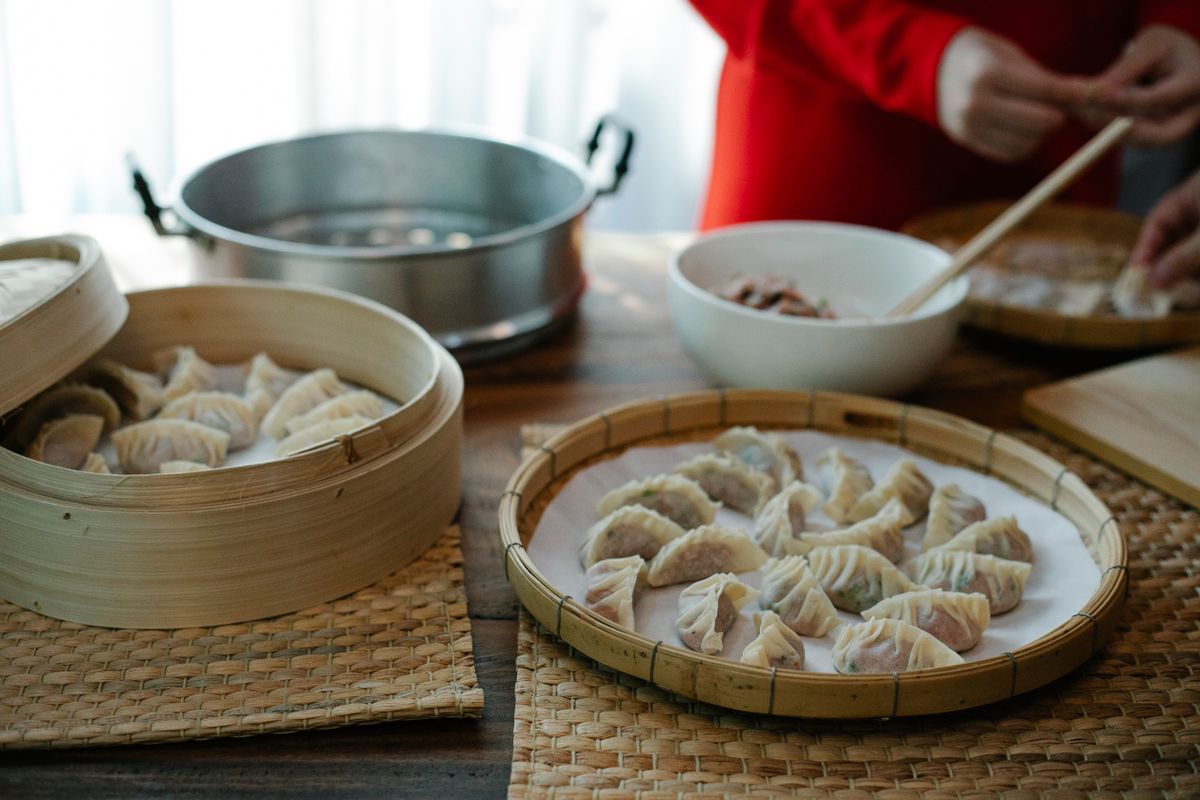
Fresh jiaozi being folded and arranged for cooking
Jiaozi: boiled, steamed, or fried?
Jiaozi wrappers use unleavened wheat dough. The cooking word often appears before jiao:
- shui, water, gives you boiled shuijiao;
- zheng, steam, gives you steamed zhengjiao;
- jian, pan-fry, gives you jianjiao;
- guo, pan or wok, appears in guotie.
Boiled jiaozi have a tender, slightly slippery skin and are often sold by plate or by weight. Steamed versions keep a drier surface and can be easier with chopsticks. Pan-fried versions add a crisp base and more oil.
In northern China, jiaozi are everyday food as well as a Spring Festival dish. Family fillings often follow local taste and season rather than a fixed national recipe. Pork with Chinese chive, pork with napa cabbage, lamb with spring onion, and egg with chive are common combinations.
How do you eat xiaolongbao without getting burned?
Xiaolongbao contain hot liquid released when chilled aspic in the filling melts during steaming. Do not bite a whole dumpling straight from the basket.
- Lift it gently by the thicker pleated top.
- Place it on a Chinese soup spoon.
- Bite or tear a small opening in the wrapper.
- Let steam escape and sip the broth.
- Add a little black vinegar and ginger if provided.
- Eat the remaining wrapper and filling once it has cooled.
A soup dumpling that has torn in the basket is not dangerous, but much of the broth will be lost. Pulling the thin side with chopsticks causes most tears. The Shanghai specialty is associated with Nanxiang and wider Jiangnan cooking, although shops across China now sell it.
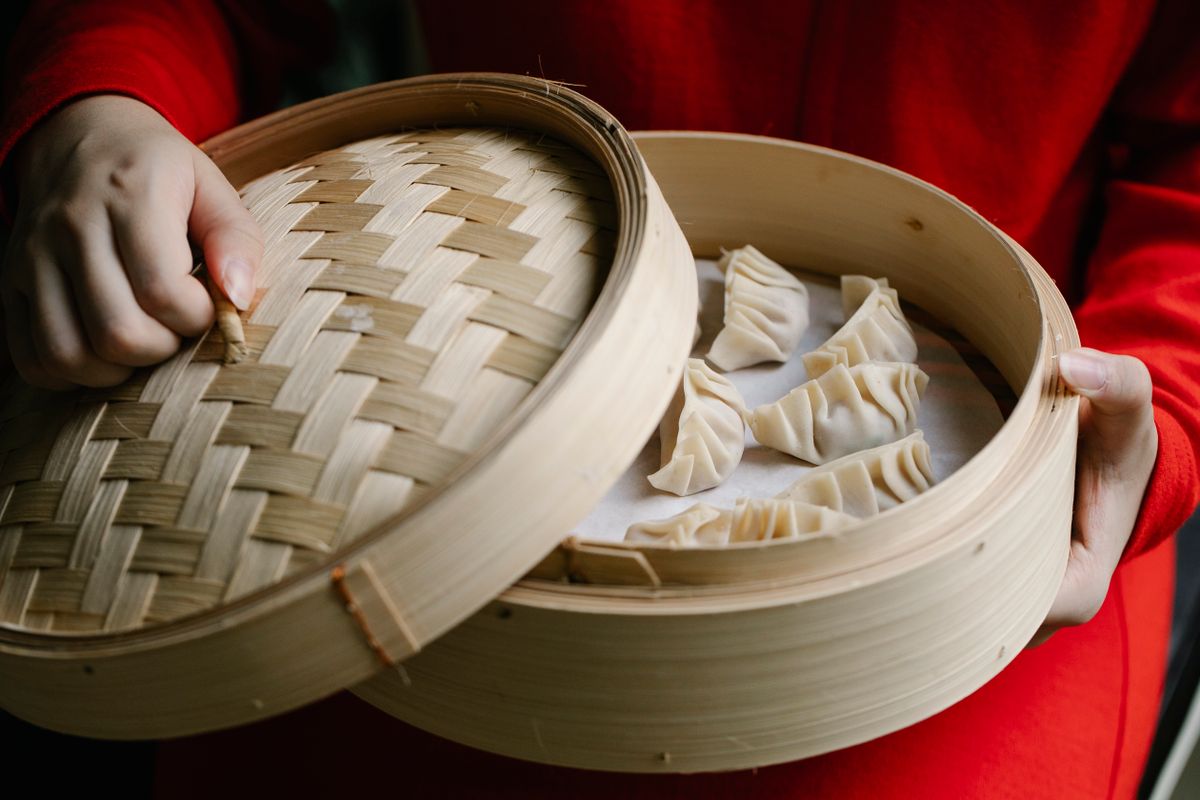
Steamed dumplings presented in a bamboo basket
Baozi, shengjian, and jiaozi are not the same
Baozi use a leavened, bread-like wrapper. They are usually larger and fluffier than jiaozi. A basic steamed pork bao is filling breakfast food, not a soup dumpling.
Shengjianbao also use a thicker wrapper, but cooks arrange them in a pan, fry the base, add water, and cover them to steam. The bottom becomes crisp while the upper dough stays soft. The filling can contain very hot broth, so use the same cautious first bite as for xiaolongbao.
English menus sometimes call both dishes “steamed dumplings.” Look at the transliterated names and the photograph: xiaolongbao means a soup-filled steamed parcel, shengjianbao means a pan-fried bun, and jiaozi points to the classic crescent dumpling.
What fillings should travelers recognize?
| Name | Pinyin | Meaning |
|---|---|---|
| Zhurou | zhurou | pork |
| Niurou | niurou | beef |
| Yangrou | yangrou | lamb or mutton |
| Jirou | jirou | chicken |
| Xia | xia | shrimp |
| Jiucai | jiucai | Chinese chive |
| Baicai | baicai | napa cabbage |
| Su | su | vegetarian, though stock should still be checked |
Fillings are commonly minced and mixed, so appearance alone will not reveal pork, shellfish, egg, or sesame oil. Travelers with allergies or religious restrictions should show a written Chinese sentence and ask about broth and cooking oil as well as the named filling.
Useful phrases include:
- Wo bu chi zhurou. I do not eat pork.
- Wo dui xia guomin. I am allergic to shrimp.
- Zhege shi su de ma? Is this vegetarian?
- Limian you huasheng huo zhima ma? Does it contain peanuts or sesame?
For higher-risk allergies, use our food allergy guide for China rather than relying on a short spoken phrase.
Where and when do people eat dumplings?
Northern dumpling restaurants often serve jiaozi for lunch and dinner, with many fillings listed by the plate. Breakfast shops may sell steamed dumplings, baozi, or pan-fried items from early morning. In Shanghai, xiaolongbao and shengjianbao are breakfast and snack foods as well as restaurant orders.
Cantonese dim sum is a different service style. Small steamed or fried plates are shared with tea, and har gow or siu mai arrive as one item among many. Our Chinese breakfast guide explains the morning context, while the regional cuisines guide shows why wheat wrappers dominate more in the north.
Prices vary sharply by city and venue. A neighborhood plate can cost far less than a heritage brand in a tourist district. Read whether the price is per piece, per basket, per plate, or per liang, a local portion measure that may vary by shop.
Common ordering mistakes
- Ordering “dumplings” without choosing boiled, steamed, or fried.
- Assuming every vegetarian filling has vegetarian stock.
- Biting a whole soup dumpling while it is still steaming.
- Confusing shengjianbao’s thick fried bun with thin xiaolongbao.
- Reading the listed price as a full plate when it is per piece.
- Pouring too much soy sauce before tasting the filling and vinegar.
If the menu is only in Chinese, take a screenshot and use an image-translation tool, then point to the transliterated names or the corresponding menu item. Our guide to ordering food in China covers QR menus, payment, and restaurant flow.
A first dumpling tasting plan
Start with shuijiao in a northern city, xiaolongbao and shengjianbao in Shanghai, and har gow at a Cantonese dim sum meal. Order one vegetable filling and one meat or seafood filling, then compare wrapper texture and vinegar rather than ordering eight baskets at once.
Jiaozi are forgiving for a first meal. Soup dumplings require more care, and dim sum works best with a group because each basket contains only a few pieces. Keep the Latin-script names in this guide on your phone; they are more reliable than an English translation that labels everything “dumpling.”
Frequently asked questions
What are Chinese dumplings called?
The classic crescent dumpling is jiaozi. English also calls xiaolongbao, wontons, har gow, and several buns dumplings, but these have different names and wrappers in Chinese.
Are Chinese dumplings always filled with pork?
No. Beef, lamb, shrimp, egg and chive, cabbage, mushrooms, and other vegetables are common. Mixed fillings and meat stock are possible, so ask directly when pork or shellfish must be avoided.
What is the difference between gyoza and jiaozi?
Japanese gyoza developed from Chinese jiaozi and often use a thinner wrapper with a strongly fried base. In China, jiaozi covers boiled, steamed, and pan-fried preparations with many regional fillings.
Are xiaolongbao dumplings or buns?
Their name contains bao, and the wrapper encloses meat and soup. English commonly calls them soup dumplings. In a restaurant, use xiaolongbao to avoid ambiguity.
Which dumpling is best for a first-time visitor?
Choose boiled pork-and-cabbage or egg-and-chive shuijiao for a simple start. Add xiaolongbao in Shanghai if you are comfortable handling hot broth, and har gow during a Cantonese dim sum meal.
Sources
- Festive Fun: Spring Festival Dumpling Customs · Beijing Municipal Government
- Explore Shanghai Culinary Heritage · Shanghai Municipal Government