Changsha
Taiping Old Street
Taiping Old Street works best as a slow walk through central Changsha rather than a single sight to tick off. The main lane is only 395 metres long, but the protected district extends through side alleys, historic residences, shops, snack counters and small cultural venues. Allow about two hours if you want to look beyond the busiest storefronts. Add more time if you plan to enter Jia Yi’s Former Residence or stop for food.
The street lies in Tianxin District within the Wuyi commercial area. The officially protected zone reaches from Santai Street and Sanxing Street in the east to Xiangjiang Avenue in the west, with Wuyi Road and Jiefang Road forming its northern and southern limits. This places it within walking distance of several central Changsha shopping streets and the Xiang River waterfront. Check a current local map for the most convenient metro exit because construction, crowd controls and station access arrangements can change.
Why Taiping Old Street matters
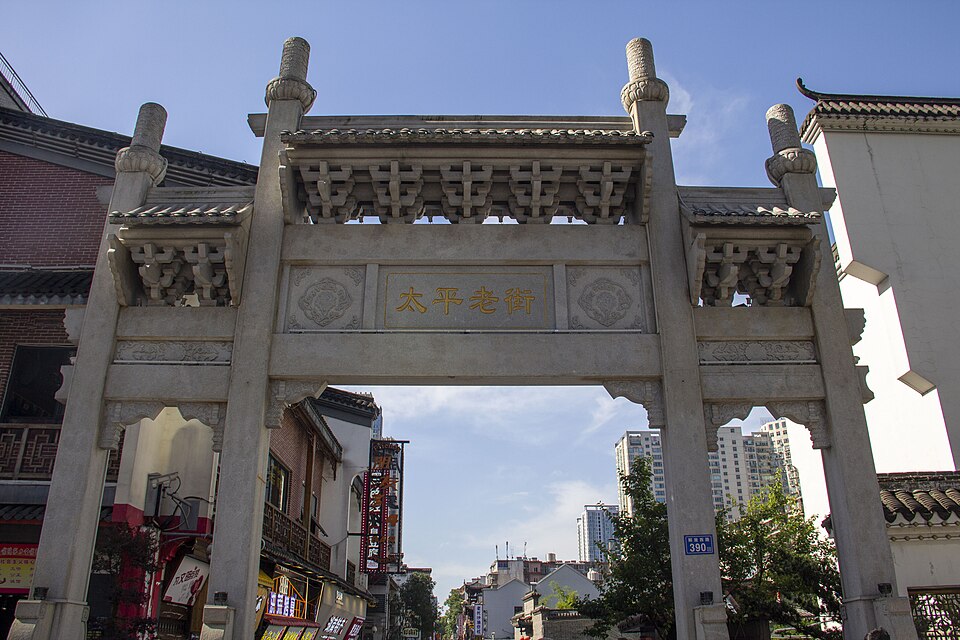
Taiping is one of the best-preserved examples of Changsha’s street pattern from the Ming, Qing and Republican periods. Its fishbone layout has a central north-south lane connected to smaller alleys. White walls, dark roof tiles, timber doors, firewalls and old shopfront proportions remain visible, although the district is also an active commercial area.
The street’s importance reaches further back than its surviving buildings. Official cultural records describe the area as a centre of urban and commercial life since the Western Han dynasty. In 2022, Taiping Old Street joined China’s first group of national-level tourism and leisure blocks. A protection plan covering 2025 to 2035 was approved in January 2026, with controls intended to preserve the historic layout and traditional appearance.
This is not an open-air museum frozen in one era. Historic houses sit beside contemporary snack shops, craft retailers and leisure businesses. That mixture can feel crowded and commercial, but it also explains why the district remains part of everyday Changsha rather than an isolated heritage compound.
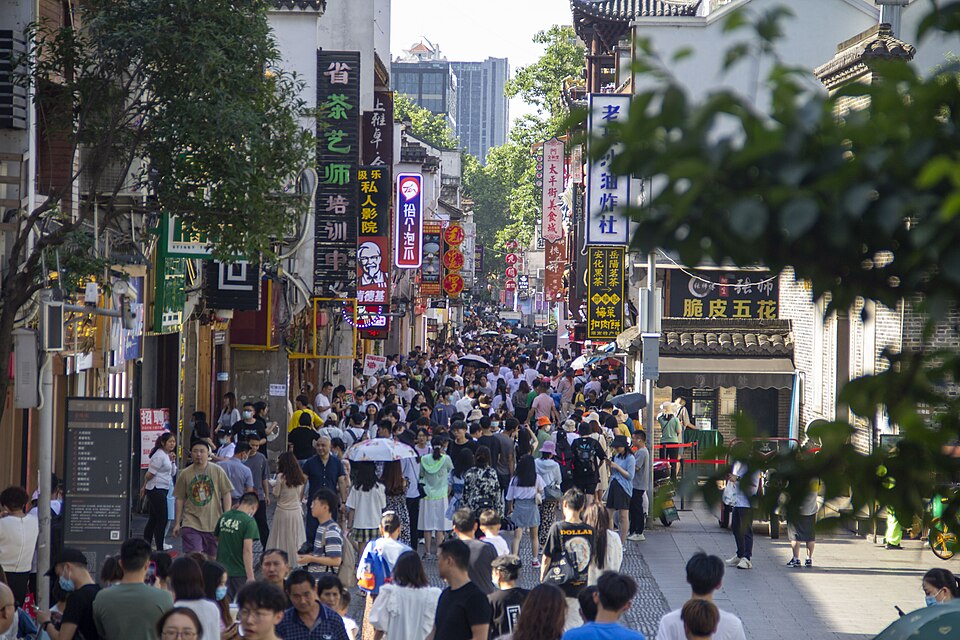
Historic shopfronts along Taiping Old Street
Photo: Weiji Xiaobawang, CC BY-SA 4.0, via Wikimedia Commons.
A useful walking route
Start at the northern end and walk the main lane once without stopping at every food queue. Look up at the upper floors, rooflines, wooden windows and firewalls. Street-level signs and crowds can conceal much of the surviving architecture.
Next, turn into one or two side lanes. The old fishbone plan becomes clearer away from the central flow, and the narrower spaces offer a better sense of the historic urban scale. Return to the main street for Jia Yi’s Former Residence at No. 28 Taiping Street. Jia Yi was a Western Han political thinker and writer who served as tutor to the king of Changsha after being sent away from the imperial court. The residence contains the ancient well associated with him and presents his connection to the intellectual history of Hunan. Individual rooms or exhibitions may follow separate admission and opening arrangements, so confirm the latest notice at the entrance.
Continue south while watching for older commercial buildings and heritage markers. Official cultural reporting records six protected cultural relic sites and 31 modern historic buildings in the district, including former grain, salt and petroleum trading premises and an old theatre stage. Not every structure has an English explanation, so a translation app helps with plaques and exhibition labels.
Finish by continuing toward the Jiefang Road and Pozi Street area or walking west toward the Xiang River. This creates a natural half-day route without repeatedly crossing the same crowded section.
What to eat and how to choose
Food is part of Taiping Street’s present identity. Official tourism sources describe a mix of Changsha snack shops, barbecue stalls, skewers and other casual evening food businesses. Treat the street as a tasting stop rather than a checklist. Pick one or two items, share portions if travelling with someone, and leave room for meals elsewhere in Changsha.
Busy counters are not automatically the oldest or best. Look for posted prices before ordering and confirm whether a displayed amount refers to one piece, one skewer or a serving. If you have allergies, prepare a translated note specifying the ingredient and the need to avoid cross-contact. Chilli, pork products, peanuts, sesame and cooking oils can be difficult to identify from appearance alone.
Carry a payment method accepted in mainland China, but keep a backup. Mobile payment is common at small vendors, while acceptance of foreign bank cards can vary. Do not scan unofficial QR codes offered by strangers, and verify the merchant name before confirming a payment.
Best time to visit
Late morning gives you a clearer look at the buildings and usually makes photography easier. Evening brings illuminated signs, food activity and a stronger nightlife atmosphere. The trade-off is density: Taiping Street can become heavily crowded during weekends and national holidays. Government tourism reporting has recorded exceptionally high holiday footfall, so travellers who dislike compressed crowds should choose a weekday and arrive before the evening rush.
Rain changes the experience in a useful way because roof tiles and narrow lanes become more atmospheric, but polished paving may be slippery. Summer heat and humidity can also make a short street feel tiring when queues move slowly. Carry water and take breaks in wider areas rather than blocking a narrow lane.
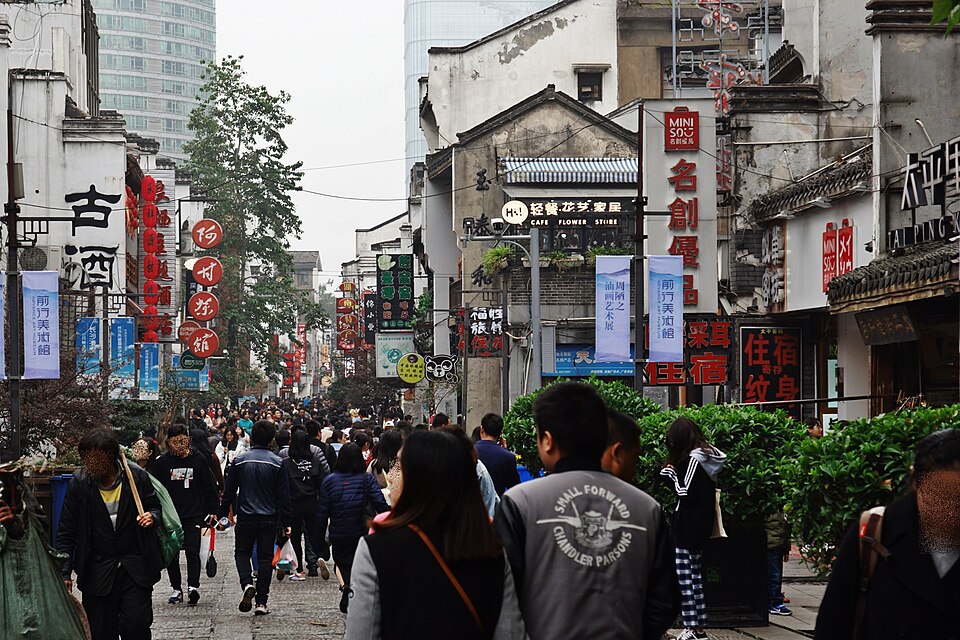
Crowds on Taiping Old Street in Changsha
Photo: Lennartbj, CC BY-SA 4.0, via Wikimedia Commons.
Accessibility and practical expectations
The principal route is a street-level urban walk, but crowding, thresholds, uneven surfaces and narrow side lanes may complicate wheelchair or stroller use. Heritage interiors can have additional steps. Travellers needing step-free access should check conditions with each indoor venue and visit outside peak periods.
Public toilets and seating may not appear exactly where you need them, so use facilities in larger commercial buildings before entering the busiest lanes. Keep children close, secure phones and wallets in dense crowds, and agree on a meeting point before separating.
Taiping Old Street is most rewarding when you divide your attention between the architecture, Jia Yi’s story and the living commercial street. A rushed pass shows mostly signs and queues. Two unhurried circuits, first along the central lane and then through selected alleys, reveal why this small district carries such a large share of Changsha’s urban memory.
Continue planning: use the Changsha travel guide and the 3-day Changsha itinerary to connect this stop with nearby sights.
Highlights
- Preserved lane in central Changsha
- Hunan snacks and small local shops
- Historic façades mixed with a busy evening scene
- Easy walk from Wuyi Square
- Useful short stop between downtown sights
Travel Tips
Visit before dinner rush
Late afternoon gives daylight for the buildings before the food crowds peak.
Buy small portions
Share snacks so you can compare several stalls without wasting food.
Watch your footing
The old lane can be crowded and uneven, especially after rain.