Beijing
Lama Temple (Yonghegong), Beijing
Most of Beijing's imperial sights are museums now. The Lama Temple (Yonghegong) is still doing the job it was built for: monks in maroon robes move between the halls, pilgrims bow with bundles of incense, and the smell of sandalwood reaches you before the first courtyard does. It is the capital's principal Tibetan Buddhist monastery and, usefully for trip planning, it opens every day of the week, including Monday, when the Forbidden City and most museums are shut.
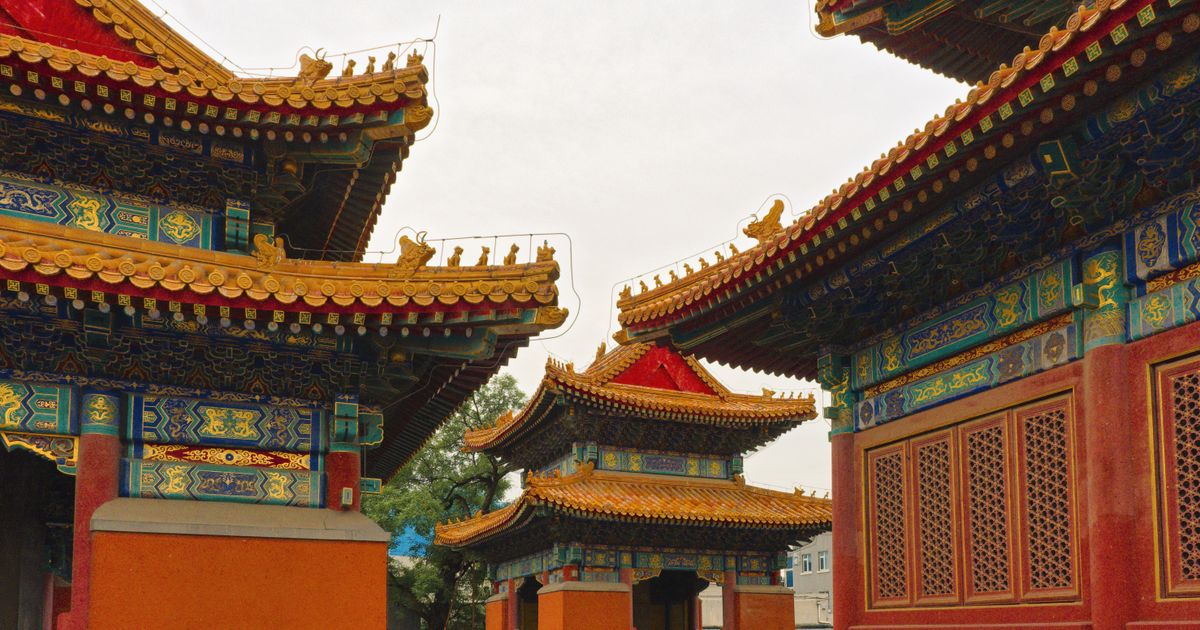
Golden ornate roofs of the Lama Temple halls in Beijing
From prince's mansion to lamasery
The complex began in 1694 as the residence of Prince Yong, who later took the throne as the Yongzheng Emperor. Imperial protocol barred his former home from ordinary use, so in 1744 it was converted into a lamasery and became the centre of Tibetan and Mongolian Buddhism in the capital. That history explains the look of the place: Han Chinese palace architecture carrying Tibetan and Mongolian decoration, one of the few corners of Beijing where the Qing empire's reach across Inner Asia is something you can see rather than read about.
The five halls and the sandalwood Buddha
The axis runs north through five main halls, each grander than the last. The climax is the Pavilion of Ten Thousand Happinesses (Wanfu Pavilion), home to a Maitreya Buddha carved from a single trunk of white sandalwood: 18 metres above the floor, another 8 below it, and a Guinness-listed record among single-tree wooden statues. Before it comes the Hall of the Wheel of the Law, with its hill of 500 luohan figures and a large bronze of Tsongkhapa, founder of the Gelug (Yellow Hat) school. The side halls hold thangka paintings and ritual objects that reward a slow pass.
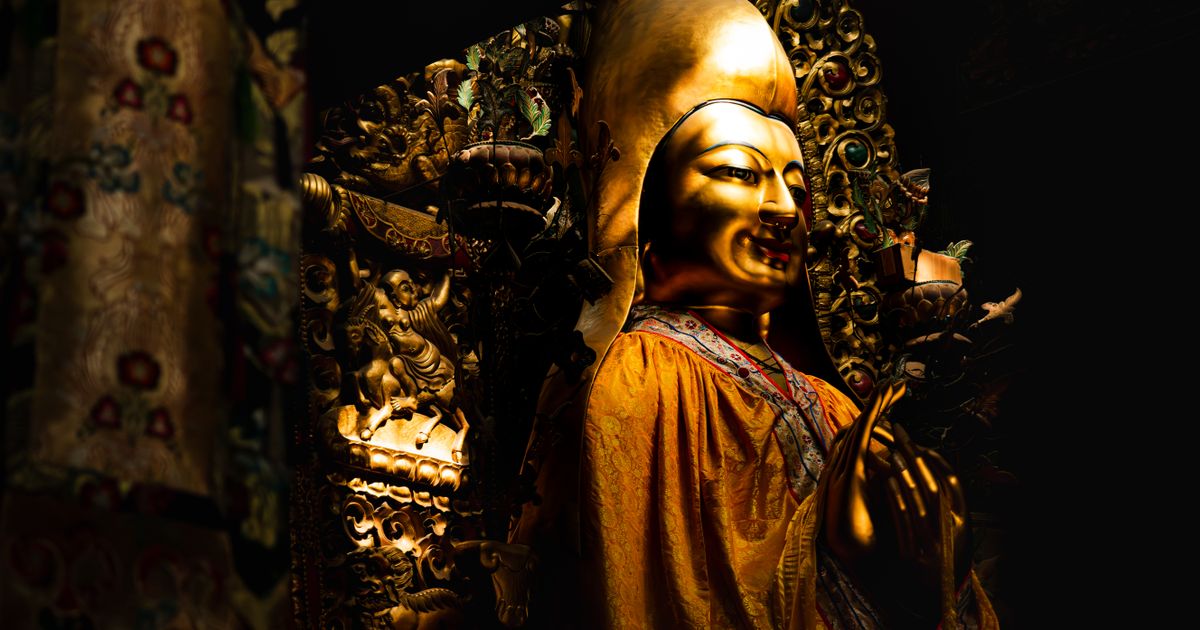
Gilded statue inside the richly decorated Lama Temple
Booking, tickets and hours
Entry works on timed slots. Reserve through the temple's official WeChat mini-program (search Yonghe Gong), which accepts foreign passports; slots open seven days ahead and morning ones go fast. No WeChat? The on-site ticket office can usually issue a same-day slot against your passport if any remain, but that is a gamble on busy dates. Admission is cheap, among the best-value tickets in Beijing, with free entry for children and certain groups. If the WeChat step puts you off entirely, guided visits sold on Trip.com include the timed entry. Hours run roughly 9:00 to 17:00 from April to October and 9:00 to 16:30 from November to March, last entry about 30 minutes before closing; details current as of July 2026, and expect adjustments around Chinese New Year, when the temple is at its busiest.
Getting there and what is next door
The temple stands on Yonghegong Street in Dongcheng District, and the metro could hardly serve it better: Yonghegong Lama Temple station sits on both Line 2 and Line 5, with Exit C a short walk from the entrance. A few minutes down Guozijian Street are the Confucius Temple and Imperial College, quiet, scholarly, and the natural second half of the same morning.
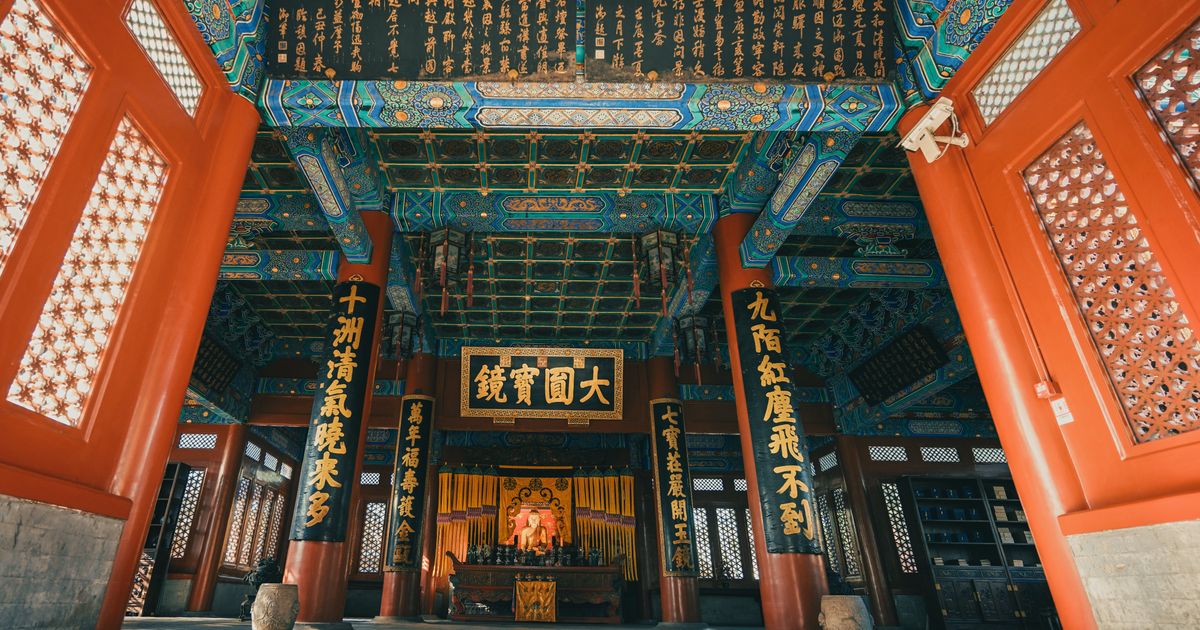
Ornate interior hall of the Lama Temple with painted beams and calligraphy
When to go
Autumn is the temple at its best: from late September to early November, golden ginkgo leaves pile against the red walls under crisp skies. Spring is pleasant too. Skip the first day of the Lunar New Year unless you want to witness (and queue with) the thousands who come to light the year's first incense.
A relaxed visit takes 1.5 to 2 hours. Free incense is handed out inside, so there is no reason to buy from the touts on the street. Dress modestly, keep your voice down in the halls, and note that photography is generally not allowed inside the main shrine rooms.
Highlights
- 18-meter Maitreya Buddha carved from a single white sandalwood trunk (Guinness-listed)
- Beijing's grandest active Tibetan Buddhist monastery, founded 1744 from an imperial prince's mansion
- Hall of the Wheel of the Law with a 500-luohan hill and a bronze statue of Tsongkhapa
- A blend of Han, Tibetan and Mongolian architecture along a five-hall central axis
- Golden ginkgo trees framing the red walls in autumn
Travel Tips
Reserve a timed slot in advance
Entry is by timed reservation via the temple's official WeChat mini-program, which accepts foreign passports. Slots open seven days ahead and mornings sell out fast; bring the passport you booked with.
Save it for a Monday
The temple opens daily, including Mondays, when the Forbidden City and most Beijing museums close. It is the natural Monday sight.
Free incense at the entrance
Complimentary incense is handed out inside; never buy any from touts outside the temple.
Combine with the Confucius Temple
The Confucius Temple and Imperial College are a few minutes' walk along Guozijian Street, ideal for the same morning.