Datong
Nine Dragon Wall
Tucked along a lane in Datong's restored old town stands the oldest and largest glazed dragon screen in China. The Nine Dragon Wall was built in 1392 as the spirit screen for the mansion of Zhu Gui, Prince of Dai and the thirteenth son of the Ming founder Hongwu. The mansion disappeared centuries ago; the screen that once shielded its gate from prying eyes, and from wandering spirits, has survived for more than six hundred years.
The glazed Nine Dragon Wall in Datong
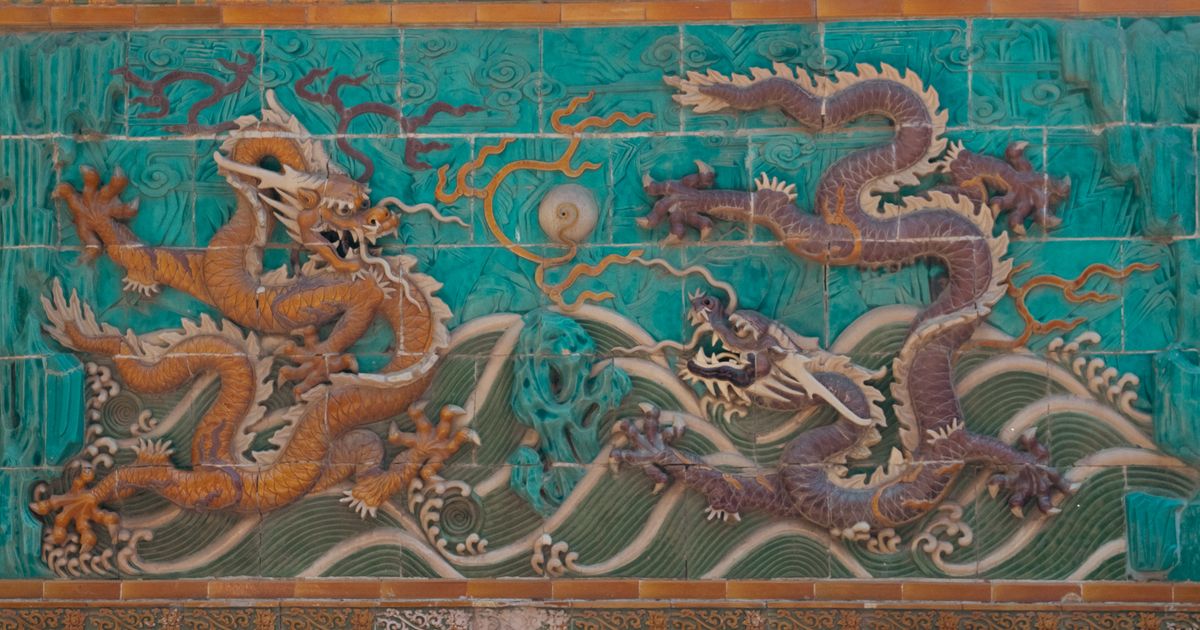
The numbers explain part of the appeal. The wall runs 45.5 metres long, stands 8 metres high and is 2 metres thick, built from 426 specially fired glazed tiles in yellow, green, blue, purple and ochre. Nine dragons coil across its face above a band of rolling waves, each one caught mid-motion among clouds and spray. It is markedly larger than the better-known nine-dragon walls in Beijing's Forbidden City and Beihai Park, both built later. A long reflecting pool in front was designed so the dragons appear to ripple and swim when the water is still.
Glazed ceramic detail in Datong's old town
A visit runs twenty to thirty minutes, an easy stop while exploring the old town on foot. The wall sits close to Huayan Temple and the rebuilt city wall, so most travellers fold all three into a single walking afternoon. Come early or late in the day if you want the reflecting pool clear of crowds.
Reading the wall
Spend a few minutes and the composition resolves into a deliberate hierarchy. The central dragon, picked out in imperial yellow, faces forward in the place of honour, flanked by pairs that turn and twist toward it through stylised clouds and waves. Between and below the dragons, the glazed band of water and rock is carved with fish, frogs and other small creatures, so the whole screen reads as a single churning sea. The colours come from metal oxides fired into the glaze: copper for green, cobalt for blue, iron for the ochres and yellows.
Getting in: tickets and hours
The wall went free to visit for several years, then reinstated a modest entrance fee in mid-2025 (children under 1.2 metres still get in free); budget for a small charge at the gate rather than a real line item in your trip. Hours run roughly 8am to 6pm through the warmer months and close half an hour earlier either side of winter, though it's worth confirming locally, since Datong's smaller sights shift their schedule with the season. The site is compact and largely shaded by the screen itself, a comfortable pause even in summer heat.
How it compares
China has three celebrated nine-dragon walls, and Datong's is the senior of them by a wide margin. The screens in Beijing's Forbidden City and Beihai Park were both built later and are smaller, which makes the Datong wall the benchmark against which the others are measured. Glazed spirit screens like this were a privilege of the highest nobility, meant to block direct sightlines into a gateway and turn away malevolent forces, which in Chinese folk belief always travel in straight lines. Seen that way, the wall isn't just decoration but a working piece of the old residence's design. Return after dark in the warmer months if you can: the screen and the surrounding old-town lanes are gently lit and far quieter than during the day.
Highlights
- The oldest and largest of China's famous nine-dragon walls, built in 1392
- 45.5 metres long and made from 426 specially fired glazed tiles
- Once the spirit screen for the Ming Prince of Dai's mansion
- A reflecting pool that sets the dragons shimmering when the water is still
- Reinstated a modest entrance fee in mid-2025 after several free years
Travel Tips
A quick, uncrowded stop
The visit takes 20-30 minutes and carries a small entrance fee since mid-2025 (children under 1.2m free). It pairs naturally with the nearby Huayan Temple and the old city wall on a walking afternoon.
Best light for photos
Morning or late afternoon gives the cleanest reflection in the pool and the fewest people. Midday sun can flatten the glaze colours.