China 24-Hour Visa-Free Transit 2026: Can You Leave the Airport?
Quick answer: China’s 24-hour visa-free transit policy covers travelers of all nationalities who pass through China on the way to a third country or region, hold confirmed onward tickets, and stay no more than 24 hours. Leaving the restricted transit area requires immigration approval for a temporary entry permit.
The route matters more than the length of the layover. London to Beijing to London is a return trip, not transit to a third place. London to Beijing to Tokyo is transit. Hong Kong and Macao count as separate regions for immigration-route purposes, so London to Shanghai to Hong Kong can fit the onward-route test if the remaining conditions are met.
Who qualifies for China’s 24-hour transit without a visa?
The National Immigration Administration states that the policy applies at all open exit-entry ports to nationals of countries around the world. You need a valid international travel document and a confirmed international flight, ship, or train ticket onward to a third country or region. Your total stay must be no longer than 24 hours.
Use this route test:
| Route | Third-place transit? | Likely route logic |
|---|---|---|
| United Kingdom → Beijing → Japan | Yes | Origin and onward destination differ |
| United States → Shanghai → Hong Kong | Yes | Hong Kong is a separate region for this rule |
| Singapore → Guangzhou → Singapore | No | It returns to the place of origin |
| India → Kunming → Thailand | Yes | It continues to a third country |
Eligibility does not guarantee permission to enter the city. Border officers make the decision at the port, especially when a traveler asks to leave the restricted area.

Aircraft seen from a terminal during an international connection
Can you leave the airport during a 24-hour layover?
Only with a temporary entry permit issued by immigration at that port. The NIA says passengers who remain inside the designated restricted area can transit without entering mainland China. A passenger who wants a hotel, city visit, terminal transfer requiring landside access, or baggage recheck outside the secure area must ask immigration whether temporary entry is allowed.
Approval can depend on the port, connection, time available, documents, and operational conditions. Do not book a non-refundable tour based only on the words “24-hour visa-free.” If the connection is overnight, check whether the airport remains open and whether your airline checks baggage through.
Passengers staying in the restricted area during 24-hour direct transit are also listed as exempt from China’s arrival card. If immigration grants entry, follow the officer’s instructions about entry forms and the permitted departure time.
24-hour transit versus 240-hour visa-free transit
These policies are not interchangeable. The 24-hour policy is nationality-wide and designed for short connections, often without leaving the port. The 240-hour visa-free transit policy is limited to listed nationalities, designated entry ports, and permitted travel areas, but it can allow up to 10 days in China.
| Question | 24-hour transit | 240-hour transit |
|---|---|---|
| Nationality | All nationalities under the stated rule | Only listed eligible nationalities |
| Maximum time | No more than 24 hours | Up to 240 hours |
| Entry ports | All open exit-entry ports | Designated ports only |
| Leave restricted area | Temporary entry permit required | Entry under the policy if approved |
| Main use | Airport or port connection | Short stopover trip |
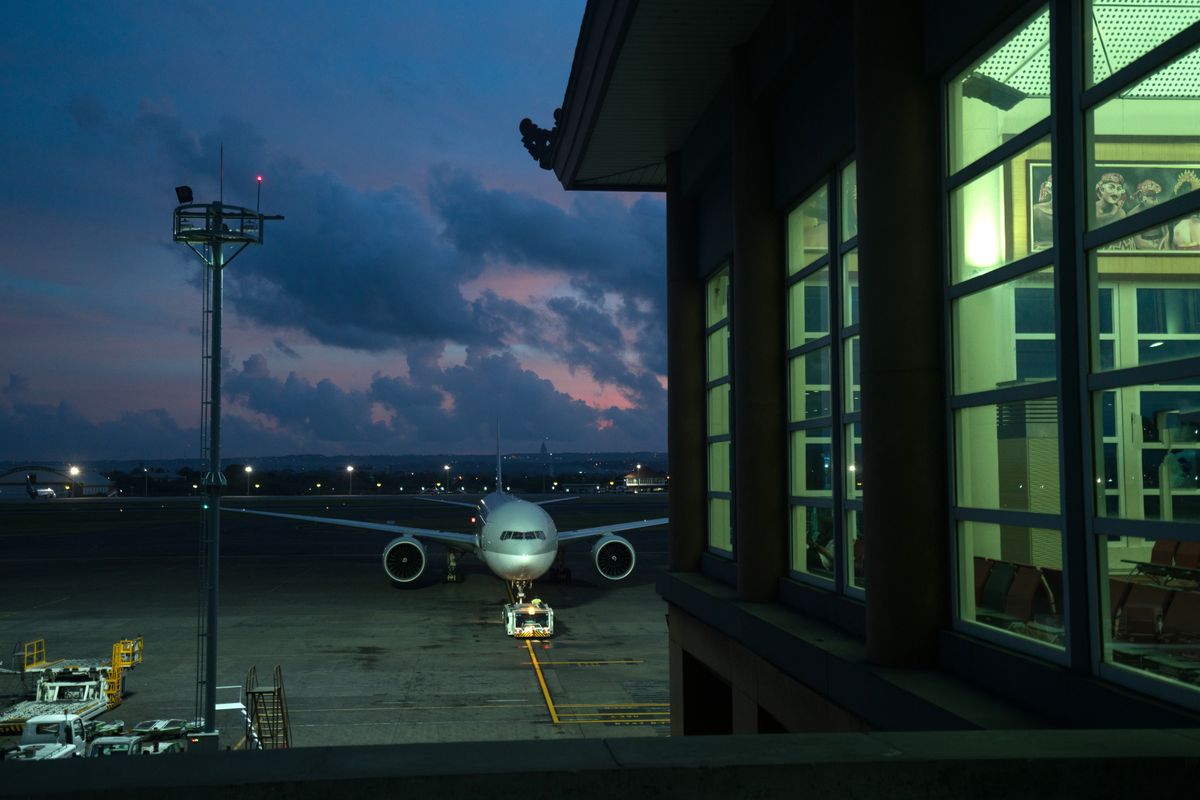
Aircraft waiting at a terminal gate after sunset
Common mistakes
- Booking A → China → A and calling it transit. The onward destination must be a third country or region.
- Assuming 24 hours means automatic city entry. A temporary entry permit is required to leave the restricted area.
- Counting only flight time. Immigration considers the permitted transit period and your actual port movements.
- Ignoring terminal and baggage changes. A self-transfer may require landside entry that officers can decline.
- Mixing up the 24-hour and 240-hour nationality lists. Their eligibility rules differ.
Who this is for
This is for passengers with a short international connection in mainland China, including travelers whose nationality is not on the 240-hour list. It is especially useful for same-day air connections and international rail or ship itineraries with confirmed onward seats.
It is not the right plan for a multi-day stopover, a domestic side trip, work, study, or an itinerary without confirmed onward travel. Eligible travelers seeking a longer stop should compare the 240-hour policy or apply for a visa.
What to carry at the transit desk
- Passport valid for the journey
- Confirmed onward ticket with date and seat
- Boarding passes or booking records for the full route
- Hotel booking if you plan to request temporary entry
- A simple printed itinerary showing origin, China port, and third destination
For the rest of the border process, see our China entry and customs guide.
Frequently asked questions (FAQ)
Is China’s 24-hour transit visa-free for Indian citizens?
The published NIA rule covers nationals of countries around the world, subject to the route and document conditions. Permission to leave the restricted area still requires a temporary entry permit.
Can I leave Beijing airport on a 20-hour layover?
You may request temporary entry at immigration, but approval is not automatic. Keep a realistic return buffer and avoid prepaid plans until entry is granted.
Does Hong Kong count as a third destination?
For mainland immigration transit-route purposes, Hong Kong is treated as a separate region. A route such as Europe → mainland China → Hong Kong can meet the third-place pattern.
Do I need an arrival card in direct transit?
The official exemption list includes 24-hour direct-transit passengers who stay within the port’s designated area. If you enter mainland China, follow the port officer’s instructions.
Is the 24-hour transit rule the same as a transit visa?
No. It is a visa-free transit policy. A temporary entry permit, when approved, allows you to leave the restricted port area during the allowed transit.
Not sure if you even need a visa?
Check your China visa-free eligibility →
Sources
- Visa-Free Transit Policies · National Immigration Administration
- China Launches Online Arrival Card for International Travelers · Embassy of China in the United States