Shanghai to Zhangjiajie Train 2026: Sleeper vs Bullet Train, Time & Price
Type "Shanghai to Zhangjiajie" into 12306 and the app will not hand you one clean through train. It either splits the trip into two legs with a change at Changsha, or points you toward an overnight K-train that eats the better part of a day and a night. That is not a glitch. The two cities sit about 1,500 km apart, separated by the hills of western Hunan, and a true high-speed link into Zhangjiajie only opened in December 2021, tying into the national network at Changsha rather than running straight through to the coast.
This guide covers the real options for making that trip in 2026: the direct overnight sleeper trains, the faster bullet-train-plus-transfer route, what a hard sleeper vs soft sleeper costs and feels like, which of Zhangjiajie's two stations to book, and how to get from the station to the sandstone pillars that inspired Avatar's floating mountains.
You can book any of these routes two ways: through 12306, China Railway's own free official app and website, or through a reseller like Trip.com that layers on an English interface and takes foreign cards.
Book China train tickets on Trip.com
English interface, foreign card support, no 12306 account needed
Some links are affiliate links; we may earn a commission at no extra cost to you.
12306 is free and sells the exact same seats at the exact same price, so if you already read basic Chinese or don't mind translating the app, it costs nothing extra to book direct. For a fuller comparison of the two, see Trip.com vs 12306.
For step-by-step guidance on registering, choosing between 12306 and Trip.com, and boarding with only your passport, see our complete guide to booking China's high-speed trains.
Why there's no direct bullet train between Shanghai and Zhangjiajie
Shanghai sits on the Shanghai-Kunming high-speed corridor, one of the busiest trunk lines in the country, running through Hangzhou, Nanchang, and Changsha. Zhangjiajie only got its own high-speed connection in December 2021, when the Changsha-Zhangjiajie-Jishou-Huaihua line opened, cut through the mountains of western Hunan at real engineering cost. That line ties into the network at Changsha, not at any point further east, so a bullet train from Shanghai still has to change at Changsha South to reach Zhangjiajie.
Building a single high-speed line straight from Shanghai to Zhangjiajie would mean threading new track through the same mountainous terrain that keeps the region so scenic, for a route that mostly duplicates track already served by the Changsha transfer. As of 2026 there's no announced project to close that gap, so the transfer at Changsha (or the overnight sleeper) remains the way to do this trip for the foreseeable future.
The fastest way: bullet train with a transfer at Changsha
For daytime travel, book a high-speed G or D train from Shanghai Hongqiao to Changsha South (around 4.5 to 5.5 hours depending on the exact train), then change to a second high-speed train from Changsha South to Zhangjiajie West (roughly 2 hours). Including a comfortable transfer window, total door-to-door time runs about 7 to 9 hours, and several combinations run daily.
Second-class seats for the combined journey typically run somewhere in the ¥750-950 range one-way; first class and business class cost noticeably more. Buy both legs on 12306 or Trip.com in one search: both platforms will show connecting itineraries and flag the minimum transfer time at Changsha South, which is usually enough to walk between platforms without sprinting.
Sleeper train vs hard seat: what the price difference buys you
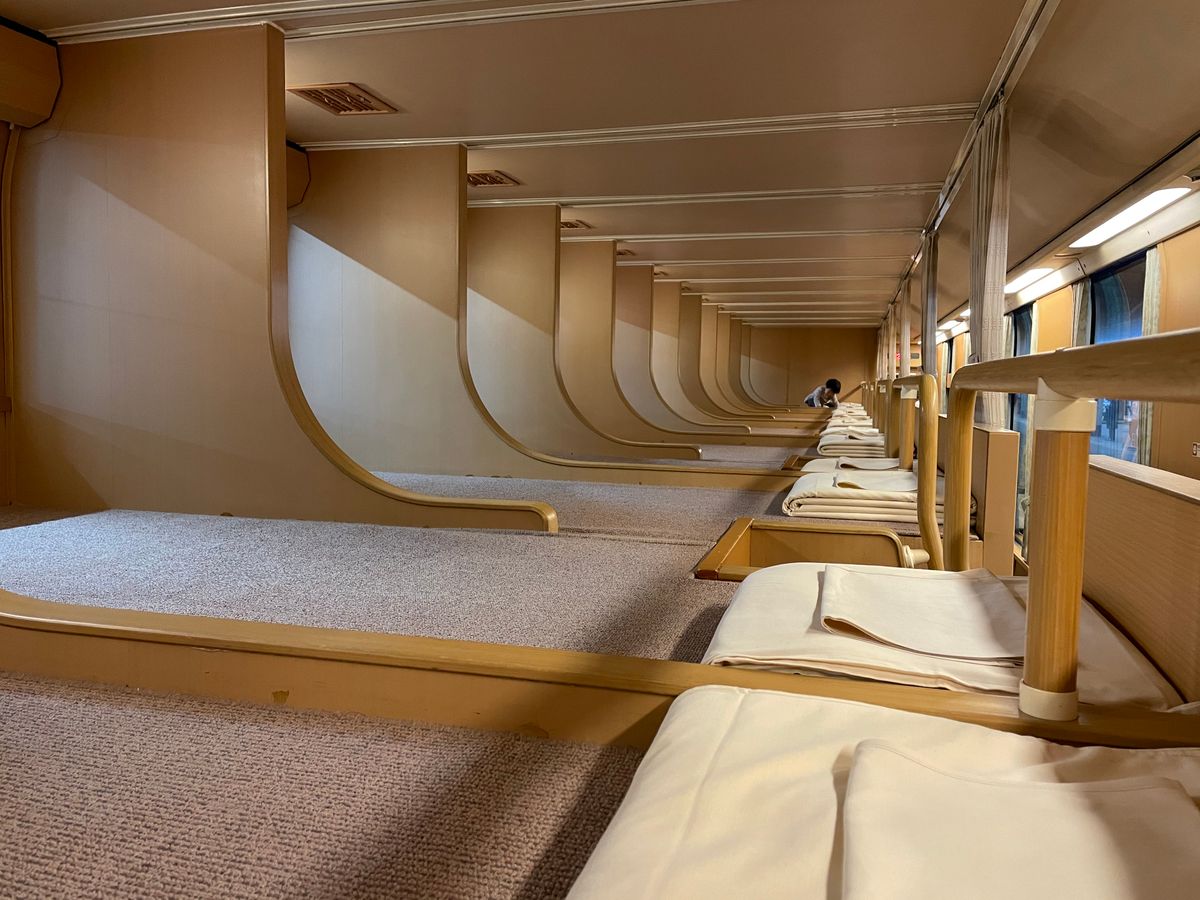
Hard sleeper carriage interior on an overnight Chinese train
If you'd rather not switch trains, a handful of direct K-class trains run overnight from Shanghai (commonly Shanghai or Shanghai South station) straight to Zhangjiajie without a change, arriving the next morning or early afternoon. Train K1373 is one of the regularly cited direct services, and it lands at Zhangjiajie Railway Station, the older, central station close to Wulingyuan.
The trade-off is time: these K-trains take roughly 15 to 19 hours depending on the exact service, versus 7 to 9 hours for the bullet-plus-transfer option. What you get back is a bed and a saved hotel night.
| Class | What it is | Typical price (one-way) | Comfort notes |
|---|---|---|---|
| Hard seat | Upright bench seating, shared car | roughly ¥150-220 | Fine for a few hours, rough for 15+ |
| Hard sleeper | Open bays of 6 bunks, no door | roughly ¥300-400 | Most common choice for this route, thin mattress, shared with strangers |
| Soft sleeper | Closed 4-berth compartment with door | roughly ¥450-600 | Quieter, lockable, worth it for couples or families |
Hard seat for a 15+ hour overnight run is a rough way to save money: no bed, bright lights that dim only partially, and a shared car that doesn't stop being noisy at 2 a.m. (see this breakdown of China's train seat classes for how each class compares nationwide). Most travelers on this specific route book hard sleeper, since it lands in the middle of the price range and gets you a real bunk. Soft sleeper is worth the upgrade if you want an actual door to close, especially if you're traveling with kids or just want to guarantee a full night's sleep before a day of hiking in Wulingyuan.
Book sleeper tickets as early as your ticket release window allows (30 days out on 12306, sometimes more via resellers) since hard sleeper berths on this route sell out first, especially lower bunks and around holidays.
Zhangjiajie Railway Station vs Zhangjiajie West: which one to book
Zhangjiajie has two stations, and mixing them up costs real time:
- Zhangjiajie Railway Station (the older, central one) mostly handles conventional and sleeper trains, including K1373. It sits close to downtown, and it's about a 30-40 minute taxi or bus ride to the Wulingyuan entrance, with Zhangjiajie's central bus station a short walk away.
- Zhangjiajie West Railway Station handles the high-speed G and D trains. It's newer and farther from the center, generally a longer transfer to Wulingyuan than the central station.
If you're booking the overnight sleeper, you'll almost certainly land at the central station, which works in your favor for reaching the park. If you're taking the bullet-train-plus-transfer route, you'll arrive at Zhangjiajie West and need a taxi or bus into town or on to Wulingyuan. Either way, check your ticket's arrival station name before you lock in a hotel, since booking a hotel near the wrong station adds 30+ minutes each way.
Wulingyuan and the real Avatar mountains
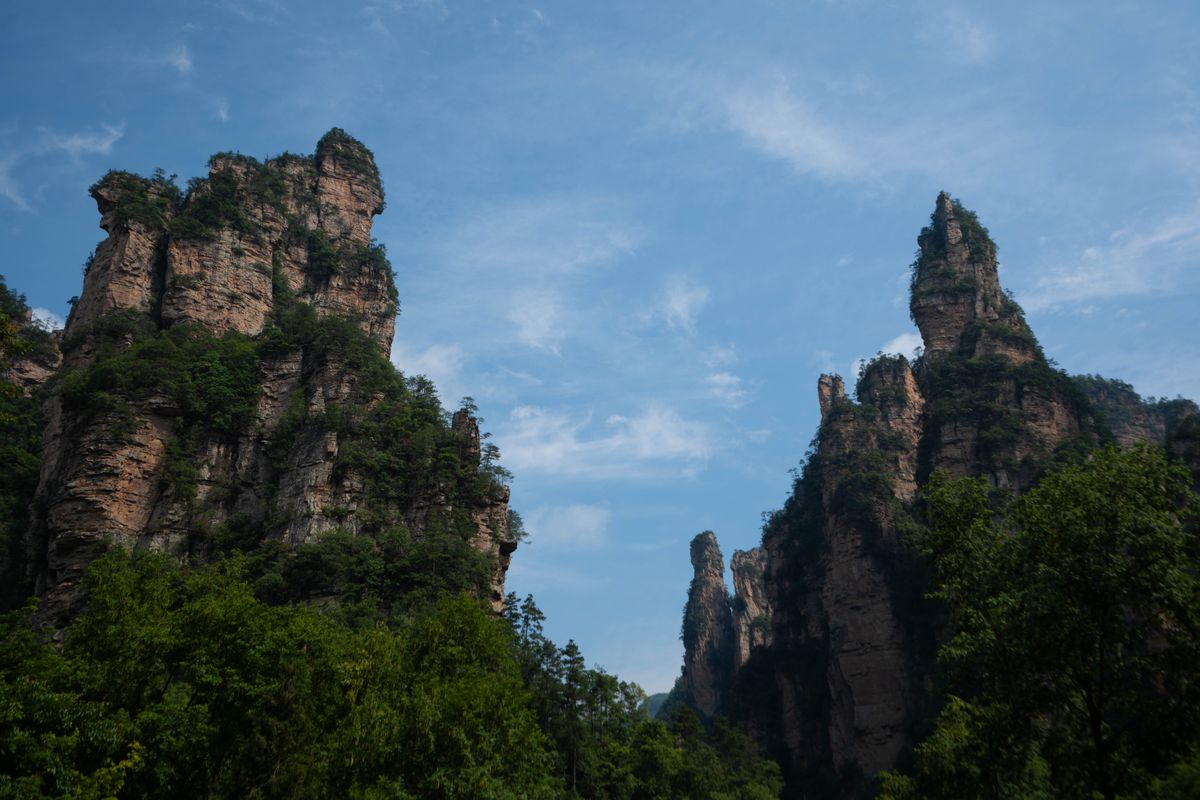
Towering sandstone pillars in Zhangjiajie National Forest Park, the inspiration for Avatar's floating mountains
The reason people make this long trip at all is Wulingyuan Scenic Area, a UNESCO World Heritage site since 1992 and the umbrella name for Zhangjiajie National Forest Park and its neighboring reserves. Thousands of quartz-sandstone pillars rise straight out of the forest, some over 200 meters tall, covered in trees that cling to bare rock.
James Cameron and his production team visited the area while designing Avatar, and the towering pillars around Yuanjiajie became the visual basis for the film's floating Hallelujah Mountains. One peak, previously called Southern Sky Column, was officially renamed Avatar Hallelujah Mountain in January 2010. It's now one of the most photographed spots in the park, along with the glass-bottomed Bailong (Hundred Dragons) elevator that climbs the cliff face nearby.
For onward planning once you're there, see this Zhangjiajie 3-day itinerary covering the Avatar mountains, Tianzi Peak, and the Tianmen glass walk, plus a guide to where to stay in Zhangjiajie, comparing Wulingyuan village against staying downtown near the railway station.
Best time of year to make this trip
Spring (March to May) and autumn (September to November) bring the clearest air and mildest hiking weather, and the sandstone pillars photograph best without summer haze. Summer (June to August) is hot and humid with frequent afternoon rain, though the forest cover keeps trails shaded. Winter is quiet and occasionally shows frost on the pillars, but some cable cars and glass attractions reduce hours or close briefly in poor weather.
Whatever season, avoid the first week of October (China's National Day holiday) and the Lunar New Year period unless you enjoy sold-out sleeper berths and packed viewing platforms. Both trains and the park itself get considerably busier.
Actionable takeaways
- If your dates are flexible, book the bullet train with a Changsha transfer for speed (7-9 hours total) over the overnight sleeper (15-19 hours), unless the saved hotel night matters more to you than time.
- Book hard sleeper, not hard seat, if you do take the overnight train: the price gap is roughly ¥150-200 and buys you an actual bunk for a 15+ hour ride.
- Confirm whether your ticket lands at Zhangjiajie Railway Station (central, close to Wulingyuan) or Zhangjiajie West (farther out) before booking a hotel.
- Reserve sleeper berths as soon as your 12306 booking window opens, especially around national holidays, since lower bunks sell out first.
- Budget 30-40 minutes and about ¥12-30 for the bus or taxi from either Zhangjiajie station to the Wulingyuan entrance.
FAQ
Is there a direct train from Shanghai to Zhangjiajie? Yes, for the overnight route: a small number of K-class sleeper trains run direct from Shanghai to Zhangjiajie without changing trains, taking roughly 15 to 19 hours. There's no direct high-speed (bullet) train; that route requires a transfer at Changsha South.
How long does the Shanghai to Zhangjiajie train take? Around 7 to 9 hours if you take a high-speed train with a transfer at Changsha, or roughly 15 to 19 hours on a direct overnight sleeper train.
Should I fly instead of taking the train? Flying takes about 2.5 hours in the air plus airport time, so it's faster overall than either train option. The overnight sleeper still appeals if you want to save a hotel night or prefer trains, and the bullet-plus-transfer option is comparable in total door-to-door time to flying once you add airport transfers on both ends.
How much does a sleeper ticket cost from Shanghai to Zhangjiajie? Hard sleeper typically runs about ¥300-400 one-way, and soft sleeper about ¥450-600, depending on the specific train and how far ahead you book.
Which Zhangjiajie station should I book, Zhangjiajie Railway Station or Zhangjiajie West? Zhangjiajie Railway Station (the central one) is closer to Wulingyuan and handles the overnight sleeper trains. Zhangjiajie West handles the high-speed trains and sits farther from the park entrance. Check your ticket before booking a hotel.