Shanghai to Xiamen Train: Duration, Price & Which Station to Use (2026)
The fastest G-train between Shanghai and Xiamen covers 1,104 km in 5 hours 3 minutes, and for the last stretch past Fuzhou the line runs close enough to the Fujian coast that you can see fishing boats, sea walls, and the odd offshore wind farm out the window. That coastal run is the whole appeal of this route: it's not the quickest way to get south, but it's a genuinely scenic one, and it drops you a short ferry ride from one of China's strangest and most photogenic small islands.
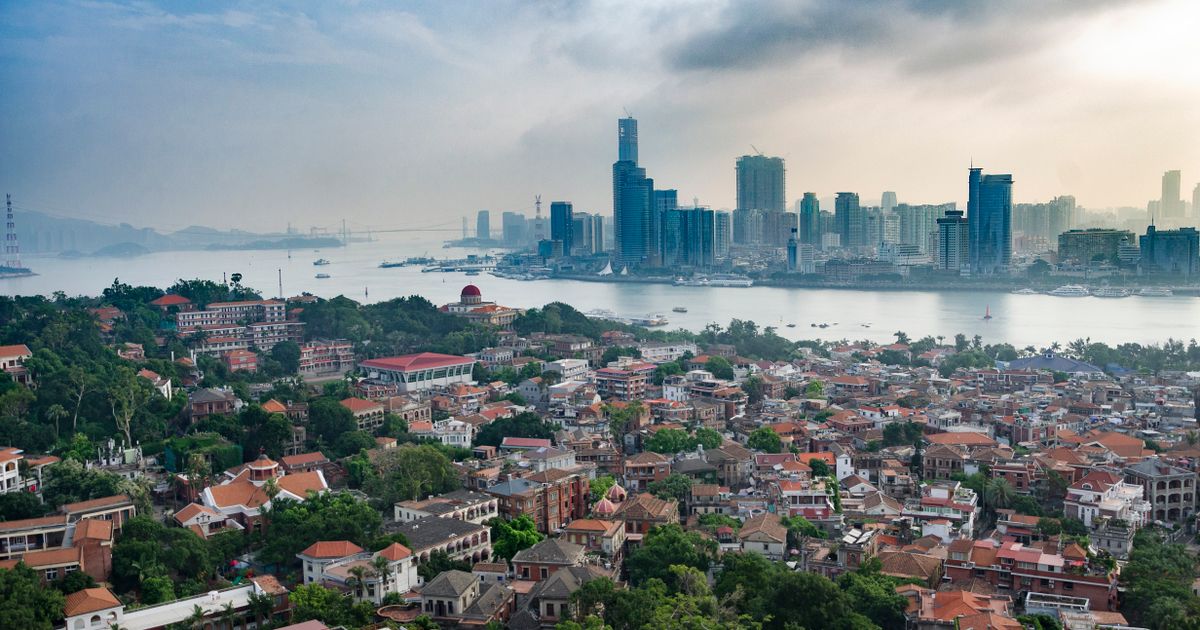
Aerial view of Gulangyu Island's colonial rooftops with the Xiamen skyline across the strait
This guide covers actual train times and prices, the Xiamen North vs Xiamen station trap that catches almost every first-timer, how to book, and how to get from the station to Gulangyu once you land.
Book Shanghai-Xiamen High-Speed Rail
Compare G-train times and seat classes in English
Some links are affiliate links; we may earn a commission at no extra cost to you.
If you'd rather book directly with the railway and skip any service fee, 12306 (the official China Railway site and app) sells the same tickets in Chinese, and both platforms draw from the same seat inventory. Trip.com is worth using if you want an English interface, foreign card support, and customer support in your own language; 12306 is worth using if you're comfortable with Chinese and want the ticket at face value.
For step-by-step guidance on registering, choosing between 12306 and Trip.com, and boarding with only your passport, see our complete guide to booking China's high-speed trains.
Train Times, Prices and How Many Run Each Day
There are roughly 25 pairs of G and D trains a day on this route, so you're not fighting for a handful of slots. Travel time depends heavily on how many stops the train makes; some G-trains run close to nonstop and finish in about 5 hours, while others stop at Hangzhou, Fuzhou, and several smaller coastal cities and stretch closer to 6.5 hours.
| Train type | Typical duration | Second-class price (CNY) | Stops |
|---|---|---|---|
| Fastest G-trains | 5h03m - 5h30m | ~¥520 - ¥583 | Hangzhou, Fuzhou, few others |
| Standard G-trains | 5h30m - 6h30m | ~¥480 - ¥560 | More coastal stops |
| D-trains (slower) | 5h - 8h30m | ~¥376 - ¥420 | Many stops |
Second-class seats run from around ¥376 to ¥583.50 depending on train and how close to departure you book; first class and business class cost more. Prices are set by the railway, not dynamic like airfare, so they don't spike the way flights do, but the cheapest seats on the fastest trains sell out first if you book within a few days of travel.
Practical takeaways:
- Book at least 3-5 days ahead for the fastest morning departures, especially around holidays.
- If your dates are flexible, a D-train that takes about 5-8.5 hours is noticeably cheaper than a G-train, but you lose more of the day.
- Overnight sleeper options exist on some conventional trains, but the daytime G-train is faster than any overnight service on this corridor, so there's little reason to take a sleeper unless you specifically want to save on a hotel night.
Which Station: Shanghai Hongqiao, and the Xiamen North vs Xiamen Trap
On the Shanghai side, effectively every high-speed train to Xiamen leaves from Shanghai Hongqiao Railway Station, which sits next to Hongqiao Airport and is on Metro Lines 2, 10, and 17. Shanghai's other main stations (Shanghai Railway Station, Shanghai South) run some services too, but Hongqiao is the default and where most schedules concentrate.
On the Xiamen side, there are two stations with similar names, and mixing them up is the single most common mistake on this route:
- Xiamen North Railway Station is in Jimei District, about 28 km from central Xiamen and Gulangyu. It's the larger station and handles most long-distance high-speed arrivals from Shanghai, Hangzhou, and points north.
- Xiamen Railway Station, just called "Xiamen Station," sits in Siming District, inside the city itself, much closer to Gulangyu, South Putuo Temple, and Zhongshan Road. Some trains, including a portion of the Shanghai services, run directly into this downtown station instead of terminating at Xiamen North.
Before you book, check the arrival station printed on your ticket, not just the city name. If you land at Xiamen North, budget an extra 30-50 minutes and a taxi or metro transfer to reach the old town and the Gulangyu ferry piers. If you land at Xiamen Station downtown, you can walk or take a short taxi ride straight to the ferry terminal.
Getting From Xiamen North to Gulangyu Island
If your train does end at Xiamen North, here's the actual route to the ferry:
- Take Metro Line 1 from Xiamen North Station toward the city center.
- Transfer to Line 2 at Lücuo Station, heading toward Xiamen's waterfront.
- Get off at the Cruise Center/Ferry Terminal area and follow signs (in English and Chinese) to Xiagu Ferry Terminal, also called the Dongdu Terminal.
- Buy a ferry ticket to Gulangyu (round trip runs about ¥35) and board for the roughly 10-minute crossing.
The whole trip from platform to pier runs close to 50 minutes by metro. A taxi covers the same ~28 km directly to the ferry terminal in about 40 minutes for roughly ¥70, which is worth it if you're traveling with luggage or arrive late at night when metro frequency drops.
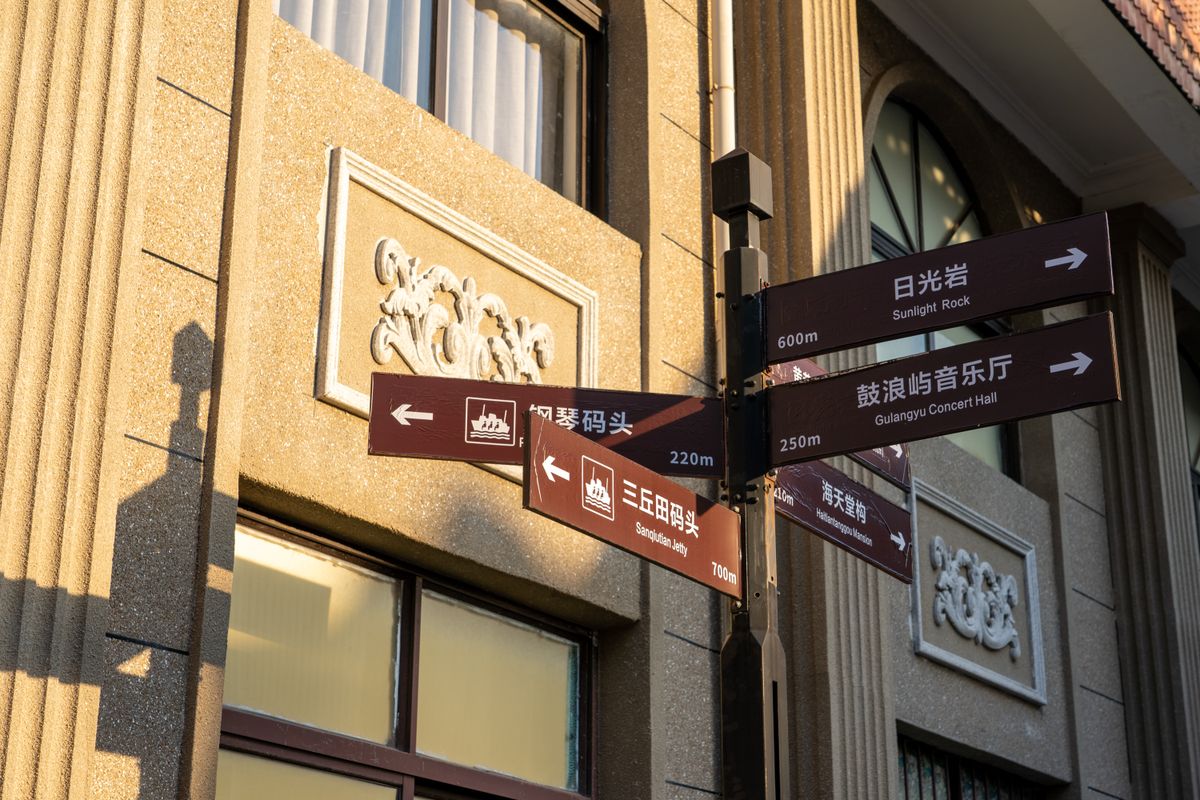
Colonial-era directional signposts pointing to Sunlight Rock and the Gulangyu Concert Hall
One more wrinkle: Gulangyu itself has no cars, scooters, or bikes. Once you're off the ferry you're walking or taking a small electric cart, so pack light for the crossing.
Why Gulangyu and Xiamen Are Worth the Detour
Gulangyu was a shared foreign settlement in the late 1800s and early 1900s, and the island still carries that layered look: red-tile-roofed colonial villas, old consulates, and a piano museum sitting a few minutes' walk from Chinese temple courtyards and banyan trees. It's small enough to cover on foot in a day, car-free by law, and the streets stay quiet in the early morning before day-trip crowds arrive on the mid-morning ferries.
Across the water, Xiamen proper has grown into a modern coastal city with its own skyline, university campus at Xiamen University (right by South Putuo Temple), and a food scene built around fresh seafood, oyster omelets, and Fujian-style noodle soups sold from small storefronts along Zhongshan Road. If you want a fuller plan for the city beyond the train and ferry logistics, see this Xiamen 3-day itinerary and a rundown of where to stay in Xiamen for the Gulangyu-vs-Zhongshan Road decision.
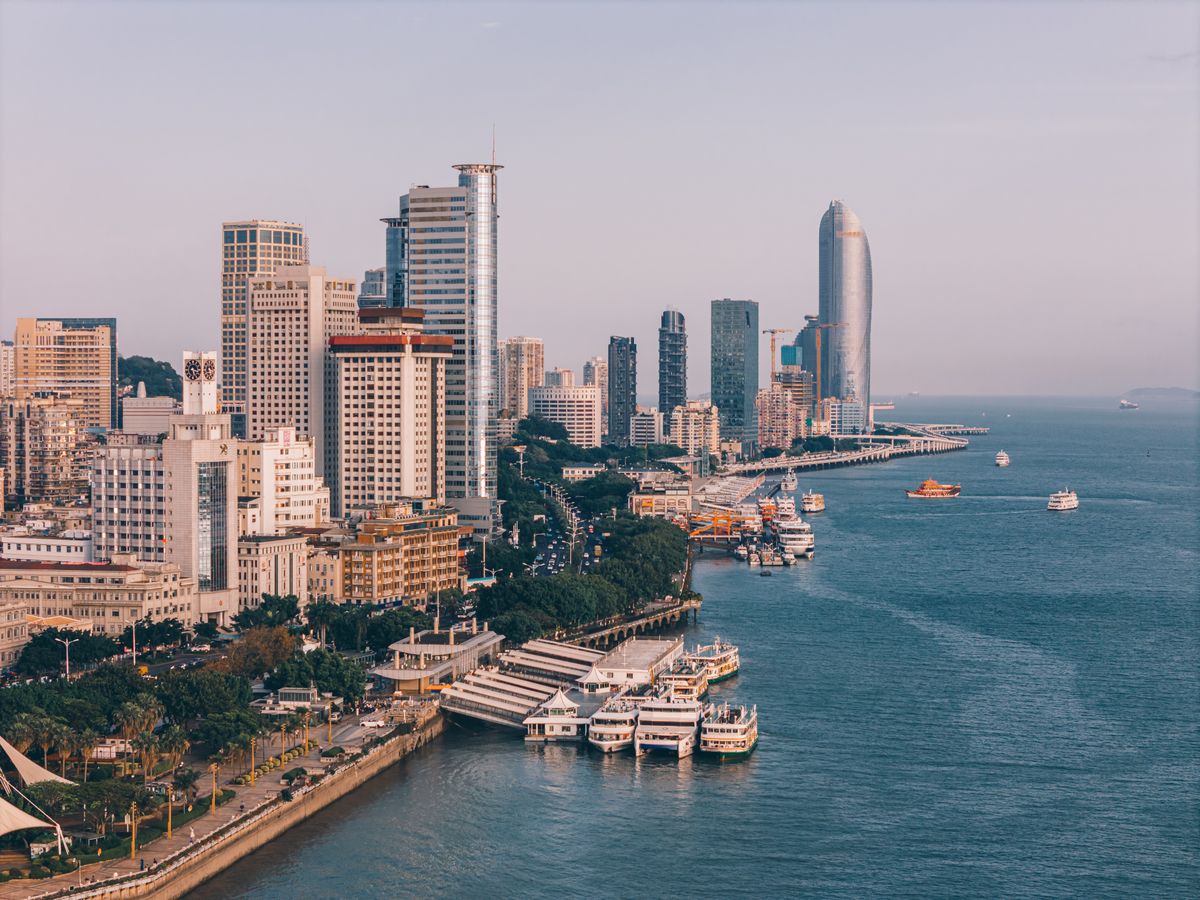
Xiamen's modern coastal skyline and harbor across the water from Gulangyu
Best Time to Go: Watch the Typhoon Season
Fujian's coast sits directly in the path of the Pacific typhoon belt. Xiamen averages 4-5 typhoons a year, most of them concentrated in July through September, with August typically bringing the strongest storms. A direct hit can suspend ferries to Gulangyu for a day or two and occasionally delays trains on exposed coastal sections.
The better windows are spring (March-May) and autumn (October-November), when temperatures sit in a comfortable 15-25°C range, humidity drops, and the coastal scenery along the train line is clearest. Summer (June-August) is hot and humid even without a storm, with daytime highs around 31-33°C. If you must travel in peak typhoon months, build a spare day into your itinerary in case the ferry gets suspended.
FAQ
Is there a direct train from Shanghai to Xiamen, or do I have to transfer? Yes, it's a direct through-train. G-trains run the whole route as one train number, typically stopping at Hangzhou and Fuzhou along the way; you stay on board the entire time.
Should I book a ticket to Xiamen North or Xiamen Station? Check what your specific train terminates at rather than assuming. If you're heading straight to Gulangyu or the old town, a ticket ending at Xiamen Station (downtown) saves you the 28 km transfer from Xiamen North.
Can I buy tickets in English? Trip.com sells the same tickets with an English interface and foreign-card payment support. The official 12306 site and app are in Chinese only but let you buy at face value with no service fee once you have an account set up with a foreign passport.
How far in advance should I book? Tickets go on sale up to 15 days ahead. Booking 3-5 days out is usually enough outside major holidays like Chinese New Year and National Day (early October), when demand on this route spikes and the fastest morning trains sell out within hours of release.
Is Gulangyu worth a full day or just a half-day trip? A half-day covers the main sights (Sunlight Rock, the piano museum, a walk down the main shopping streets), but a full day lets you get past the day-tripper crowds into the quieter residential lanes on the island's south and west sides, which is where most of the well-preserved colonial architecture sits.
Sources
- Shanghai–Xiamen Trains: Schedule and Tickets Booking · TravelChinaGuide
- Xiamen Train Schedule · TravelChinaGuide
- China Railway 12306 English Booking Website · China State Railway Group Co., Ltd.