New High-Speed Rail Lines in China 2026: What Changed and What It Means
Quick answer: China opened another wave of high-speed lines over the winter of 2025 to 2026, pushing the network past 50,000 km, roughly two-thirds of all high-speed track in the world. For travelers the useful news is a batch of new direct routes, including Zhangjiajie to Chongqing and a one-hour Xi'an to Yan'an link, plus more than 2,000 km of extra line due to open during 2026. You book them the same way as any other train, through 12306 or Trip.com, 15 days ahead.
If you rode China's trains a couple of years ago, the map has moved on. Whole corridors that used to need a flight or an overnight sleeper are now a few hours in a daylight seat. Here is what actually changed and which of it matters for a 2026 trip.
What is new on the map
Several major sections came into service around the turn of the year:
- Zhangjiajie to Chongqing, part of the Xiamen to Chongqing corridor, finally links the Avatar sandstone peaks directly to Chongqing by high-speed rail.
- Guangzhou to Zhanjiang, a 401 km line that opened December 22, cuts the run down western Guangdong and shortens the approach to the Hainan ferry ports.
- Tianjin to Dongying on the Bohai coastal route, and Yiyang to Shaoyang on the Hohhot to Nanning route, close gaps in the eastern and central grids.
- Xi'an to Yan'an, a 350 km/h line, drops the trip to the revolutionary heartland to around an hour. It is part of the larger Beijing to Lanzhou corridor, a 519 km, 54.63 billion yuan project that fills the last missing link in the northwest network.
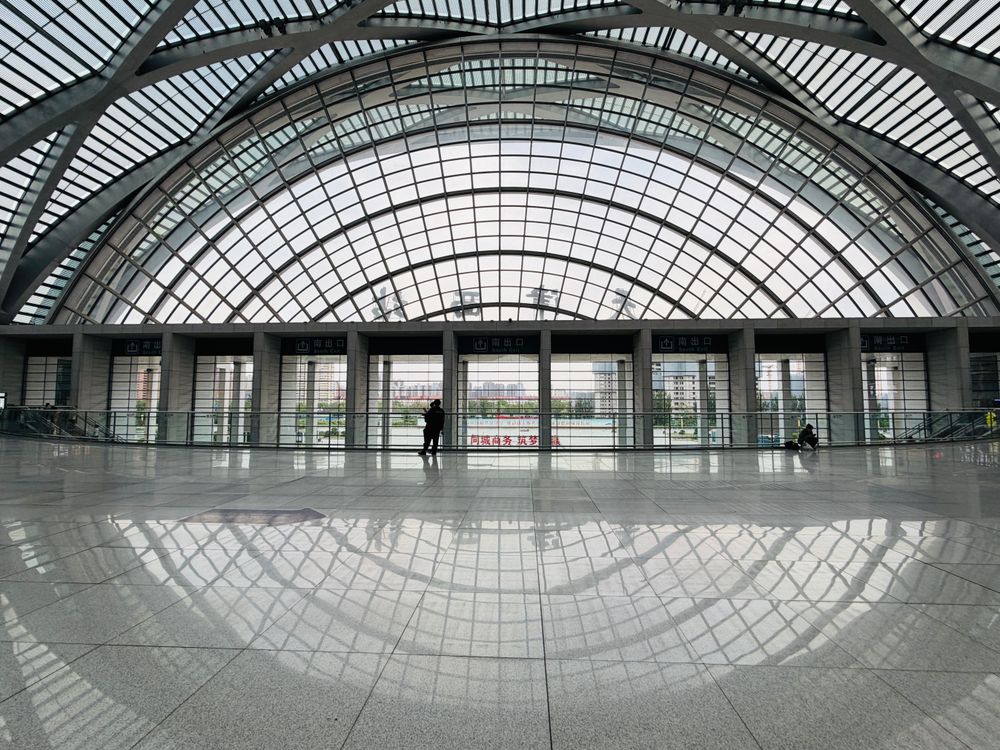
The bright, modern interior concourse of a large Chinese high-speed railway station
The network by the numbers
By the end of 2025, China's high-speed rail passed 50,000 km of operating line. That is about two-thirds of the world's high-speed track in commercial service, all built since 2008. The country is closing in on its "eight by eight" plan, a grid of eight east-west and eight north-south corridors, with the full 16-route framework targeted for 2030. More than 2,000 km of new line is scheduled to open during 2026 alone.
What that scale means on the ground is redundancy. Popular pairs like Beijing to Shanghai now run dozens of departures a day, so a sold-out morning train usually has an afternoon alternative.
Routes that change how you plan
The new lines are not just dots on a map, they reshape realistic itineraries:
- The Zhangjiajie to Chongqing link makes a "mountains then megacity" loop practical without backtracking or flying.
- Faster access to Zhanjiang makes western Guangdong and the Hainan crossing a smoother overland option.
- The one-hour Xi'an to Yan'an ride turns a former full-day expedition into an easy day trip from Xi'an, which pairs naturally with the Terracotta Army.
If you are building a multi-city route, check the latest timetable rather than a two-year-old guide, because a connection that once forced an overnight may now be a lunchtime hop.
Faster trains are still coming
The workhorse Fuxing trains already cruise at 350 km/h. China is testing the next generation, the CR450, designed for commercial speeds near 400 km/h, which would make it the fastest scheduled train service in the world. It is not on general timetables yet, but it signals where the network is heading.
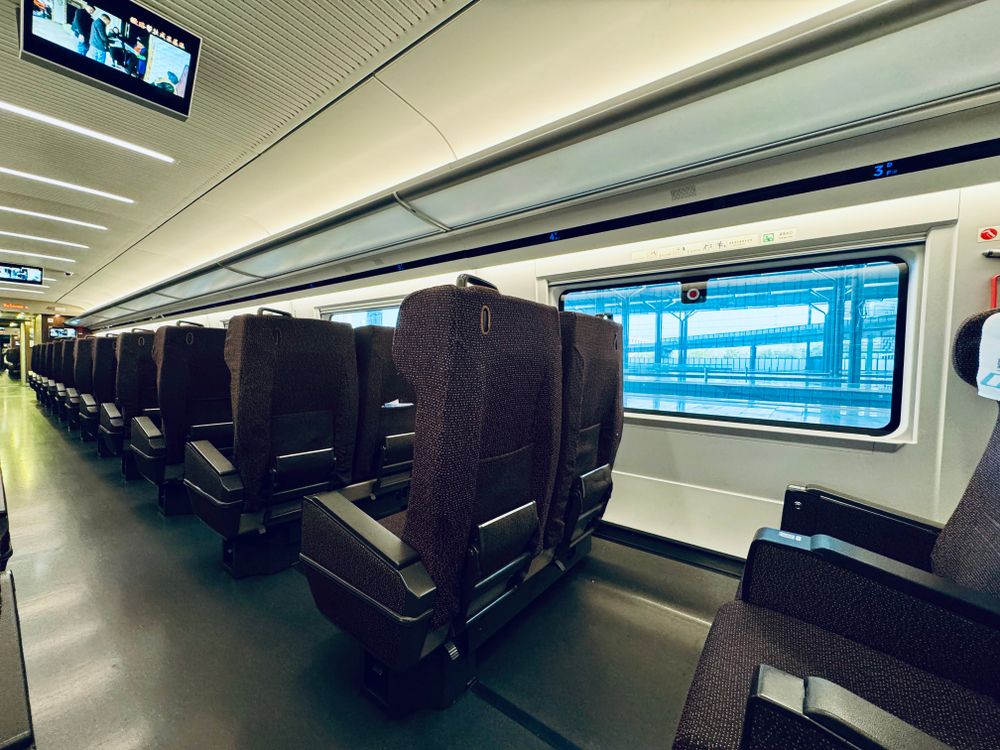
The clean, spacious seating cabin of a modern high-speed train
How to book the new lines
Booking works the same across old and new routes:
- Tickets open 15 days before departure. On busy routes and in peak season, popular seats can go within hours.
- Use the official 12306 app or a foreigner-friendly platform such as Trip.com, which handles English and overseas cards.
- Bring your passport. It is your ticket and ID for the gate and the onboard check.
- Aim to arrive at the station 40 to 60 minutes early. The big new stations are vast, and security plus platform-finding takes longer than a metro ride.
Book China high-speed trains on Trip.com
Search the newest routes, pay with an overseas card, and reserve seats 15 days ahead
Some links are affiliate links; we may earn a commission at no extra cost to you.
Frequently asked questions
How big is China's high-speed rail network in 2026? It passed 50,000 km of operating line at the end of 2025, about two-thirds of the world's high-speed track, and more than 2,000 km of new line is due to open during 2026.
What new high-speed routes opened recently? Recent openings include Zhangjiajie to Chongqing, Guangzhou to Zhanjiang, Tianjin to Dongying, Yiyang to Shaoyang, and the one-hour Xi'an to Yan'an line.
How fast are Chinese high-speed trains? Fuxing services run at up to 350 km/h. The next-generation CR450, now in testing, is designed for around 400 km/h in commercial service.
How far in advance can I book? Tickets release 15 days before departure. Buy popular routes early, since peak-season seats can sell out within hours of the window opening.
Do I need the new lines, or can I still fly? For many pairs the train is now faster door to door and far more reliable than short flights. New links like Zhangjiajie to Chongqing remove the last reasons to fly on some routes.