Chengdu to Lhasa Train 2026: The Real 34-Hour Route via Xining
Search "Chengdu to Lhasa train" and you will find pages claiming a new direct line cuts the trip to a few hours. That line does not run yet. What actually exists in 2026 is train Z322: one sleeper service that leaves Chengdu West Railway Station in the evening and pulls into Lhasa about 34 hours and 30 minutes later, after looping north through Lanzhou and Xining before joining the Qinghai-Tibet Railway. No transfer, one ticket, one train number. Just not the shortcut some sites describe.
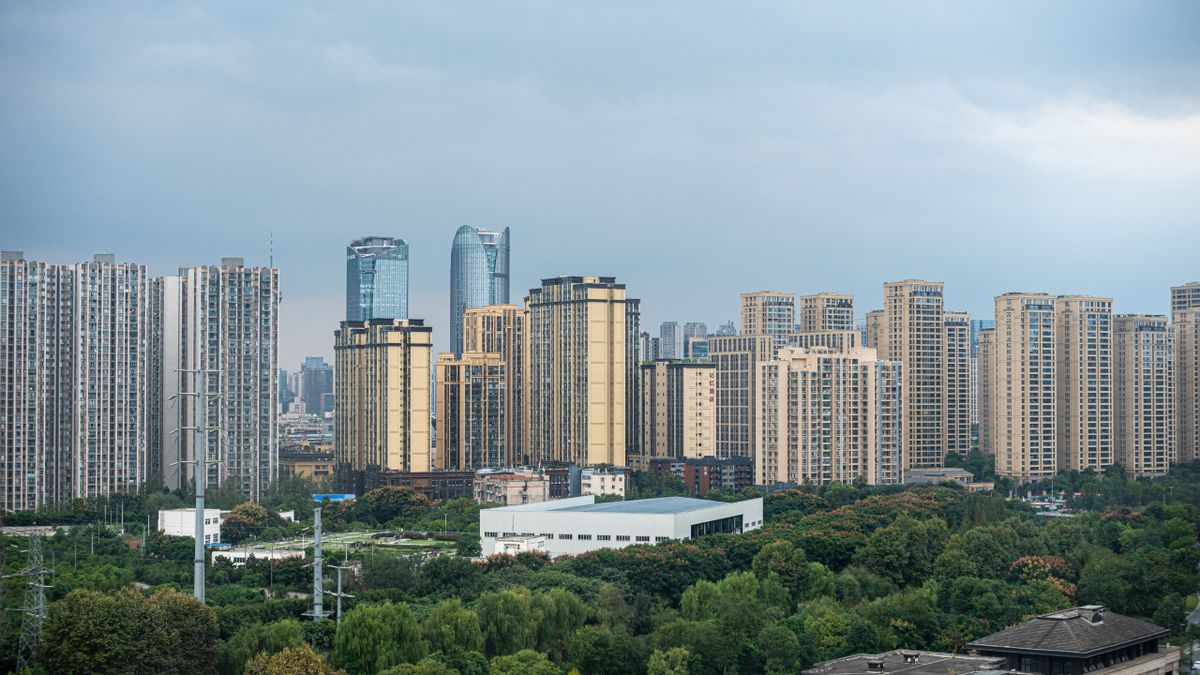
Chengdu skyline, the starting point of the Z322 train to Lhasa
For step-by-step guidance on registering, choosing between 12306 and Trip.com, and boarding with only your passport, see our complete guide to booking China's high-speed trains.
Is there a direct train from Chengdu to Lhasa?
Yes and no, depending on what "direct" means to you.
If you mean one train with no changing carriages, yes: Z322 runs Chengdu to Lhasa without a transfer, and its return working is Z321. On alternate days the same type of service runs as Z223/Z224 between Chongqing and Lhasa instead, so confirm your departure city before you book.
If you mean a new high-speed line that tunnels straight through the mountains, no, not yet. That project is the Sichuan-Tibet Railway. Two end sections are open: Chengdu to Ya'an (running since 2018) and Nyingchi to Lhasa (running since 2021). The hardest middle section, Ya'an to Nyingchi, crosses some of the most seismically active, high-relief terrain on the planet and is still under construction, with completion not expected before the early 2030s. Until that gap closes, every Chengdu-Lhasa train, including Z322, takes the long way around through Gansu and Qinghai on existing track.
How to book: 12306 vs a travel agency
Book Chengdu-Lhasa Train Tickets
Search Z322 seats and sleepers in English
Some links are affiliate links; we may earn a commission at no extra cost to you.
Trip.com shows seat maps and prices in English and handles the passport-number field that trips up first-time bookers on the Chinese-only interface. The free, official alternative is 12306 (China Railway's own site and app), which sells the same tickets with no service fee if you can read enough Chinese, or work through its limited English mode, to complete the passenger form yourself.
Either way, remember two separate things have to line up: the train ticket and the Tibet Travel Permit (covered below). Booking the ticket alone does not get you onto the train if the permit paperwork is not sorted.
Z322 schedule and route: Chengdu to Lhasa station by station
The train covers roughly 3,070 km of track for a straight-line distance of about 1,250 km, because it detours north before turning back south into Tibet.
| Station | Province | Approx. time | Altitude |
|---|---|---|---|
| Chengdu West (departure) | Sichuan | 21:11, Day 1 | 500 m |
| Guangyuan | Sichuan | late night, Day 1 | 500 m |
| Lanzhou | Gansu | morning, Day 2 | 1,500 m |
| Xining | Qinghai | midday, Day 2 | 2,275 m |
| Delingha | Qinghai | afternoon, Day 2 | 2,980 m |
| Golmud | Qinghai | evening, Day 2 (25-min stop) | 2,829 m |
| Nagqu | Tibet | early morning, Day 3 | 4,500 m |
| Lhasa (arrival) | Tibet | 07:41, Day 3 | 3,650 m |
Times shift by a few minutes between timetable updates, so confirm the exact departure and arrival times when you book. The Golmud stop matters for a practical reason: crew swap the locomotive and check the train's pressurization and oxygen systems there before the climb onto the plateau.
What a ticket costs in 2026
Three classes run on Z322:
- Hard seat: around ¥300. Workable for a short daytime leg, not recommended for the full 34-hour run.
- Hard sleeper: roughly ¥630-660 for a mid-tier bunk in a six-berth open compartment.
- Soft sleeper: roughly ¥1,000-1,035 for a four-berth closed compartment with a door.
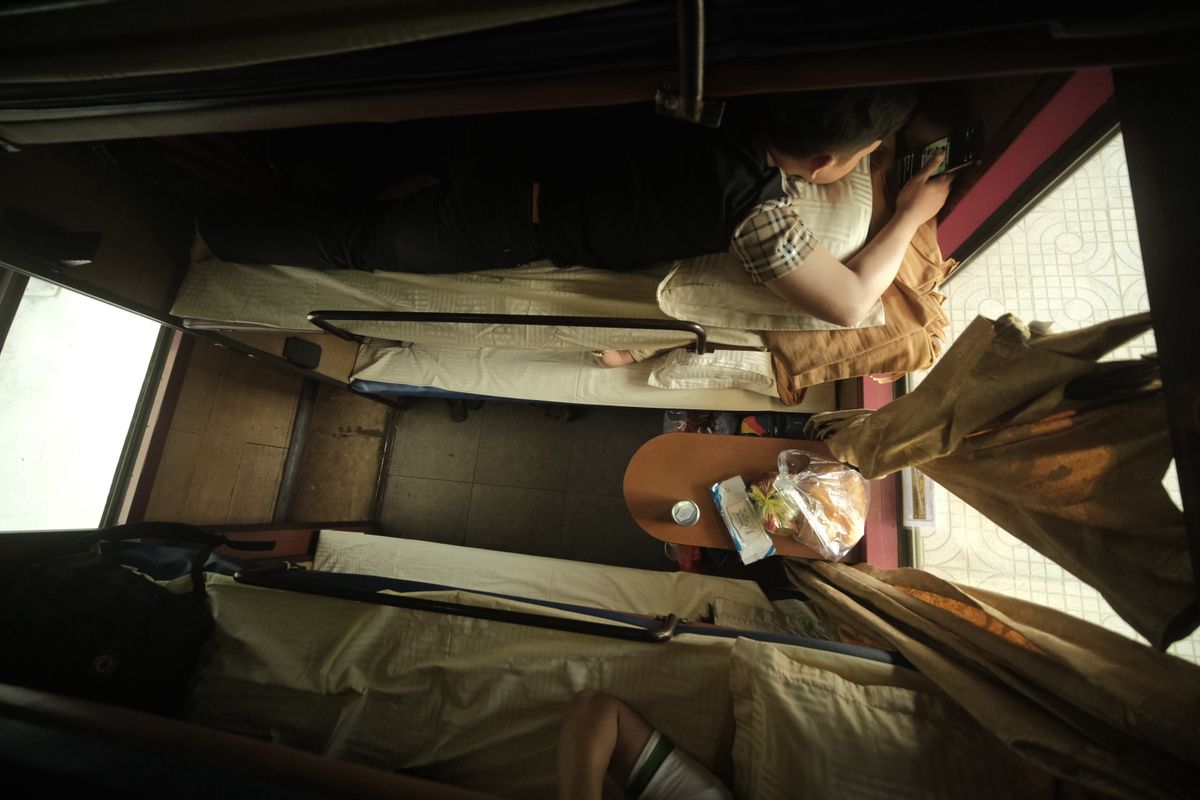
Sleeper cabin bunks on a Chinese overnight train
Prices vary by berth position (top bunks are cheaper than bottom) and by how far ahead you book. Tickets release 15 days before departure through 12306's normal window, though agencies booking on your behalf may work to a different schedule tied to permit processing.
Altitude and oxygen on board
This is the part first-timers underestimate. After Golmud (2,829 m), the line climbs onto the Tibetan Plateau and stays above 4,000 m for hours, cresting at Tanggula Pass, 5,072 m, the highest point on any railway in the world. Air pressure up there means available oxygen drops to roughly 60% of sea-level levels, sometimes less.
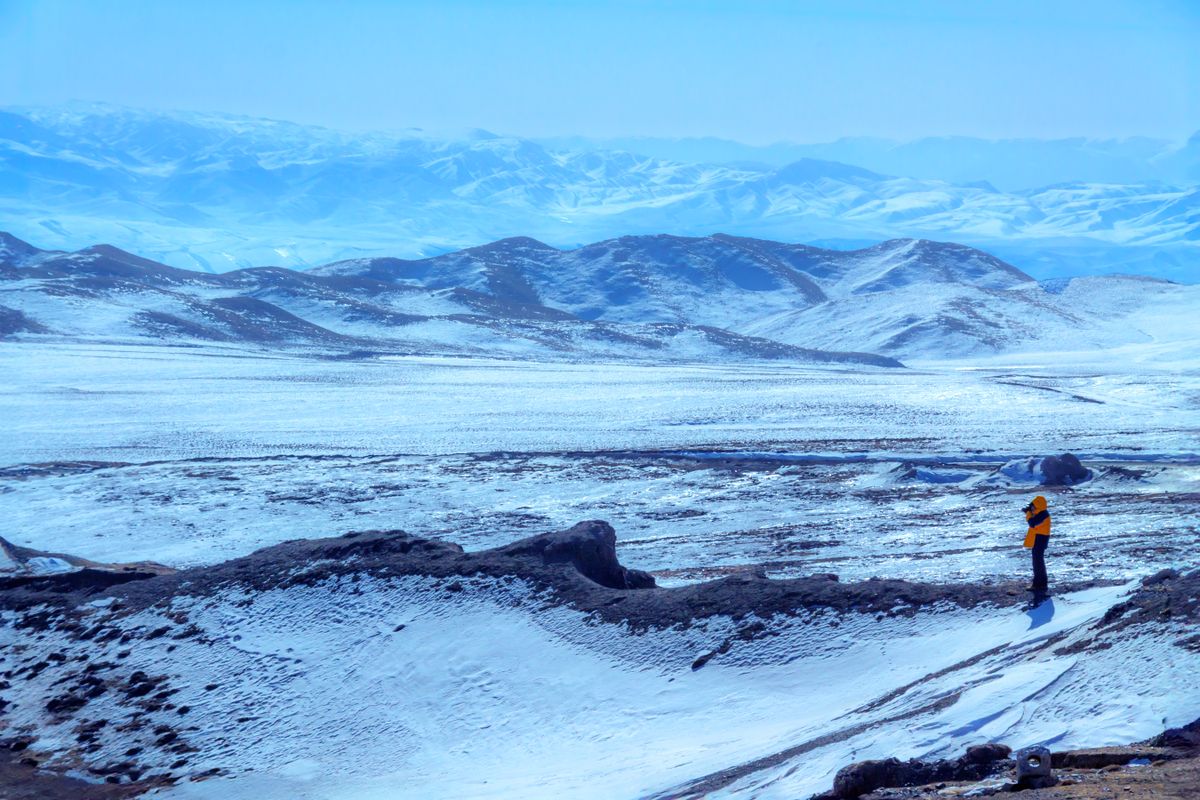
High-altitude plateau landscape in Qinghai, part of the route toward Lhasa
The train answers with a dispersion oxygen system that starts working at Golmud: it blends supplemental oxygen into the carriage air conditioning so the whole cabin runs at a safer oxygen concentration, not just your seat. Each berth also has its own oxygen port with a nasal tube for anyone who wants a direct supply, and the crew includes a doctor or trained nurse who carries emergency oxygen equipment for passengers in real distress.
Practical steps that help: drink more water than usual, skip alcohol on travel day, avoid a heavy meal right before Golmud, and walk the corridor rather than staying flat once symptoms like headache or breathlessness start. Mild symptoms are common and usually pass; report anything severe (confusion, chest pain, can't catch your breath) to train staff immediately.
Tibet Travel Permit: the part that trips people up
Foreign passport holders cannot board a Lhasa-bound train, or fly into Lhasa, without a Tibet Travel Permit (TTP). You cannot apply for one yourself online. A licensed Tibet travel agency applies on your behalf, and the permit comes bundled with a fixed itinerary, guide, and pre-booked hotels; independent, permit-only travel inside Tibet is not an option for foreign nationals.
Practical timeline:
- Book your agency tour 20-25 days before travel.
- Permit processing takes about 10 working days once your passport and China visa scans are submitted.
- For the train, you only need a photocopy of the permit to board at the station; your agency emails it once issued.
- The original permit is handed to you by your guide on arrival in Lhasa.
Build this into your planning before you lock in a Z322 ticket date. A ticket without a matching permit is a ticket you cannot use.
Train or flight from Chengdu to Lhasa?
Chengdu Shuangliu and Tianfu airports run frequent direct flights to Lhasa Gonggar on Air China, Sichuan Airlines, Tibet Airlines and China Eastern, taking about 2 hours 20 minutes, with one-way fares starting from roughly $140 in shoulder season.
The trade-off is altitude adjustment. A flight drops you from Chengdu's 500 m straight to Lhasa's 3,650 m in under three hours, exactly the kind of rapid ascent that raises acute mountain sickness risk. The train's 34-hour climb through Xining and Golmud gives your body a longer runway to adjust, plus the onboard oxygen system for the steepest final stretch. If you already have altitude experience or limited vacation days, fly. If this is your first trip above 3,000 m, the train's slower ascent is the safer default, and it is also markedly cheaper in hard sleeper class. Either way, you still need the Tibet Travel Permit.
For the connecting legs into Chengdu, the Xi'an to Chengdu train crosses the Qinling Mountains in 3-4 hours on high-speed rail, and the Chengdu to Chongqing train covers that route in about 1-1.5 hours if you are arriving from the east. If Xining works better as your starting point instead of Chengdu, see our Xining to Lhasa train guide for the shorter approach up the Qinghai-Tibet Railway. For ticket-buying mechanics on 12306 itself, our 12306 foreigner guide walks through account setup and the passport field.
Before you book: a quick checklist
- Decide hard sleeper vs soft sleeper based on budget and how much privacy you want for 34 hours.
- Book your Tibet Travel Permit through a licensed agency 20-25 days out, before locking a travel date.
- Buy the Z322 (or Z223/Z224 from Chongqing) ticket once your permit timeline is confirmed.
- Pack layers, a refillable water bottle, and any altitude medication your doctor recommends.
- Confirm whether your agency needs the permit copy sent to them or straight to the station.
FAQ
Is there a direct train from Chengdu to Lhasa? Yes, in the sense of one train with no transfer: Z322. No, in the sense of a new high-speed line straight through the mountains: that route (the Sichuan-Tibet Railway) is still under construction and not expected to open before the early 2030s.
How long does the Chengdu to Lhasa train take? About 34 hours and 30 minutes, covering roughly 3,070 km via Lanzhou, Xining and Golmud.
Is there oxygen on the Chengdu to Lhasa train? Yes. A dispersion system feeds supplemental oxygen into the air conditioning from Golmud onward, and each berth has an individual oxygen port. A doctor or nurse rides the train for emergencies.
Do I need a permit to take this train? Yes. All foreign travelers need a Tibet Travel Permit, arranged through a licensed agency, before boarding any Lhasa-bound train or flight.
Should I take the train or fly from Chengdu to Lhasa? The flight is faster (about 2 hours 20 minutes) but takes you to 3,650 m almost immediately, raising altitude sickness risk. The train's 34-hour ascent gives your body more time to adjust and costs less in sleeper class.