Beijing to Chengdu Train: Direct High-Speed Route, Time & Price (2026)
Quick answer: There's a genuine direct train from Beijing to Chengdu: one train number, no transfer, no changing stations mid-route. The fastest G-trains cover the 1,874 km in about 7 hours 30 minutes, departing Beijing West and arriving Chengdu East. Second class costs roughly $110-145, first class $175-230, business class $345-470. A slower overnight sleeper option also exists on older K/T trains (27.5-33.5 hours, hard sleeper around $65), and flights take about 3 hours. For most people the daytime high-speed train is the better trade of time, cost, and comfort.
For step-by-step guidance on registering, choosing between 12306 and Trip.com, and boarding with only your passport, see our complete guide to booking China's high-speed trains.
Is the Beijing to Chengdu train direct, or do you have to transfer?
You don't have to get off and board a different train. The high-speed service is a single through train, same seat, same ticket, from departure to arrival. What confuses people is the routing: the train doesn't run on one dedicated Beijing-Chengdu line, because no such line exists. Instead it stitches together three separate high-speed corridors.
A typical run leaves Beijing West, uses the Beijing-Zhengzhou section of the Beijing-Guangzhou HSR corridor down to Zhengzhou East, switches onto the Zhengzhou-Xi'an high-speed line to reach Xi'an North, then continues on the Xi'an-Chengdu line, the same mountain-crossing route covered in our Xi'an to Chengdu train guide, through the Qinling range and down into the Sichuan Basin to Chengdu East. The train never stops running or changes numbers along the way; you just feel the track quality shift as it crosses from the flat North China Plain into mountain tunnels.
Total stops on the fastest services: Shijiazhuang, Zhengzhou East, Xi'an North, then Chengdu East. Around 7 high-speed departures run daily between roughly 7:00 AM and 8:45 PM, so there's a workable window whether you want an early arrival or a mid-afternoon one.
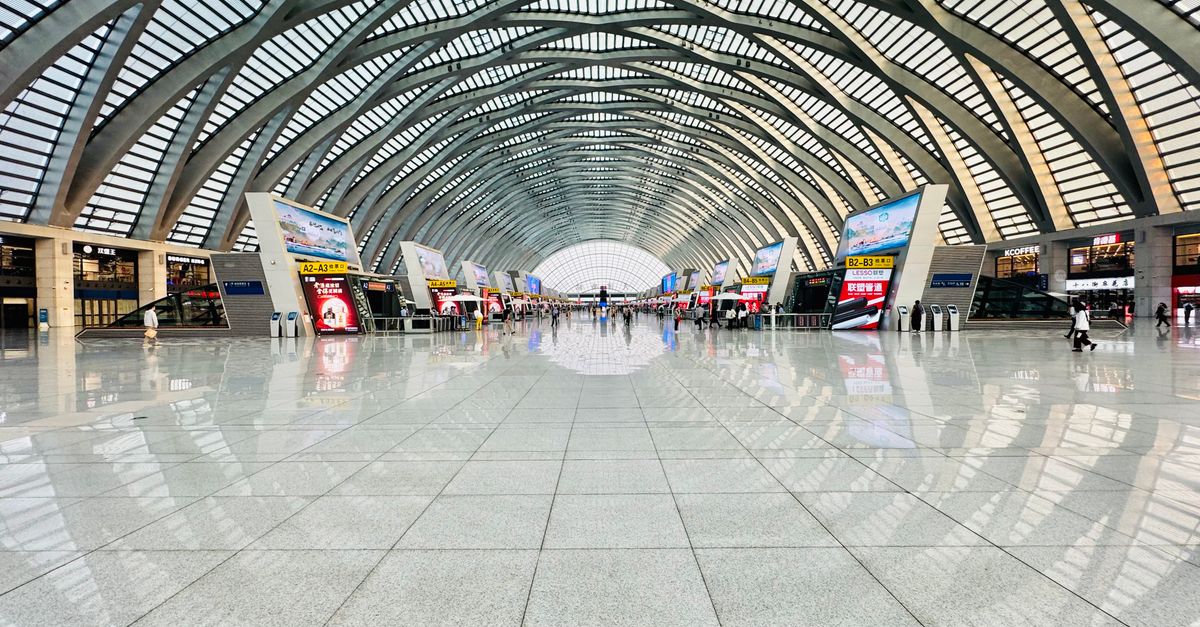
Modern Chinese high-speed rail station interior with departure boards
How long does it take and what does it cost
Duration on the high-speed trains ranges from about 7 hours 30 minutes on the fastest departures to 9.5 hours on ones that make more stops or run at lower top speed on certain sections. Distance is 1,874 km, among the longer domestic HSR routes in China, roughly on par with a Boston-to-Chicago drive but done at 300-350 km/h.
Ticket prices by class (USD, approximate, converted from CNY at time of research):
| Class | Price (USD) | Price (CNY) |
|---|---|---|
| Second class | $110-145 | ¥780-1,030 |
| First class | $175-230 | ¥1,250-1,650 |
| Business class | $345-470 | ¥2,450-3,350 |
Book through China's official rail site, 12306.cn, and you pay exactly these fares with no markup, though the interface is only partly translated and it wants a passport number tied to your account for real-name ticketing.
Book Beijing to Chengdu train tickets
English-language booking, English support, small service fee
Some links are affiliate links; we may earn a commission at no extra cost to you.
If 12306 feels like too much friction on your first trip, a booking platform in English is worth the small fee, especially for a 7-9 hour journey where you want your seat confirmed before you show up at the station.
Overnight sleeper vs daytime high-speed: which one to book
The overnight option runs on older K and T-class trains rather than the G-series bullet trains, and it's a different trip altogether: 27.5 to 33.5 hours, arriving at Chengdu's older main railway station rather than Chengdu East. Hard sleeper tickets run about $65 (¥456), soft sleeper about $100 (¥703). That's cheaper than even second class on the high-speed train, but you're trading roughly 20 extra hours for the savings.
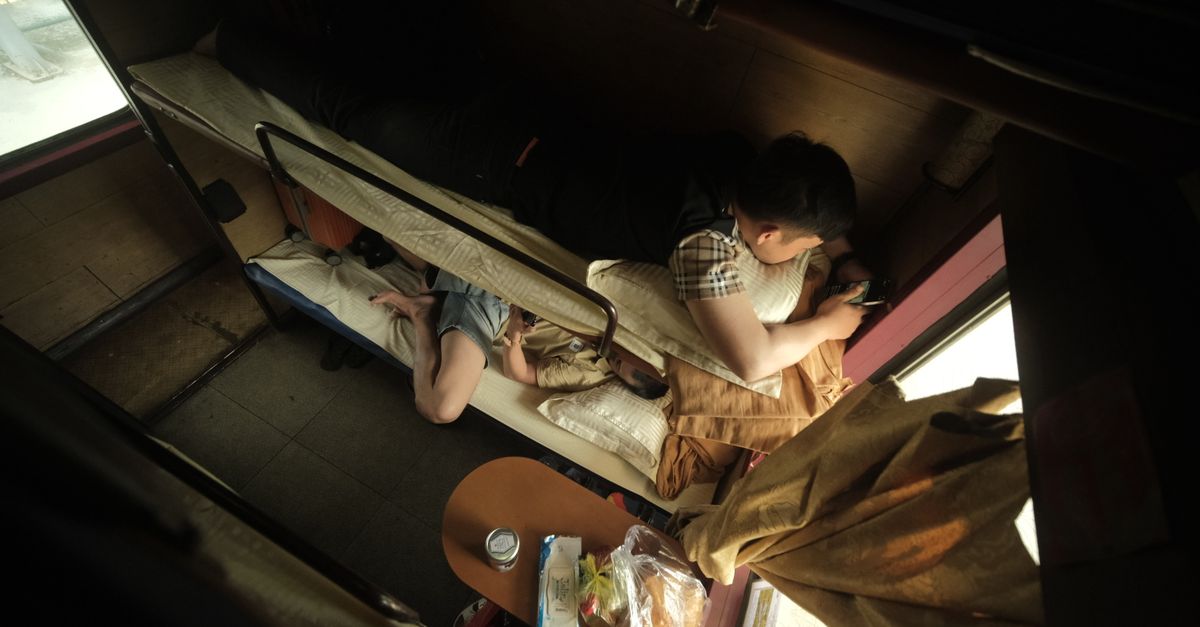
Overnight sleeper train compartment with bunk beds in China
Sleeper trains make sense in a couple of specific cases: you're on a tight budget and time matters less than money, you want to save a hotel night by sleeping on the train, or you specifically want the slower-travel experience of watching provinces roll by from a bunk. For nearly everyone else planning a single long-distance hop, the daytime high-speed train is the better use of a travel day. You arrive rested, you can work or read comfortably, and the price difference against second-class HSR is often smaller than people expect once you count the hotel night you'd otherwise need.
Is flying from Beijing to Chengdu better than the train
A direct flight takes about 3 hours, with dozens of daily departures between Beijing (PEK or PKX) and Chengdu (mostly Tianfu, TFU). On pure travel time, flying wins by a wide margin over any train option.
Where the train earns its keep: no airport buffer time, no baggage claim, no risk of weather delays stacking up at either end, and stations sit inside the city rather than an hour out. Add the 2-3 hours of airport overhead most fliers budget and total door-to-door time gets a lot closer between a 7.5-hour train and a "3-hour" flight. Price is comparable too when flights are booked more than a few weeks out; last-minute flights often cost more than even business-class rail. If your dates are flexible and you book early, compare both. If you're deciding within a week of travel, the train is usually the safer bet on price.
Why Chengdu: the giant panda base connection
A large share of travelers on this route are headed to the Chengdu Research Base of Giant Panda Breeding, one of the most visited animal reserves in China and the main reason many first-time visitors add Chengdu to a Beijing-anchored itinerary at all. The base sits in Chengdu's northern suburbs, about 40-50 minutes from Chengdu East by taxi or a metro-plus-bus combination, and mornings are best since pandas are more active and less likely to be napping in the shade by midday.

Giant panda eating bamboo at a reserve in Chengdu
Because the train arrives at Chengdu East, which connects directly to Chengdu's metro network, getting from the station to a hotel and then out to the panda base the next morning is straightforward without needing a car.
Common mistakes people make booking this route
- Assuming Beijing South is the departure station. Nearly all Beijing-Chengdu high-speed trains leave from Beijing West, not Beijing South (which mainly handles Shanghai and Tianjin routes). Double-check the station on your ticket before you plan your route to the platform.
- Booking a K/T sleeper train without checking the arrival station. These land at Chengdu railway station, a different location from Chengdu East where the HSR trains arrive. If your hotel booking assumed Chengdu East, budget extra transfer time.
- Not accounting for the real-name ticketing system. Every ticket is tied to a passport, checked at station security before you even reach the platform. Bring the same passport used at booking, and arrive with enough buffer for the extra ID check.
- Underestimating the distance: 1,874 km is a long way. People used to shorter European or Japanese high-speed hops sometimes expect a 3-4 hour ride. Budget a full workday for the crossing either direction.
- Skipping seat selection on longer rides. On a 7.5+ hour trip, an aisle seat near the restroom or a window seat for the mountain scenery past Xi'an makes a real difference. Book early enough to have a choice.
Who this route makes sense for
The direct train suits travelers who want one ticket, one seat, and a single travel day between two major cities, without the logistics of coordinating a stopover. It's also a solid option if you'd rather not fly but still want to reach Chengdu inside a working day.
If you'd rather turn the trip into two stops instead of one, breaking the journey at Xi'an is worth considering: ride the Beijing to Xi'an train first (about 4.5-6 hours), spend a day or two at the Terracotta Army and the city wall, then continue on the shorter Xi'an to Chengdu train (about 3 hours 10 minutes for the fastest option, 658 km). Total travel time ends up similar to the direct train once you add a stopover night, but you get a second city out of the same route instead of one long sit.
FAQ
Is there a direct train from Beijing to Chengdu? Yes. High-speed G-trains run as a single through service with no transfer required, taking about 7.5 to 9.5 hours depending on the specific train and number of stops.
Is it better to fly or take the train from Beijing to Chengdu? Flying is faster in the air (about 3 hours) but total door-to-door time is closer once you add airport transfers and check-in buffers. The train wins on price for last-minute bookings and skips the airport altogether; flying wins if your dates are flexible enough to catch a cheap fare booked weeks ahead.
How much is a Beijing to Chengdu train ticket? Second class runs about $110-145, first class $175-230, and business class $345-470 on the high-speed trains. The overnight sleeper option is cheaper, around $65 for hard sleeper, but takes 27.5-33.5 hours instead of under 10.
Does the train stop in Xi'an on the way to Chengdu? Yes, Xi'an North is one of the main stops on the through route. You stay on the same train, but if you want to get off and see Xi'an, you'd need to book it as a separate stopover rather than staying on board.
Which station do I need in Beijing and Chengdu? Beijing West for departure and Chengdu East for arrival, for the high-speed G-trains. Overnight K/T sleeper trains use Chengdu's main railway station instead, a different location, so check your ticket carefully.