Chinese Cold Noodles: 6 Regional Dishes to Order in 2026
Chinese cold noodles are not one recipe. In Xi'an, liangpi means slippery starch sheets with vinegar and chili oil. In Shanghai, cooks cool wheat noodles and coat them with peanut or sesame sauce. The useful ordering skill is knowing the regional name and naming any allergy before the sauce goes into the bowl.
Which Chinese cold noodles should you try?
| Dish | Region to look for | Texture and usual flavor | Search term |
|---|---|---|---|
| Liangpi | Shaanxi and Xi'an | Wide starch sheets, vinegar, garlic, chili oil, cucumber and wheat gluten | liangpi |
| Sichuan liangmian | Sichuan and Chongqing | Springy wheat noodles with chili oil, garlic, soy and sometimes sesame | Sichuan liangmian |
| Majiang liangmian | Beijing and northern cities | Wheat noodles with thick sesame paste, cucumber and vinegar | Majiang liangmian |
| Shanghai lengmian | Shanghai | Fan-cooled wheat noodles with peanut or sesame sauce and optional toppings | Shanghai lengmian |
| Yanji lengmian | Jilin and northeast China | Chilled broth, chewy noodles, fruit or cucumber, egg and sliced meat | Yanji lengmian |
| Jidou liangfen | Sichuan and Yunnan areas | Cool jelly-like strips or blocks with a sharp, spicy dressing | liangfen |
Liangfen is technically starch jelly rather than a wheat noodle, but travelers see it beside cold noodle dishes and order it for the same hot-weather meal.
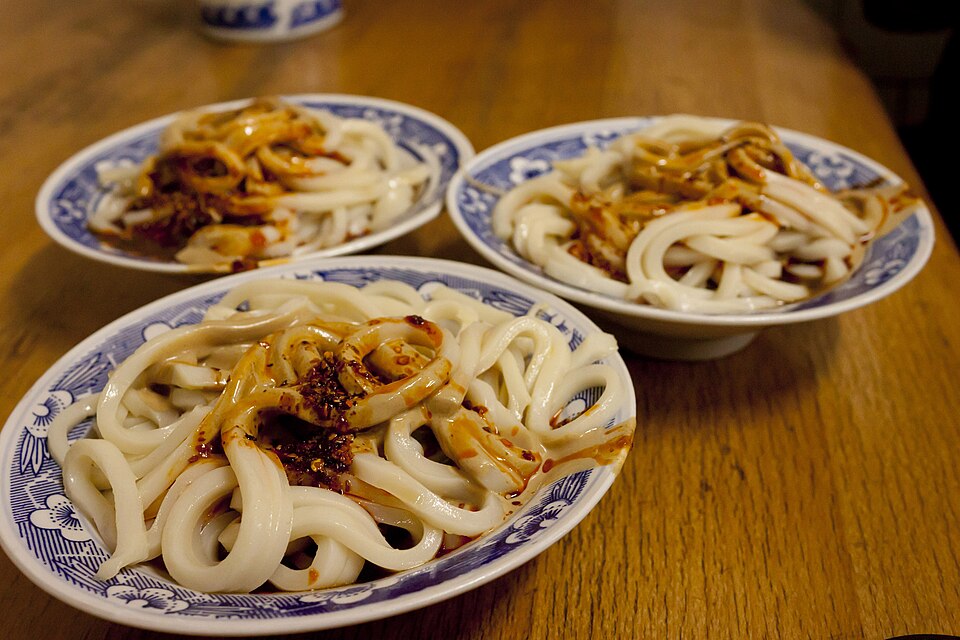
Liangpi served with chili oil
What makes liangpi different from liangmian?
Liangpi means “cold skin.” The sheets are made by settling starch from wheat or rice and steaming it into thin layers. The finished strips look like broad noodles but have a smooth, bouncy bite. Shaanxi versions often include spongy wheat gluten, cucumber, bean sprouts, vinegar and chili oil.
Liangmian simply means cold noodles. Most versions use cooked wheat noodles that are cooled, tossed with oil so they do not stick, and dressed to order. In Shanghai, the local government describes a fan-cooling method that avoids rinsing noodles in tap water. Peanut or sesame sauce is a common local choice.
How do you order cold noodles in Mandarin?
Show the dish name on your phone and use one short request at a time:
- One bowl of liangpi: Yi wan liangpi.
- Not spicy: Bu yao la.
- A little spicy: Wei la.
- No peanuts: Bu yao huasheng.
- No sesame: Bu yao zhima.
- No coriander: Bu yao xiangcai.
- Pack it to go: Daba.
“Not spicy” removes chili but does not remove sesame, peanuts, soy or vinegar. Point to the ingredient or use a translated allergy card if the reaction could be serious.
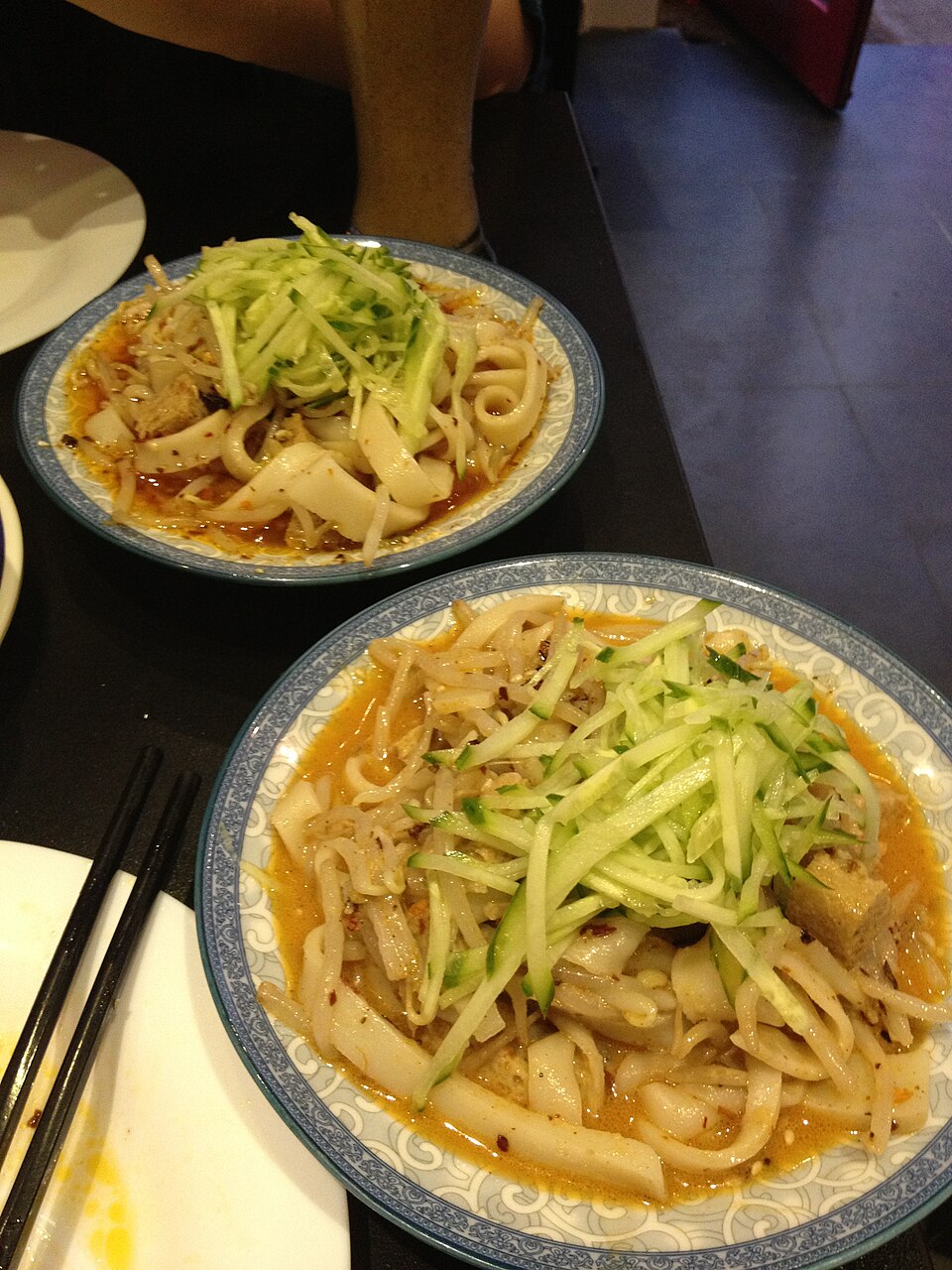
A bowl of cold noodles being topped with peanuts and cucumber
Allergy and diet checks
Cold noodle sauces hide several common allergens. Sesame paste and peanut paste can look alike. Soy sauce usually contains wheat, and liangpi made from wheat may include pieces of wheat gluten even though the starch sheets themselves look translucent.
Ask before ordering:
- Does this contain peanuts? Zhege you huasheng ma?
- Does this contain sesame? Zhege you zhima ma?
- I am allergic, not a preference: Wo guomin, bu shi bu xihuan.
- Is there meat broth? You routang ma?
Vegetarian travelers should also ask about meat broth, lard and minced meat. A dish can look plant-based while its sauce or broth contains animal ingredients. Read our vegetarian and vegan food guide for China for a longer phrase list.
Where and when should you eat them?
Cold noodles are easiest to find from late spring through early autumn. Search map and review apps with the regional names in the table rather than an English translation. Xi'an snack shops often sell liangpi year-round. Shanghai noodle shops may treat cold noodles as a summer item.
Busy shops with fast turnover are a better choice than a tray that has sat uncovered. The noodles should smell fresh, cucumber should look crisp and sauce should be added close to serving. If you have a sensitive stomach, choose a sit-down shop and skip raw garnishes that have been standing in heat.
Common ordering mistakes
- Asking only for “cold noodles” in English and receiving a different regional dish.
- Assuming liangpi is always gluten-free.
- Saying “not spicy” when the real concern is peanuts or sesame.
- Confusing Yanji cold noodle soup with a dry sesame noodle dish.
- Ordering several bowls before checking the sauce's sweetness, acidity and heat.
A first-timer's tasting plan
Start with one local style rather than hunting all six in one city. In Xi'an, choose liangpi beside roujiamo. In Beijing, try sesame-paste noodles for a mild first bowl. In Shanghai, order cold noodles with sauce on the side if you want to control richness. In Chengdu or Chongqing, expect more chili and ask for wei la if you prefer low heat.
Pair this guide with our guide to China's eight regional cuisines and Chinese dining etiquette. The names on a menu tell you more than a generic photo.
Frequently asked questions
Are Chinese cold noodles served ice cold?
Not always. Many dry styles are cooled to room temperature rather than chilled with ice. Yanji-style noodles are commonly served in a cold broth.
Is liangpi gluten-free?
Do not assume it is. Some liangpi uses rice starch, but wheat-starch versions and the common wheat-gluten topping are not suitable for someone avoiding gluten.
Are cold noodles spicy?
Liangpi and Sichuan liangmian often contain chili oil. Beijing sesame noodles and Shanghai cold noodles can be mild, but sauces vary by shop.
How much do cold noodles cost in China?
A simple snack-shop bowl often costs about ¥8–25, while central-city restaurants or meat-topped versions can cost more. Check the posted menu before ordering.
Can I order cold noodles without peanuts?
Often yes, if the sauce is mixed to order. Ask before preparation because some Shanghai sauces combine peanut and sesame paste in advance.
Sources
- Shanghai Cold Noodles · Shanghai Municipal Government