Wuyuan Culture and Local Traditions: Huiju, Nuo Dance and a Living Heritage Landscape
Wuyuan’s cultural identity is not confined to a museum label. It is carried through performance traditions that remain closely associated with the county, especially Huiju and Wuyuan Nuo dance. For travelers, that is a useful starting point: look for context, names and local attribution rather than treating every traditional-looking performance as interchangeable.
Start with Huiju
Huiju is a traditional opera associated with Wuyuan County in Jiangxi. China’s national intangible cultural heritage record lists Wuyuan County as its declaring area or unit for Huiju. That local connection matters when you encounter references to Huiju in Wuyuan: it is part of the county’s documented cultural heritage, not simply a generic opera category.
Opera can be difficult to follow without Chinese, so set a modest goal. Watch the relationship between music, gesture, costume and pacing rather than trying to translate every line in real time. A short encounter can still make the form more legible than reading a label alone.
Wuyuan Nuo dance, also called “ghost dance”
Wuyuan Nuo dance is another documented intangible cultural heritage tradition from the county. It is locally also called “ghost dance.” The national heritage record identifies the Wuyuan Huiju Training Institute as its safeguarding unit.
The English nickname can invite a shallow reading. Treat it as a local name attached to a specific tradition, not as a promise of a horror-themed attraction. If you see the term in a program or explanation, ask what part of the performance is being presented and whether there is interpretation available in a language you can follow.
A wider Huizhou cultural setting
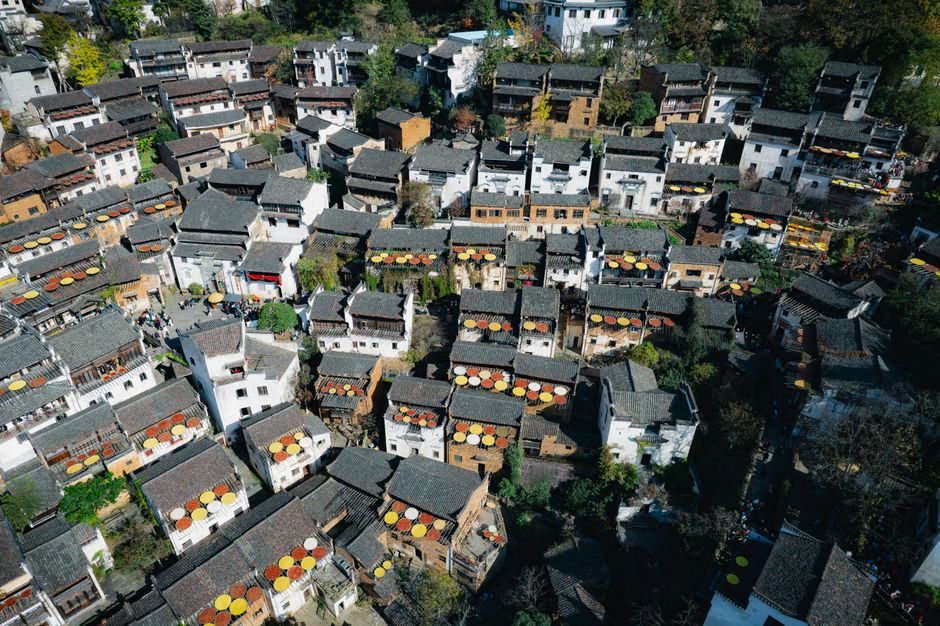
Aerial view of Huangling Village in China showcasing traditional rooftops and vibrant autumn colors.
Wuyuan is included in the Huizhou Cultural Ecological Protection Area, which is supported by China’s Ministry of Culture and Tourism. This gives a broader frame for the county’s traditions: the cultural setting is recognized as an ecological whole, rather than as one isolated item on a stage.
For a respectful visit, use that frame to slow down. Prioritize locally named traditions, read any available interpretation, and avoid reducing cultural practice to a photo opportunity. The most rewarding question is often simple: what does this tradition mean in Wuyuan itself?
How to approach culture in Wuyuan
- Use the names Huiju and Wuyuan Nuo dance when asking about local traditions.
- Distinguish a documented heritage practice from a generic themed performance.
- Ask whether an explanation, translation or printed context is available.
- Give performances your attention; photography should never become the main event.
- Keep your expectations flexible. A cultural encounter may be brief, informal or unavailable on the day you visit.
Key takeaway
Wuyuan culture is best understood through its specific local practices. Huiju, Wuyuan Nuo dance and the county’s inclusion in the Huizhou Cultural Ecological Protection Area offer three reliable reference points. Use them to ask better questions and to engage with what is actually being presented.
FAQ
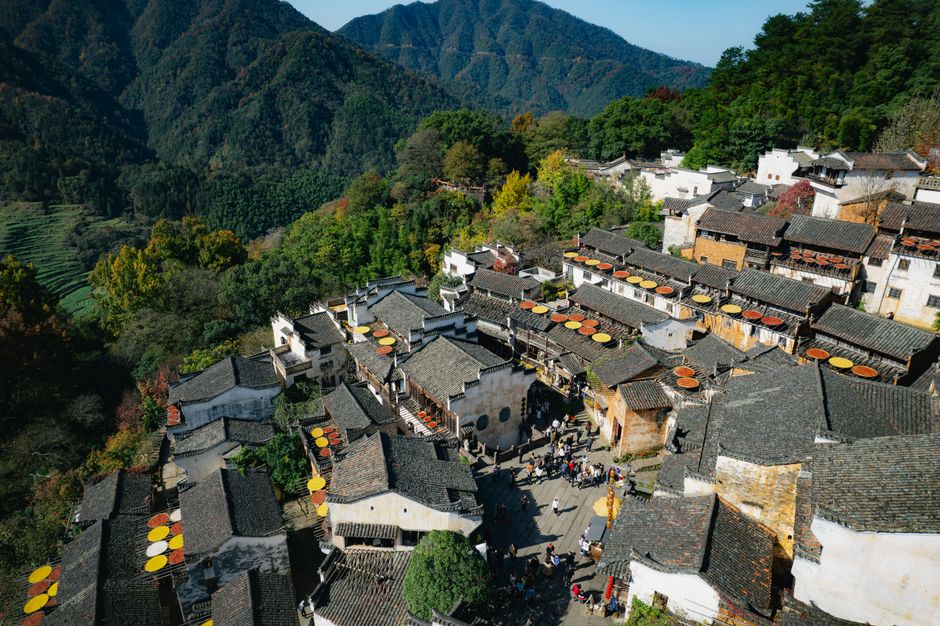
Aerial photograph showcasing the picturesque Wuyuan village nestled in China's autumn landscape.
Is Huiju connected to Wuyuan?
Yes. China’s national intangible cultural heritage record lists Wuyuan County as a declaring area or unit for Huiju.
What is Wuyuan Nuo dance?
It is an intangible cultural heritage tradition from Wuyuan County, locally also called “ghost dance.”
Who safeguards Wuyuan Nuo dance?
The heritage record lists the Wuyuan Huiju Training Institute as its safeguarding unit.
Is Wuyuan part of a cultural protection area?
Yes. The Ministry of Culture and Tourism includes Wuyuan in the Huizhou Cultural Ecological Protection Area.
Sources
- 徽剧 (Huiju) · China Intangible Cultural Heritage Network / China Intangible Cultural Heritage Digital Museum
- 傩舞(婺源傩舞) (Nuo Dance—Wuyuan Nuo Dance) · China Intangible Cultural Heritage Network / China Intangible Cultural Heritage Digital Museum
- 文化和旅游部关于对十三届全国人大一次会议第2056号建议的答复 · Ministry of Culture and Tourism of the People’s Republic of China