China in August 2026: Weather, Crowds & 7 Cooler Places
Quick answer: China in August 2026 is hot, humid and busy in the major eastern cities, but it can still be a good trip if you start early, keep weather buffers and choose at least one cooler region. Do not build a mountain or coastal itinerary that cannot absorb a rain closure.
August is part of China's domestic school summer holiday. Beijing, Shanghai, Xi'an, Chengdu and family attractions draw large crowds, while heat, thunderstorms and typhoons can change transport plans with little notice. The useful question is not “Is August bad?” It is “Which China trip still works when one outdoor day moves?”
This guide pairs with our best time to visit China overview and China summer travel guide.
What is China weather like in August?
Most classic first-trip routes feel hot. Many afternoons in Beijing, Shanghai, Xi'an, Chengdu and Guangzhou rise above 30°C, and official heat alerts may use 35°C as an important threshold. Humidity makes eastern and southern cities feel harder than the thermometer suggests. Mountain and plateau areas can be much cooler after sunset.
| Region | Typical August issue | Better daily plan | Pack first |
|---|---|---|---|
| Beijing and North China | Dry heat, sudden thunderstorms | Outdoor sights before 10:00, museums after lunch | Sun hat, water, light rain shell |
| Shanghai and lower Yangtze | Heat, humidity, heavy showers | One outdoor block plus one indoor backup | Quick-dry clothes, compact umbrella |
| South China coast | Heat, downpours, typhoon disruption | Refundable bookings and no tight flight-rail connection | Waterproof pouch, spare shirt |
| Sichuan and Chongqing | Hot, humid basins | Early starts and air-conditioned midday break | Electrolytes, breathable shoes |
| Yunnan, Guizhou and highlands | Cooler air, frequent rain, landslide risk on rural roads | City base with day trips chosen by forecast | Warm layer, grippy footwear |
| Qinghai and high plateaus | Strong sun, cool nights, altitude | Slow first day and short walks | Sunscreen, warm layer, prescribed medicine |
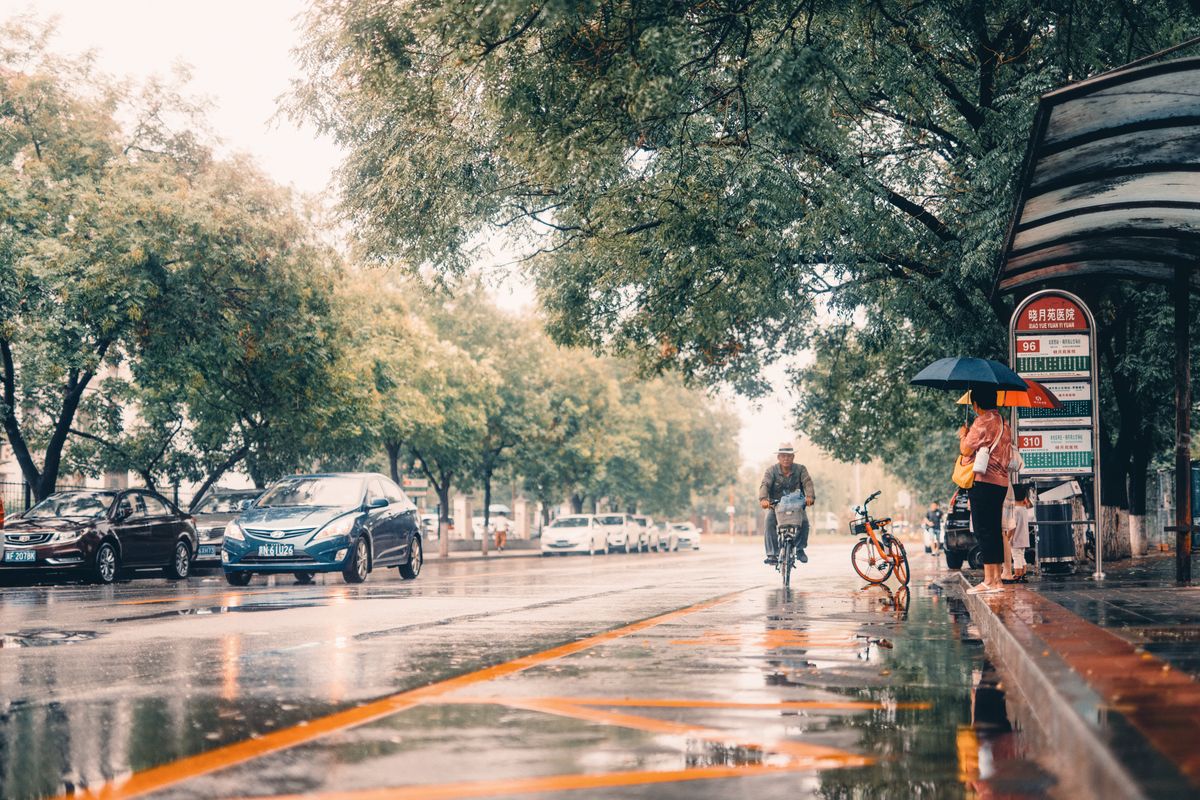
Rainy street in Beijing during summer travel
Rain is often intense rather than continuous. A dry morning can turn into a flooded underpass or a closed mountain trail by afternoon. In July 2026, a red rainstorm alert led Beijing's Fengtai district to suspend attractions, museums, campsites and cultural venues. Treat an official red alert as a reason to stop, not as sightseeing weather.
How crowded is China in August 2026?
August is crowded because families travel before school resumes, not because it contains a nationwide public holiday. Weekends, water parks, panda bases, major museums and famous mountain areas fill fastest. China's 2026 national summer tourism campaign runs through late August with more than 30,000 activities, so popular night markets, performances and family events may draw extra local demand.
Use these booking windows as a planning buffer, not a guarantee:
- Reserve intercity trains as soon as your travel date opens for sale.
- Check each major attraction's official account or booking channel one to two weeks before the visit.
- Choose weekday entries for the Forbidden City, panda bases and major theme parks.
- Keep one unreserved half-day in every three-day city stay.
- Avoid a last train or last flight after a remote mountain excursion.
Foreign visitors should not assume that a local voucher or mini-program promotion accepts an overseas phone number, passport or foreign card. Price the trip without the discount, then treat any usable offer as a bonus.
Seven cooler places for an August China trip
The following places lower the heat burden, but none removes weather risk.
1. Xining and Qinghai Lake
Xining works as an acclimatization base before higher ground. Spend the first day in the city, drink water and avoid a hard cycling plan at Qinghai Lake until you know how your body responds to altitude.
2. Harbin
Harbin is warmer than its winter image suggests, yet summer is milder than the Yangtze basin. The riverside, Central Street and indoor museums make a practical mixed day.
3. Changchun and Jilin
Northeast cities offer broad parks, cooler evenings and fewer international tour groups. Long-distance transport takes time, so give the region at least three nights.
4. Hohhot and nearby grasslands
Grassland nights can feel cool after a sunny day. Choose an operator that states the driving time, toilet standard and exact camp location instead of selling only a generic “Mongolian experience.”
5. Kunming
Kunming's elevation softens the heat. Rain is common, so use the city as a base and decide on Stone Forest or mountain day trips after checking the local forecast.
6. Guiyang
Guiyang is a useful food and transport base for Guizhou. Rural waterfalls and valleys may close after heavy rain, which is why a city day belongs in the plan.
7. Zhangye and the Hexi Corridor
Northwest Gansu is drier than eastern China, with strong sun and large day-night temperature swings. The distances are long, so a private transfer or carefully timed rail plan matters more than adding another sight.
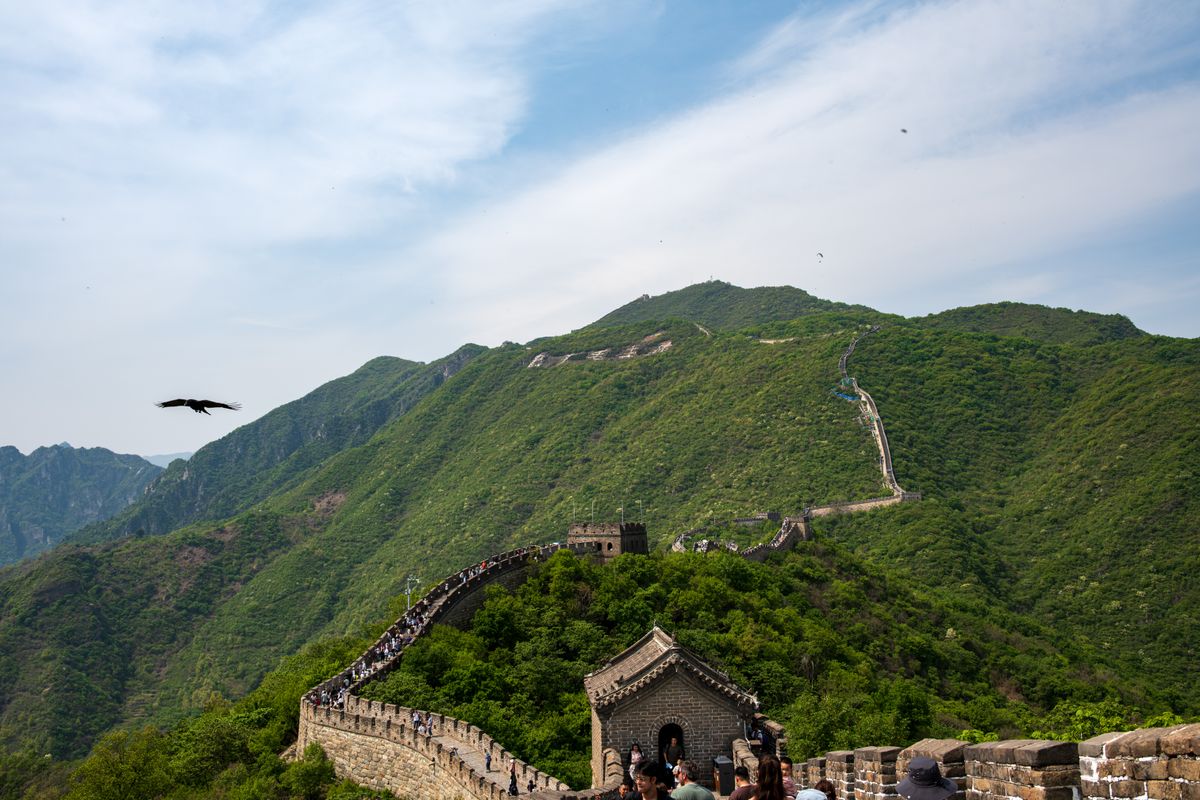
Summer crowds on the green Great Wall near Beijing
Build an August itinerary that survives bad weather
A resilient 10-day first trip might use Beijing for four nights, Xi'an for two and a cooler city for three, with the final night near the departure airport. Put the most weather-sensitive outing early in each stay. If it is cancelled, move it into the buffer slot rather than sacrificing an intercity train.
For each city, save three items offline: the hotel address in Chinese, the rail or flight booking, and one indoor backup. A translation app helps when a closure notice appears only in Chinese; see our best translation apps for China.
Common mistakes
- Scheduling mountains on a departure day: A rain closure or slow cable car queue can make you miss the last train.
- Reading a monthly climate average as a forecast: Check the seven-day forecast again, then the official alert on the morning of travel.
- Packing only sandals: Wet stone steps at old towns and mountain sites need shoes with grip.
- Ignoring heat after sunset: Night markets can stay hot and crowded; keep drinking water.
- Buying every ticket without cancellation terms: August weather rewards refundable hotels and changeable transport.
Who this is for
This plan suits travelers tied to school holidays, visitors who can start before 08:00 and people willing to mix famous cities with a cooler regional base. It also works for families that can pause indoors at midday.
It is a poor fit for travelers who want long exposed hikes every day, dislike humidity or cannot alter a fixed chain of one-night stops. Consider late September or October instead, while checking the National Day holiday dates first.
Your 48-hour pre-departure check
- Check official weather alerts for every province on the route.
- Reconfirm attraction openings and timed-entry bookings.
- Screenshot hotel addresses, tickets and travel insurance details.
- Move essential medicine and one change of clothes into cabin baggage.
- Tell the hotel if you expect to arrive after a delayed train or flight.
Frequently asked questions
Is August a good time to visit China?
Yes, if August is your available window and you plan around heat and rain. It is less suitable for a rigid outdoor-heavy route. Cooler bases such as Xining, Harbin, Kunming and Guiyang make the month easier.
Is China crowded in August?
Major attractions and family destinations are crowded during the school summer holiday, especially on weekends. August has no nationwide week-long holiday, so weekday entries and early time slots still help.
Does it rain all day in China in August?
Not usually across the whole country. Many places get short, heavy storms, while coastal areas can face longer typhoon-related rain. The local alert matters more than a national monthly average.
Where should I avoid during a red rainstorm alert?
Avoid mountains, riverbanks, underpasses, low-lying roads, outdoor camps and any attraction ordered to close. Stay in a solid building and follow local emergency and transport notices.
Sources
- China launches 2026 summer tourism campaign · State Council of the PRC
- Beijing Fengtai rainstorm safety notice, July 2026 · Fengtai District Government
- August flood and typhoon risk briefing, 2025 reference · State Council of the PRC