China Drone Rules for Tourists 2026: Registration, 249g Limits and No-Fly Zones
Quick answer: Tourists can fly a compliant drone in China only after meeting real-name registration, equipment-identification and airspace rules. Do not assume a 249g label allows unrestricted flight. Check the CAAC UOM platform and local restrictions before every launch, and do not fly if registration or approval is unresolved.
China's national drone framework has applied since January 1, 2024, and two new mandatory standards took effect on May 1, 2026. The 2026 standards cover real-name registration and activation plus operational identification. For a visitor, the practical question is not only whether the drone can enter China, but whether the aircraft, operator and exact launch point are legal on that day.
What changed in China's drone rules in 2026?
The CAAC announced two mandatory national standards that took effect on May 1, 2026: one for real-name registration and activation of civil unmanned aircraft, and another for identification during operations. These standards support existing rules that require aircraft to transmit or report identification information.
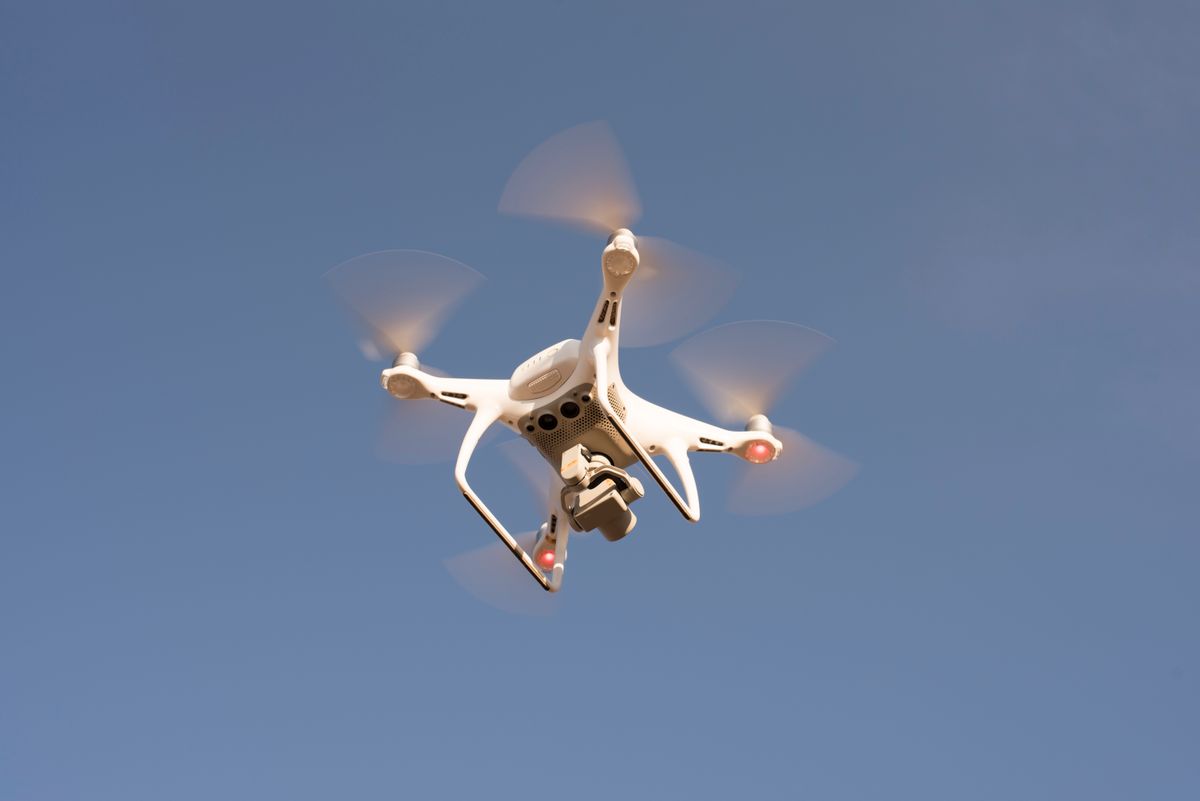
A traveler operating a drone controller
The basic flight-management regulation remains in force. It classifies drones by weight and performance, requires owners to complete real-name registration, divides airspace into controlled and suitable areas, and sets conduct rules for each category. A product sold abroad may not meet China's activation or identification requirements even if it flies normally elsewhere.
Does a drone under 250g avoid registration?
Do not use weight alone as your answer. China's definition of a micro drone includes an empty weight below 0.25kg, but it also limits maximum true flight height to 50m, level speed to 40km/h and radio characteristics. A popular 249g camera drone may have performance beyond that definition.
Article 10 of the national regulation states that civil drone owners must perform real-name registration. The older CAAC English notice also describes registration for aircraft at or above 250g, but the newer framework and 2026 standards make a simple “under 250g means no registration” claim unsafe. Register the aircraft on the official CAAC UOM platform before planning a flight.
| Question | Practical 2026 answer |
|---|---|
| Is a pilot license needed for micro or light drones? | The national regulation says operators of micro and light drones do not need an operator license, but they must know the aircraft and rules |
| Can I fly anywhere below 120m? | No. Airports, restricted zones, military areas, borders, major facilities and temporary event controls can still make the area controlled |
| Is 249g automatically exempt? | No safe blanket exemption; category depends on performance as well as weight, and registration rules still matter |
| Can I fly in controlled airspace? | Only with the required approval and any operator qualification that applies |
| Can a local park allow it? | Park permission does not override airspace, police, heritage-site or event restrictions |
Where is drone flight controlled?
National rules identify airspace above 120m true height as controlled and also cover prohibited or restricted zones, airport surroundings, military low-altitude routes and specified sensitive areas. Local governments can publish precise controlled zones. Temporary controls may appear for major events or emergency operations.
Outside controlled zones, suitable airspace can allow micro, light and small drones under the conditions for that category. Even there, the operator must keep track of the aircraft, yield to crewed aviation and traffic, follow identification rules, and obey weather and visibility requirements.
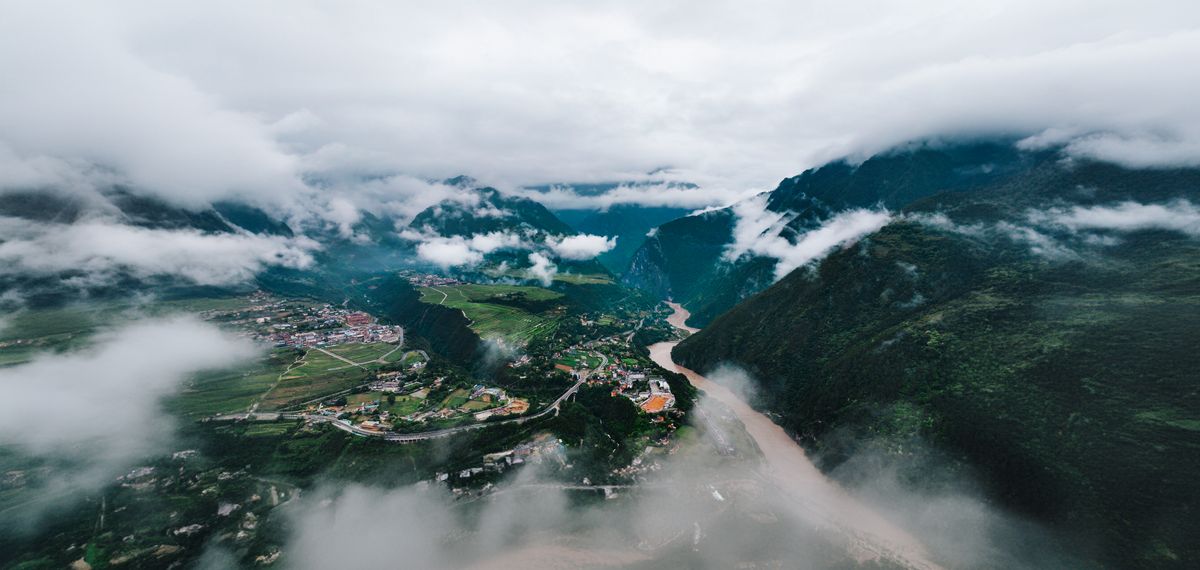
Aerial view of the Nujiang Valley in Yunnan
A scenic viewpoint is not proof of permission. Sections of the Great Wall, palace museums, nature reserves, border valleys and dense city centers can have site rules or sensitive airspace. Ask the attraction or land manager, then check the official airspace source. Both answers need to be positive.
A safe pre-flight checklist for foreign visitors
- Record the model, serial number, empty weight, maximum takeoff weight and radio specifications.
- Try real-name registration and activation on CAAC UOM before bringing the aircraft to the launch point.
- Confirm that the aircraft can send the required identification information and has current firmware.
- Check national and local controlled-airspace notices for the exact coordinates and date.
- Ask the site manager if takeoff, landing and photography are permitted on the property.
- Keep the flight within the limits of the category and any approval.
- Maintain visual contact, stay clear of people and vehicles, and yield immediately to crewed aircraft.
- Carry batteries in hand luggage according to the China power bank and lithium battery rules.
If the platform does not accept your documents or you cannot confirm the airspace, leave the drone grounded. Hiring a local operator who can show current registration and any required approval is safer than relying on an online forum post.
Common mistakes
- Treating 249g as a universal exemption. China's micro category has performance conditions beyond weight.
- Checking only the manufacturer's geofence. An app map does not replace Chinese legal and local notices.
- Flying below 120m near an airport. Airport surroundings are controlled regardless of your chosen height.
- Assuming rural means unrestricted. Border areas, military routes, reserves and infrastructure can be sensitive.
- Getting park permission but skipping airspace checks. Land permission and flight permission are separate.
- Relying on an old blog. The May 1, 2026 standards changed the registration, activation and identification baseline.
Who this guide is for
This is for recreational visitors bringing a small camera drone for landscapes or city footage. It helps you decide whether to pack the aircraft and what to check before a planned launch.
Commercial filming, mapping, group operations, flights beyond visual line of sight and heavier aircraft need a separate legal review. This article does not replace an approval from air traffic management, public security or the site owner.
Before packing other equipment, read the China entry customs guide and the broader China safety guide.
Official sources
- CAAC announcement of the two standards effective May 1, 2026
- Interim Regulations on Unmanned Aircraft Flight Management
- CAAC real-name registration notice
Frequently asked questions (FAQ)
Are drones allowed in China in 2026?
Yes, compliant civil drones can fly under registration, identification, category and airspace rules. A tourist should not launch until the aircraft is registered and the exact area is confirmed as legal.
Do I need a Chinese drone license for a DJI Mini?
National rules say micro and light drone operators do not need an operator license for ordinary suitable-airspace flights, but the aircraft must fit the legal category and other rules still apply. Controlled airspace or special operations can require training and approval.
Can I fly a drone at the Great Wall?
Do not assume so. Rules differ by section and date, and site permission does not replace airspace checks. Contact the specific scenic area and check current local controls.
What should I do if I cannot register with a foreign passport?
Do not fly unregistered. Contact CAAC UOM support or use a qualified local operator who can document lawful registration and permission for the planned location.
Sources
- CAAC Releases Two Mandatory National Standards for UAV · Civil Aviation Administration of China
- Interim Regulations on Unmanned Aircraft Flight Management · State Council of China
- Regulations on Real-name Registration of Civil Unmanned Aerial Vehicles · Civil Aviation Administration of China