Yangshuo
Yulong River
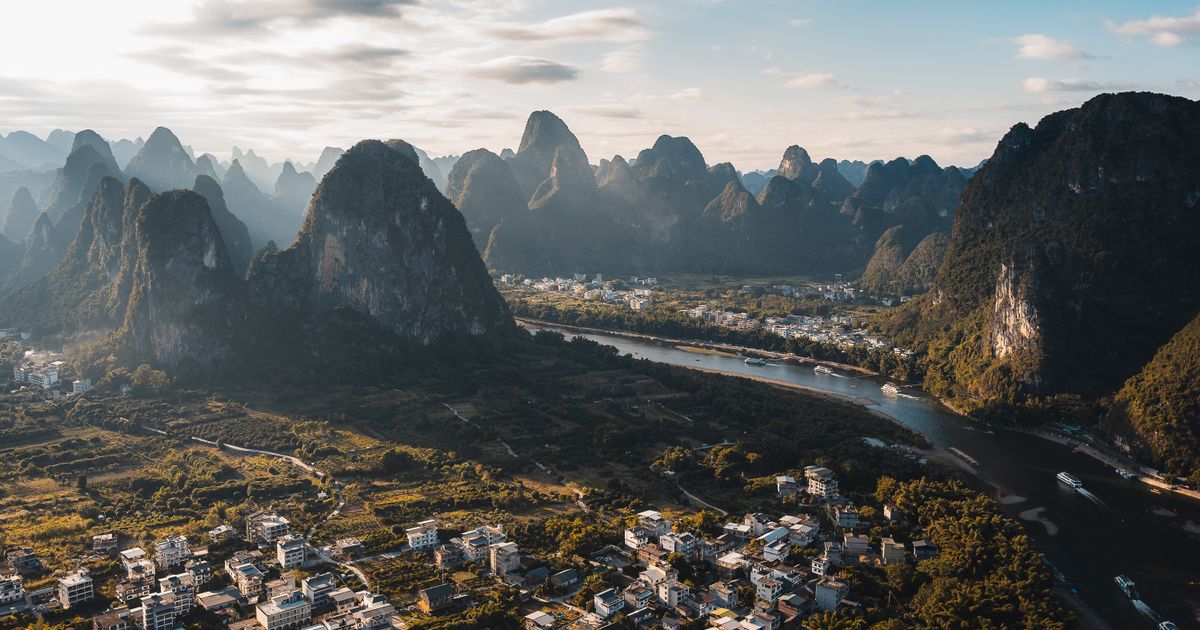
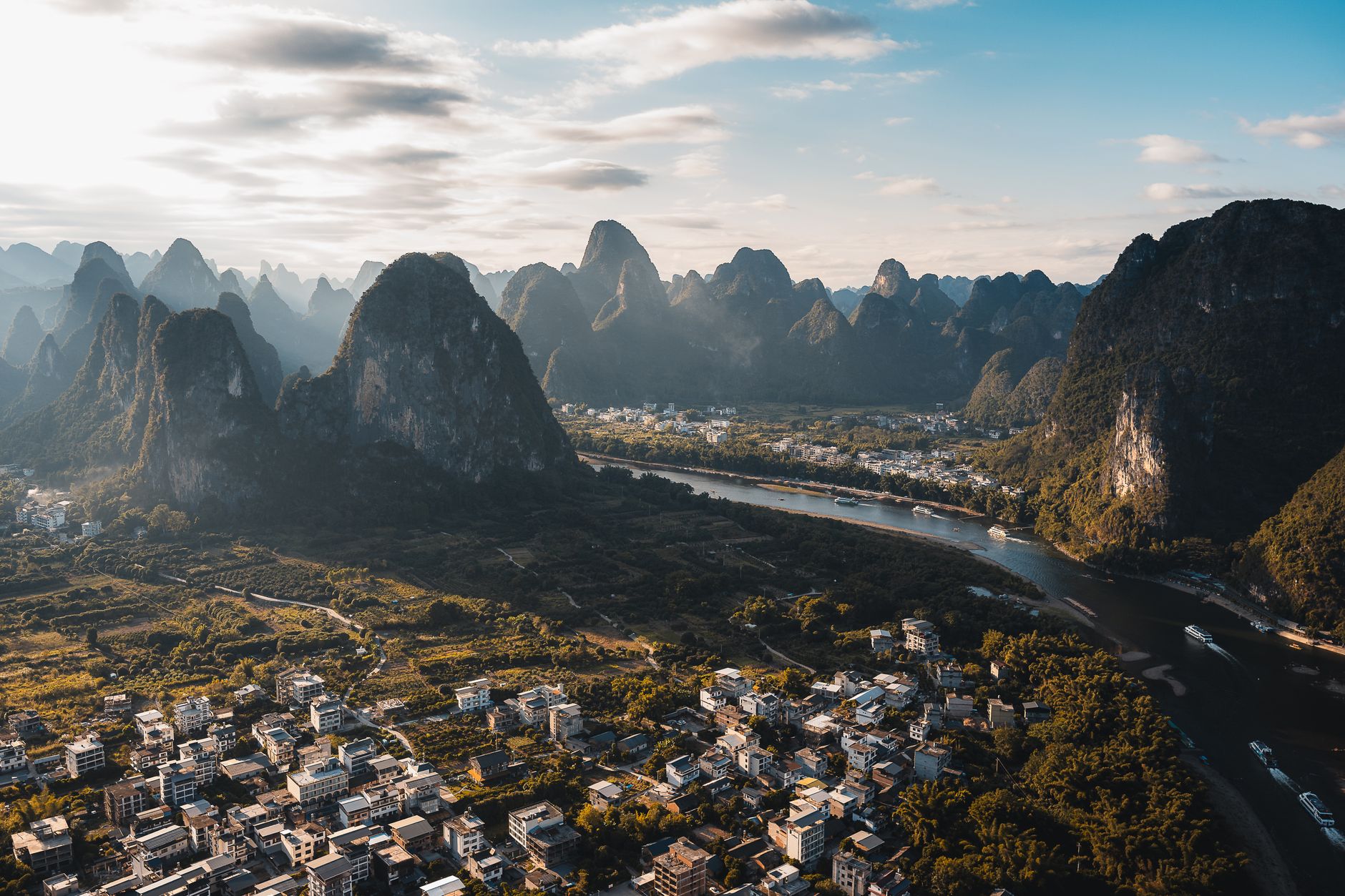
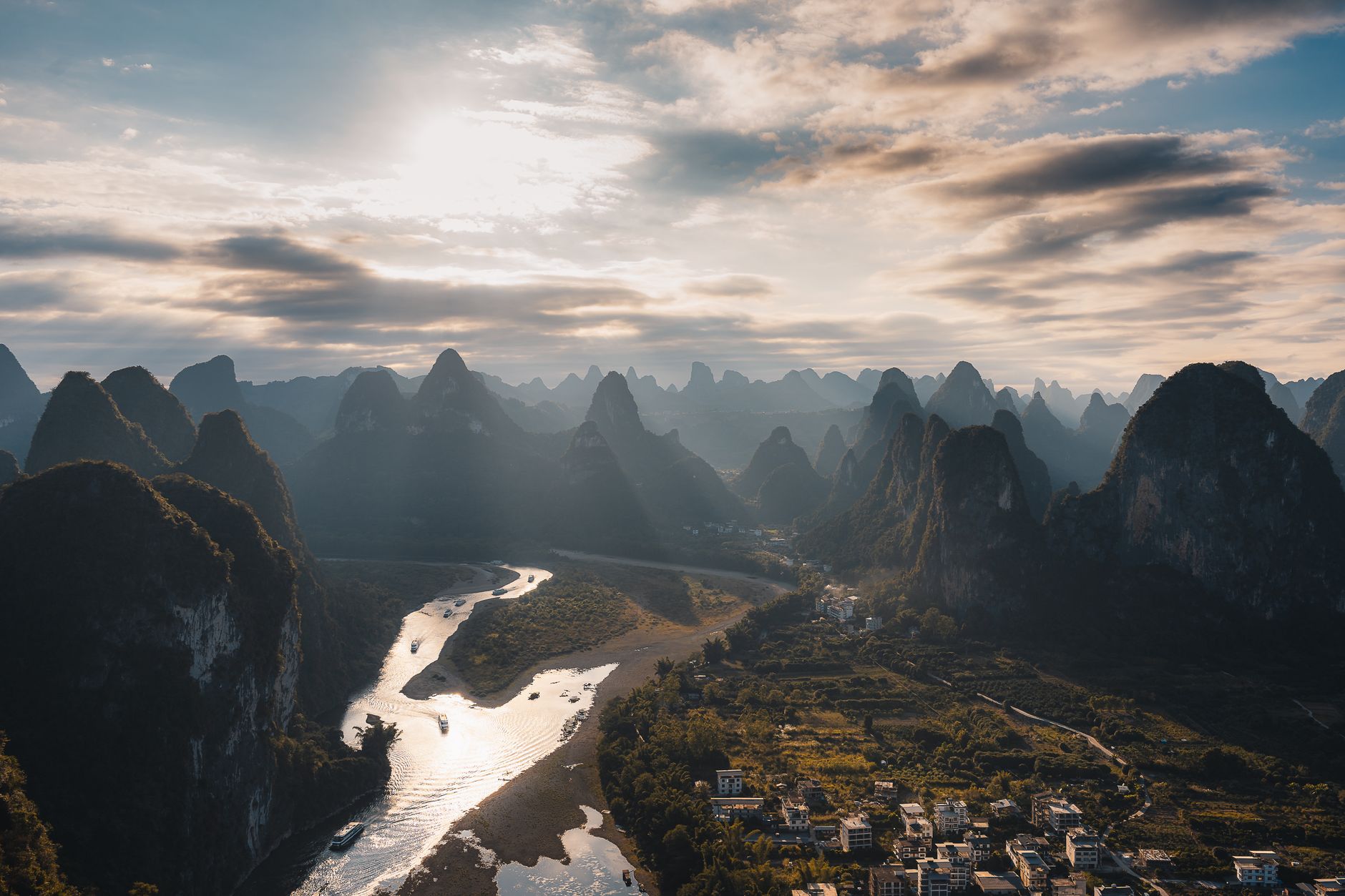
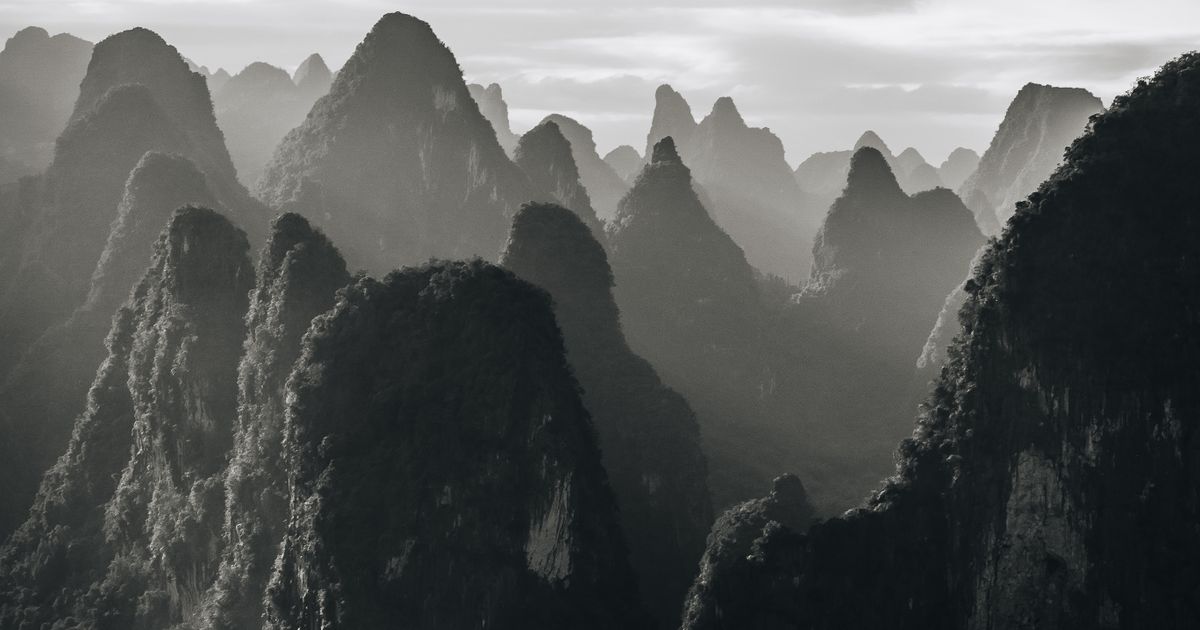
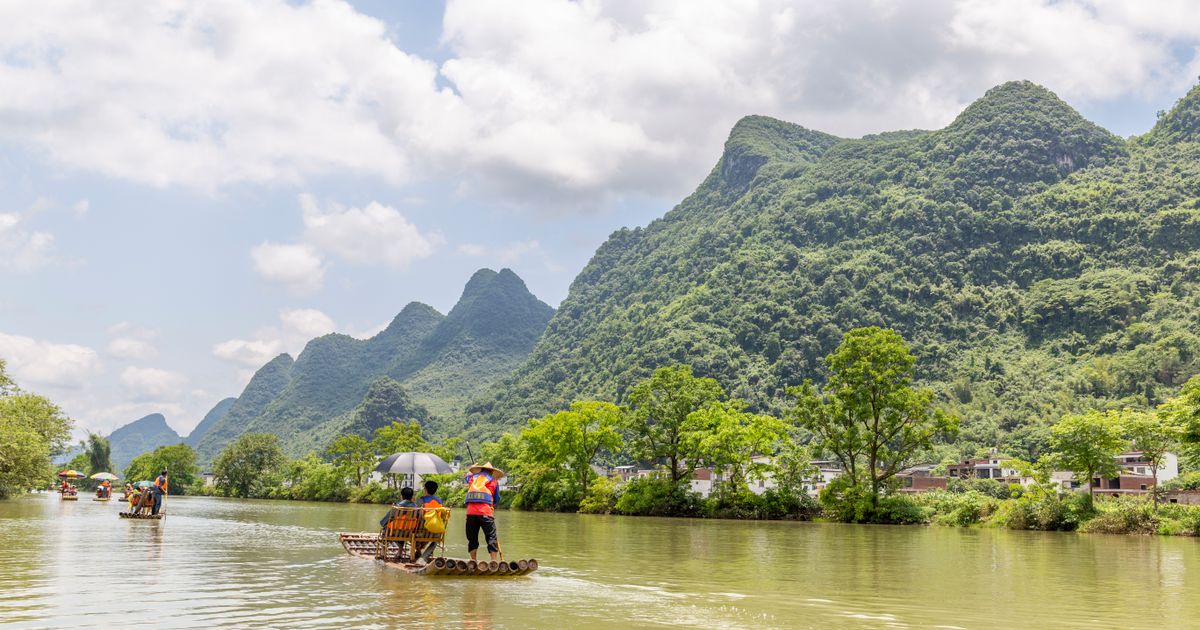
The Yulong River is the quieter, gentler cousin of the Li River: a slow ribbon of green water winding for some 40 kilometers through rice fields and karst peaks west of Yangshuo town. Its name means "meeting the dragon," and old folk tales say a dragon from the Eastern Sea was so taken with the scenery that it stayed. There are no engine boats here, only hand-poled bamboo rafts, which makes it the most peaceful way to get onto the water and into the heart of the countryside.
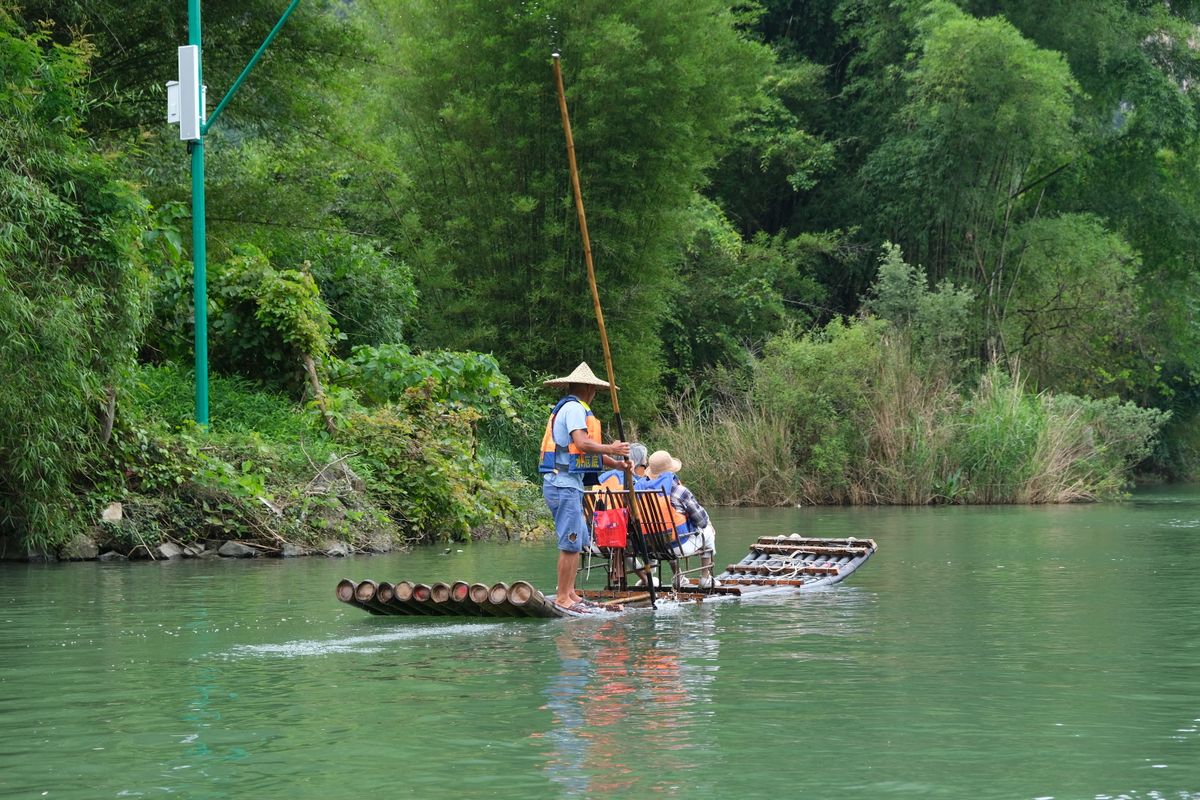
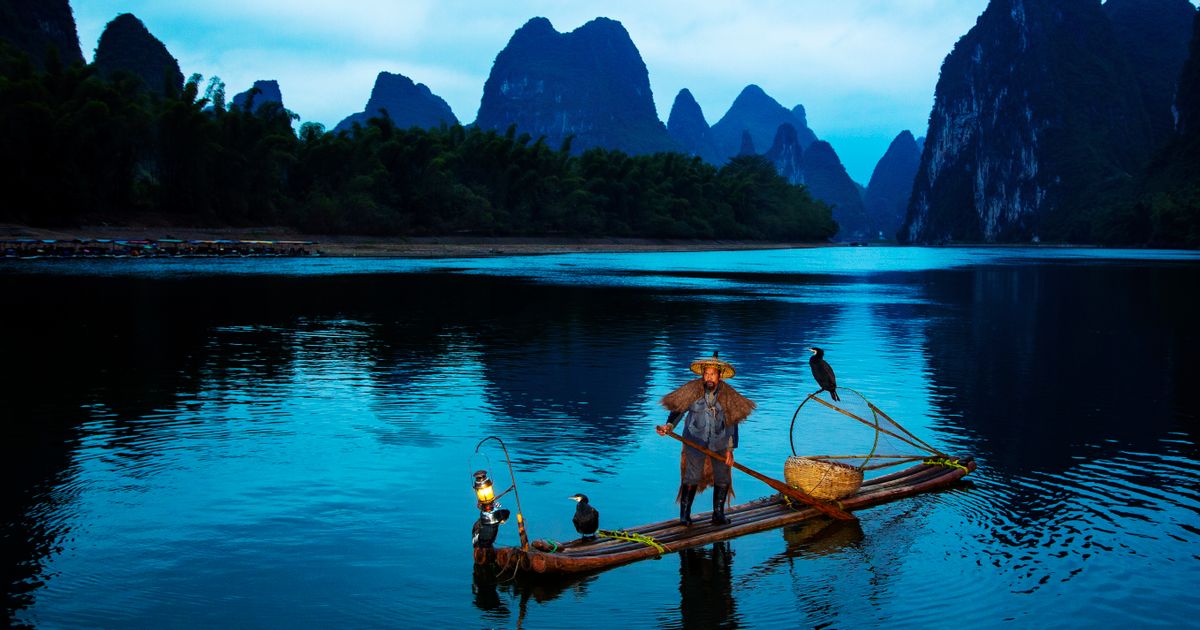
Bamboo rafts drifting on the Yulong River below karst peaks
The bamboo raft experience
A raftsman poles you downstream past water buffalo, bamboo groves, and small stone weirs that send the raft over gentle drops with a satisfying splash. The classic route runs between villages along the upper and lower river, and you can choose a short section of about 40 minutes or a longer half-day drift of up to two hours. Expect to get a little wet at the weirs, especially in the front seats, which is half the fun on a hot day. Rafts usually carry two passengers on bamboo chairs, and the rhythm is slow enough to take photos, trail a hand in the water, or just watch the peaks slide by.
Cycling and ballooning the valley
Many travelers pair the raft with a bike ride along the riverbank. The lanes are flat, shaded by trees, and lined with farmhouses and tea stalls, making the Yulong valley one of the best easy cycling routes in all of China. The graceful Yulong Bridge, a stone arch built in the Ming dynasty, makes a natural turnaround and a favorite photo stop. On clear mornings you may also see hot-air balloons rising over the fields, and several operators offer sunrise flights for a bird's-eye view of the karst.
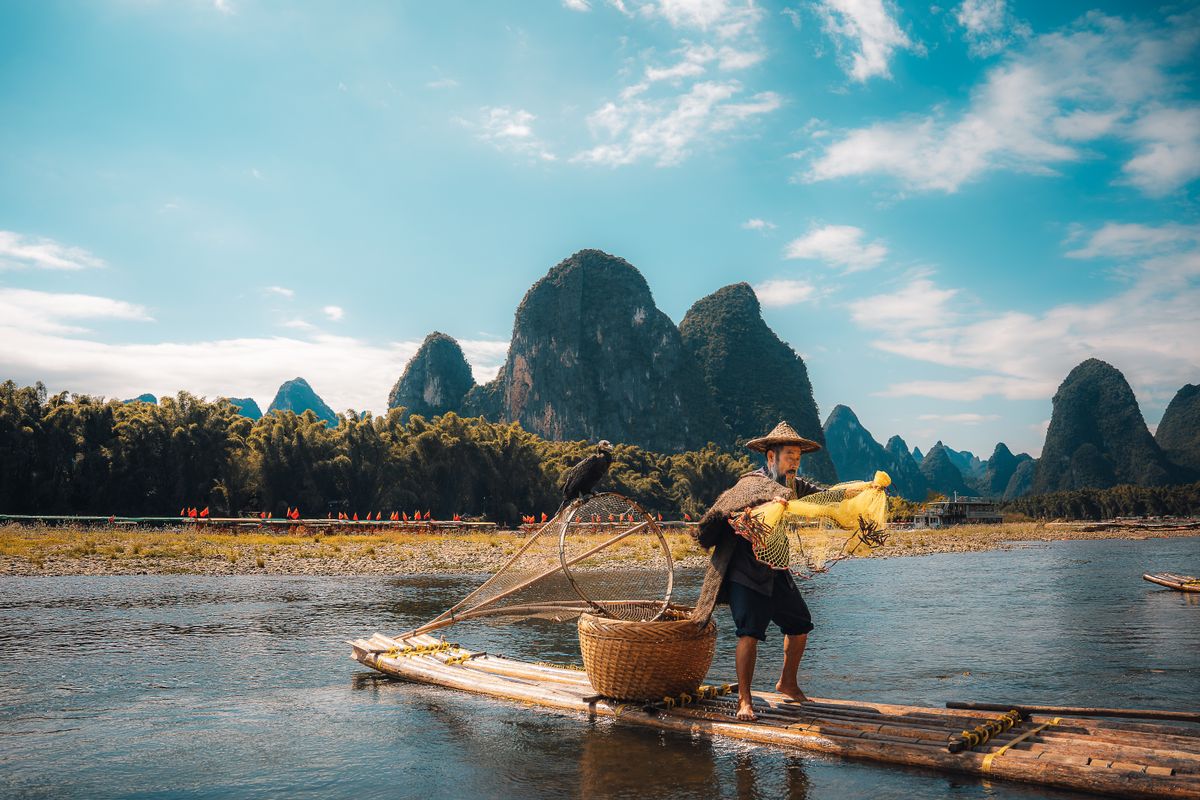
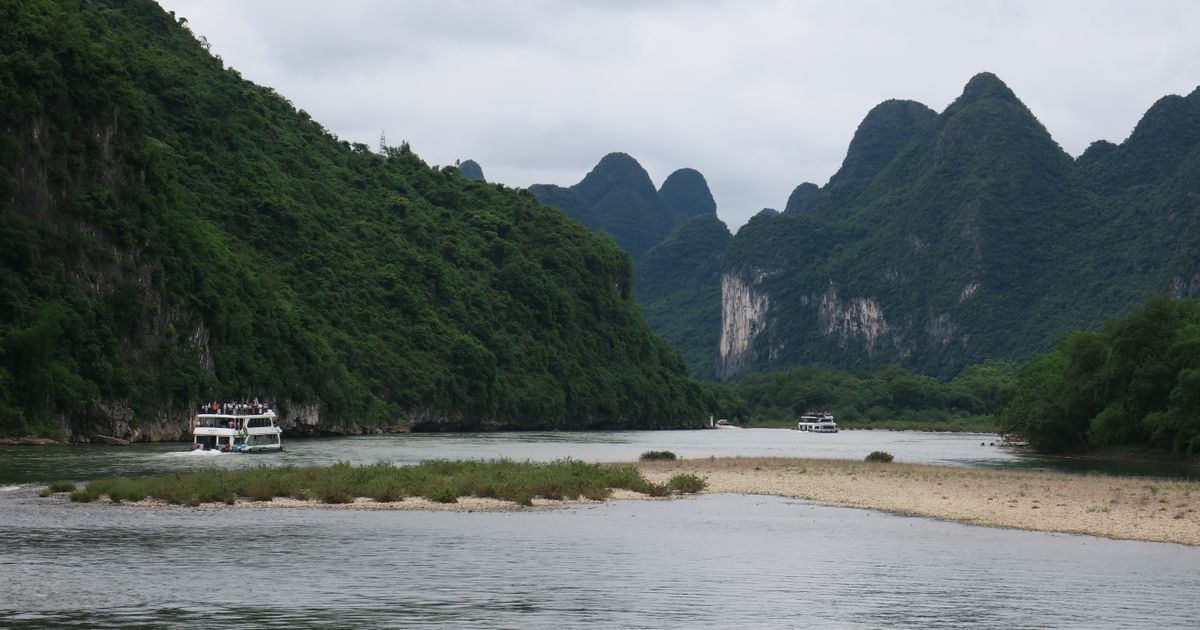
Tourists on a bamboo raft poled along the green Yulong River
Getting there and booking a raft
The main piers, Shui'edi, Jinlong Bridge, Jima, and Jiuxian among them, sit roughly 7 to 8 kilometers from Yangshuo's West Street, about a 30-minute drive that can stretch well past an hour in peak-season traffic (as of 2026). Bamboo rafting here is split across a dozen or so distinct routes rather than one fixed trip, ranging from short 40-minute stretches to two-hour drifts, and the price scales with the route's length rather than being a single set fare, so confirm the cost for your specific section before you commit. Book online a day ahead through your guesthouse, a platform like Klook or Trip.com, or the local "IIY Yangshuo" WeChat mini-program: manually poled rafts have limited daily capacity, and popular piers routinely sell out during July and August and around national holidays, when you may not get the exact pier you asked for.
Book Yulong River bamboo rafting
Reserve online ahead, popular piers sell out fast,compact
Some links are affiliate links; we may earn a commission at no extra cost to you.
Practical tips
Go early in the morning for soft light, calmer water, and shorter lines; spring and autumn are the most comfortable seasons, while summer afternoons can be crowded and hot. Bring a dry bag or waterproof pouch for your phone and camera, wear sandals you do not mind getting wet, and use sun protection, as there is little shade out on the water. For safety, some operators restrict very young children, pregnant travelers, and anyone with a serious heart condition from certain rafts, so ask at the pier if you have concerns. A small cash tip for the raftsman is appreciated but not required.
A few good stops along the way
The valley around the river rewards slow exploration, so build in time off the water too. The village of Jiuxian, with its restored mud-brick courtyard houses, has become a small hub of guesthouses and cafes and makes a peaceful overnight away from town. Nearby Baisha and the old market towns give a glimpse of everyday rural life, while roadside stands sell pomelo, sugarcane, and fresh-pressed juice in season. Photographers should look for the low stone weirs, where the water spills in a clean white line and a raft tipping over the edge makes the classic Yulong shot. If you would rather stay dry, simply walking or cycling a stretch of the riverbank delivers much of the same scenery for free, with plenty of shaded spots to stop and watch the rafts drift past.
A note on the seasons
Water levels shape the experience as much as the weather. From May to August the river runs higher and a little faster, and the weirs are at their most playful, with the biggest splashes, though this is also when piers are most crowded. Spring fills the valley with the greenest rice paddies, while autumn brings the clearest skies and the most comfortable temperatures for a long drift. In a dry winter some upper sections can run too shallow to raft, and operators may switch to shorter routes lower down, so it is worth checking current conditions when you book rather than fixing your plan too far ahead.
Highlights
- Hand-poled bamboo rafts on calm, engine-free water
- Gentle weir drops with a refreshing splash
- Flat riverside cycling past farms and tea stalls
- The Ming-dynasty stone Yulong Bridge and sunrise balloons
- The bamboo raft experience
Travel Tips
Price depends on the route
Bamboo rafting is split across roughly a dozen routes of different lengths; price scales with distance rather than one flat fare, so confirm the cost for your specific section before you set off.
Book a day ahead
Reserve online through your guesthouse, Klook, Trip.com, or the local WeChat mini-program: manually poled rafts have limited daily capacity and popular piers sell out fast in July-August and around holidays.
Go early and stay dry
Mornings bring soft light and shorter lines; bring a waterproof pouch for your phone and wear sandals you can get wet.
Some rafts have rider restrictions
For safety, very young children, pregnant travelers, or anyone with a serious heart condition may be restricted from certain rafts; ask at the pier if unsure.