Dunhuang
Yangguan Pass (Sun Gate)
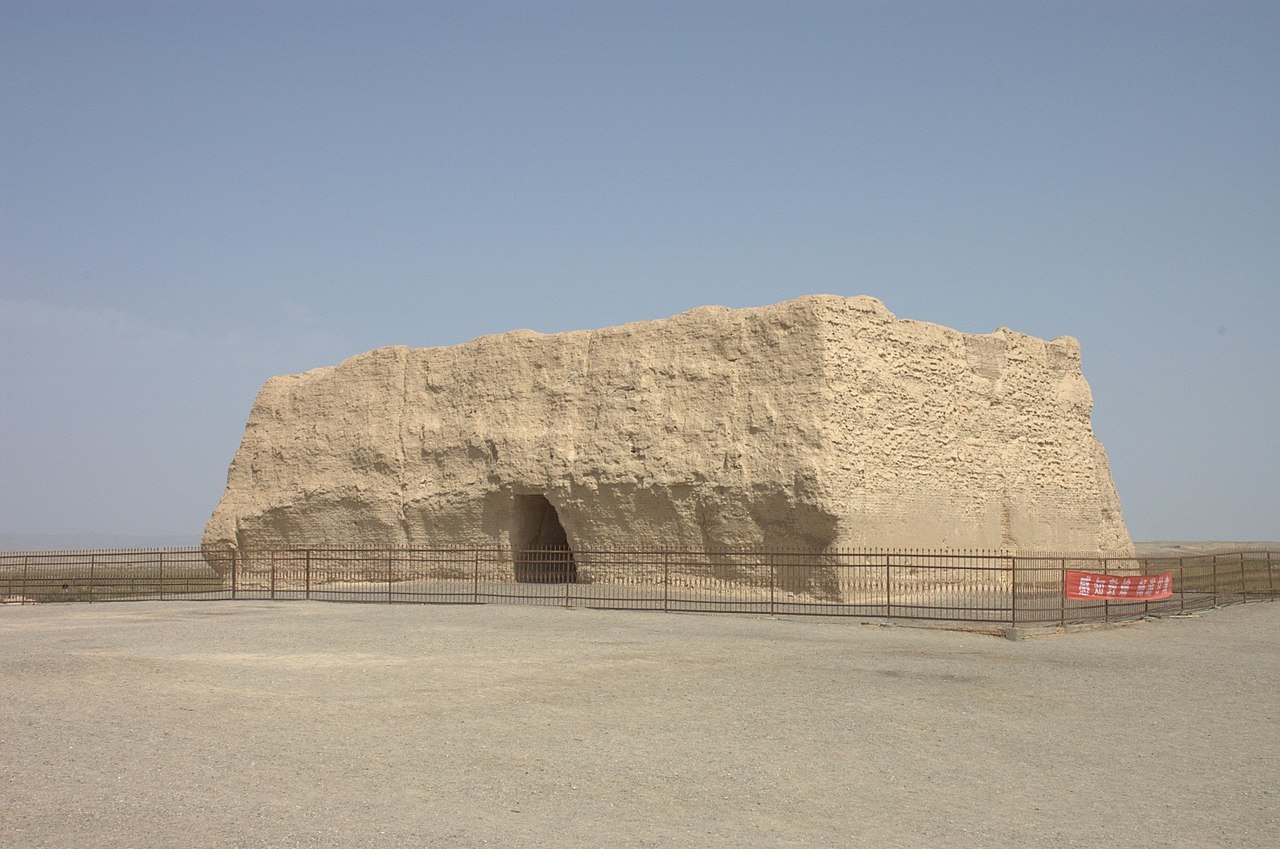
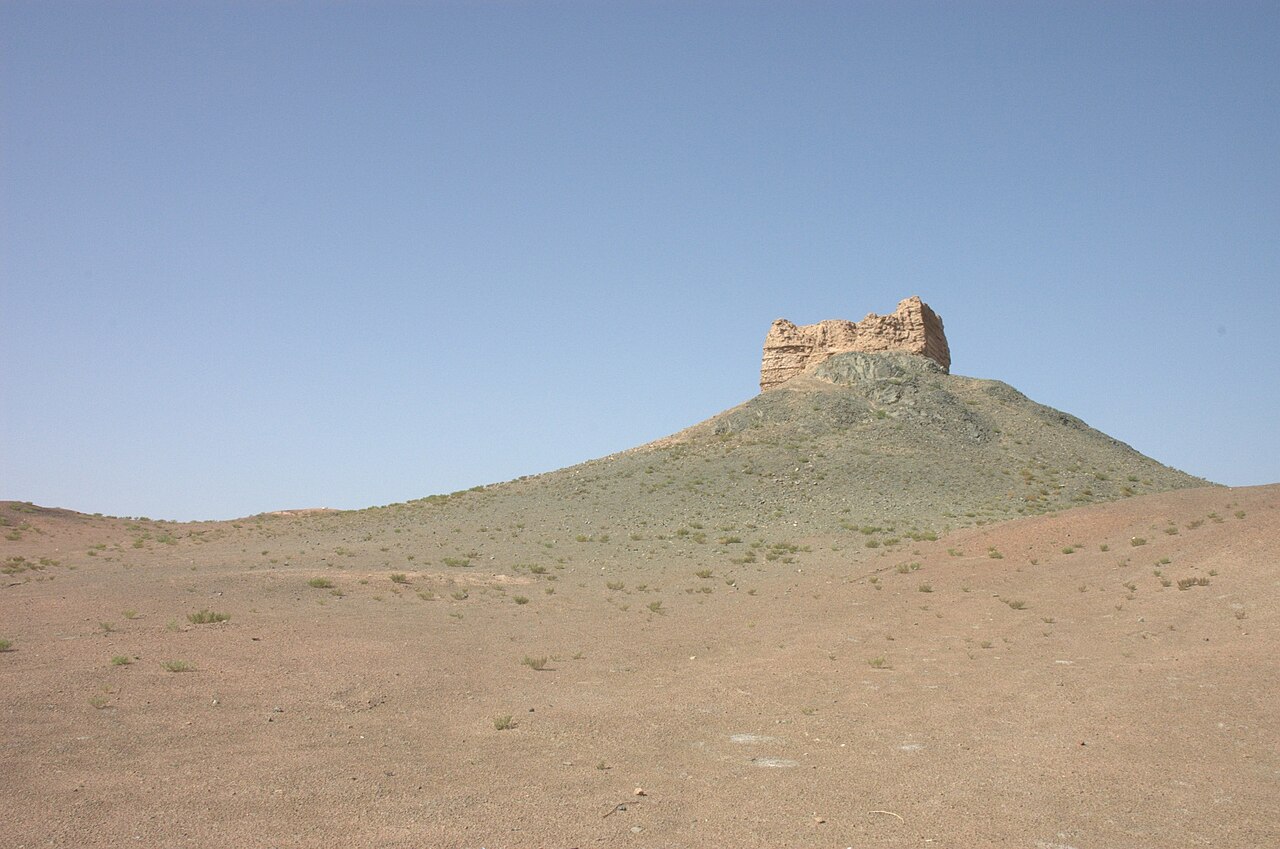
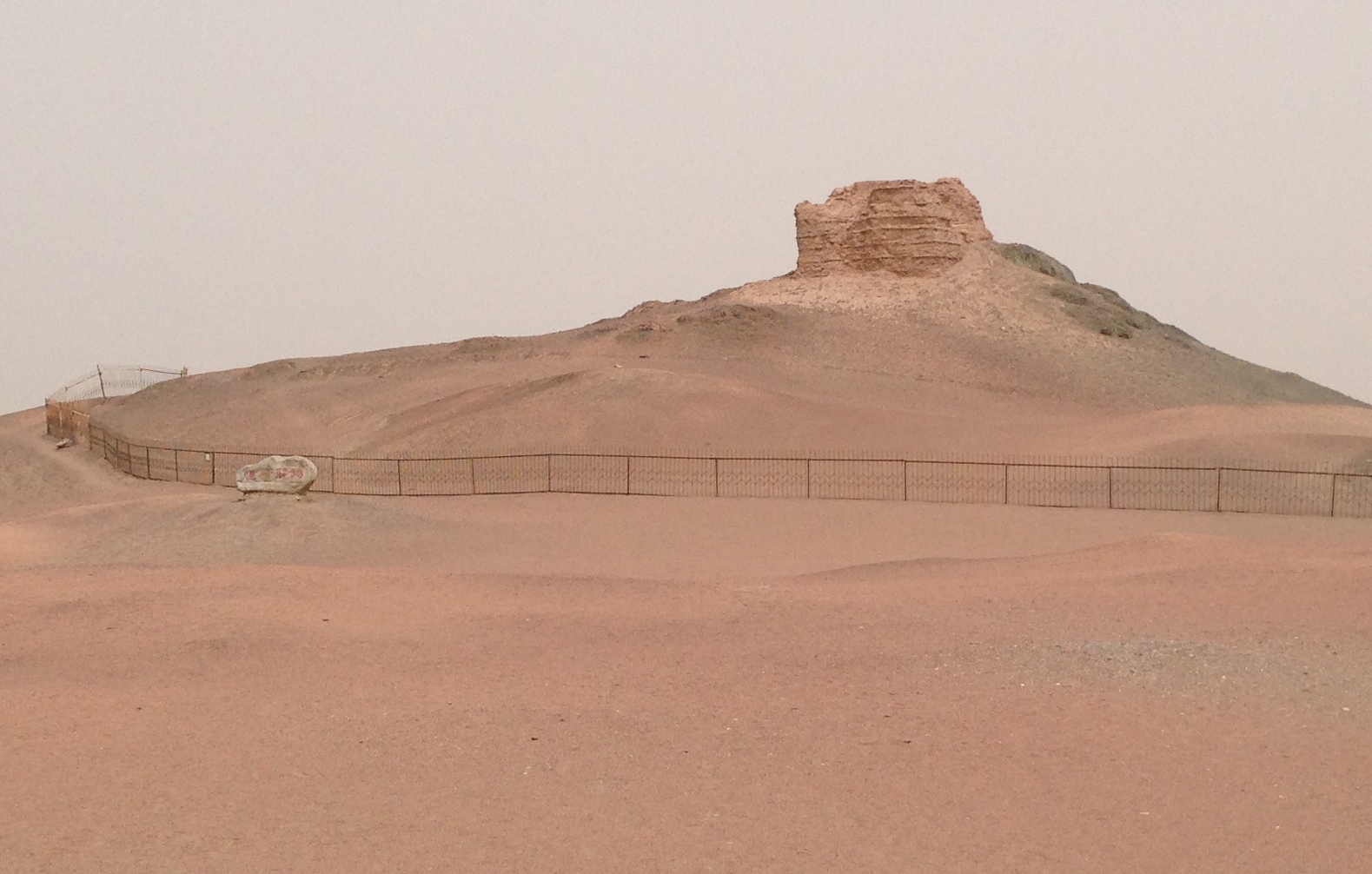
The lone beacon-tower ruin of Yangguan Pass on a Gobi hilltop
For a thousand years, Yangguan was where Chinese travellers said goodbye. Wang Wei fixed the feeling in four lines written to see a friend off west: "I urge you to drink one more cup of wine; west of Yang Pass there will be no old friends." Those lines became a song, the "Three Variations of Yangguan," and turned a desert checkpoint into shorthand for the edge of the known world. Stand on the hill today and you can see why: beyond the last beacon tower there is only Gobi.
Yangguan ("Sun Gate," the pass "south of the barrier") was the southern half of the Han empire's twin Silk Road gateways, paired with Yumen Pass to the north. It was fortified under Emperor Wu of Han around the 2nd century BC, and from here caravans took the southern road skirting the Taklamakan toward Khotan and the western kingdoms. The pass lies about 70 km southwest of Dunhuang, and its one surviving landmark is the Dundun beacon tower, an eroded earthen sentinel on the highest hill, once part of a signal chain that could pass a warning down hundreds of kilometres of frontier.
What you actually see
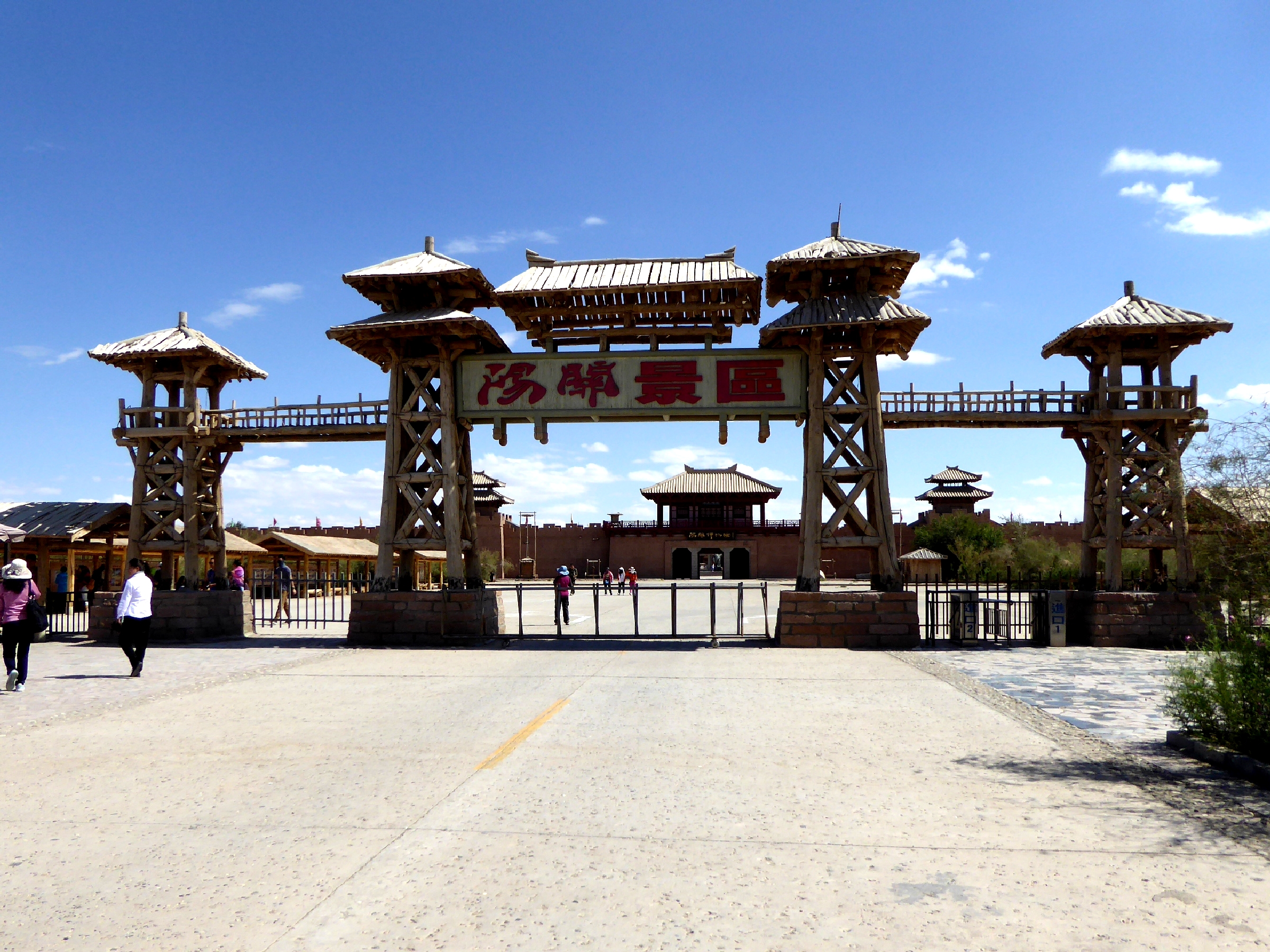
The modern scenic area is part ruin, part reconstruction. The genuine article is the beacon tower and the "ancient battlefield" flats below it, where wind still turns up potsherds and the odd arrowhead. Around it stands a rebuilt Han-style gate-town, plus a museum on the Silk Road frontier and the travel-permit system that caravans needed to move between passes. An electric cart runs out toward the tower; the last stretch up to it is a short sandy climb on foot.
Reconstructed Han gate and beacon tower at the Yangguan scenic area
Hours and tickets
Yangguan opens daily from morning to evening, though the exact hours shift with the season, so check before a long drive out. Admission covers the museum and the electric-cart ride to the tower and battlefield. If you are also visiting Yumen Pass, ask for the combined Yumen and Yangguan ticket, which is cheaper than paying at each gate.
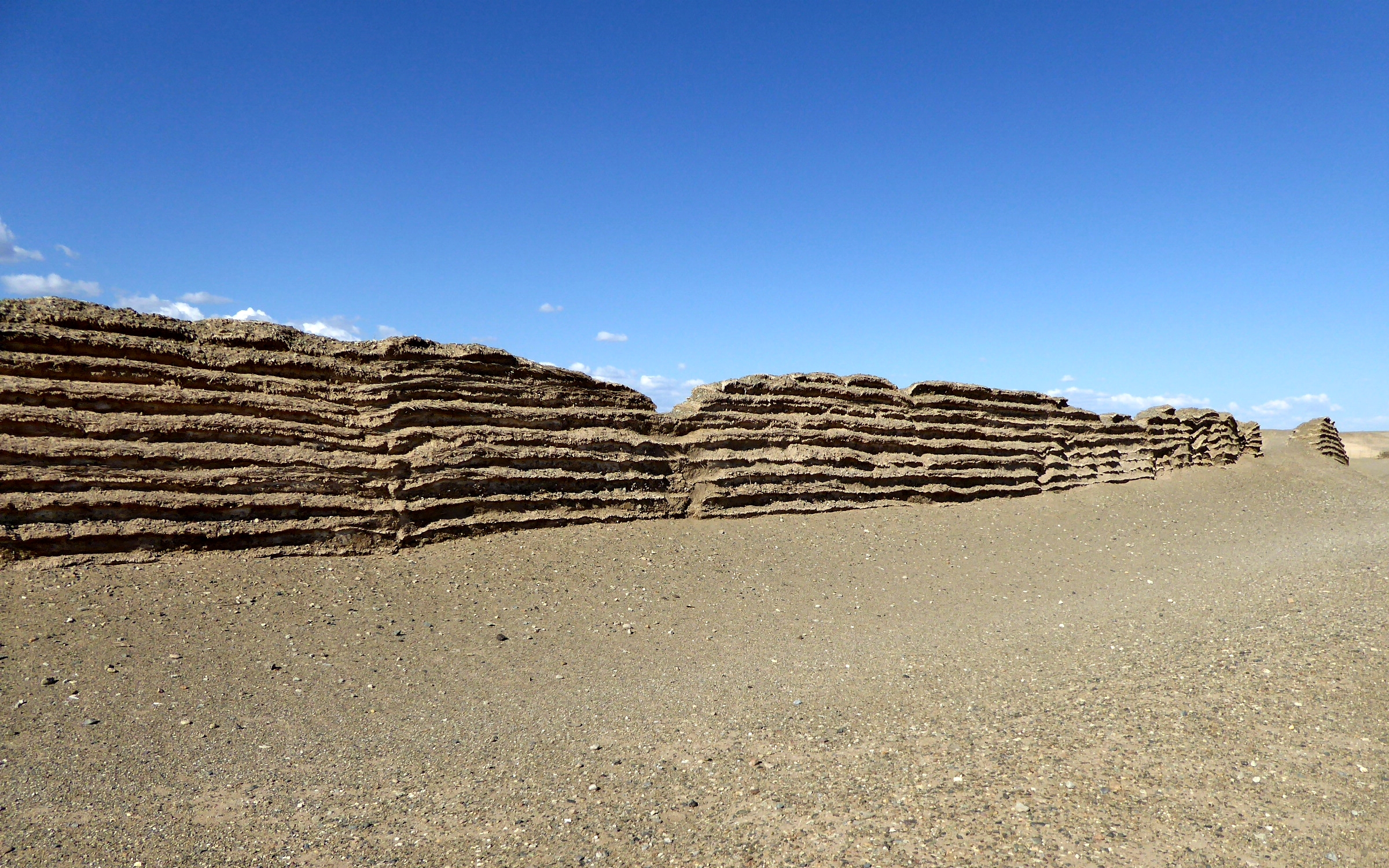
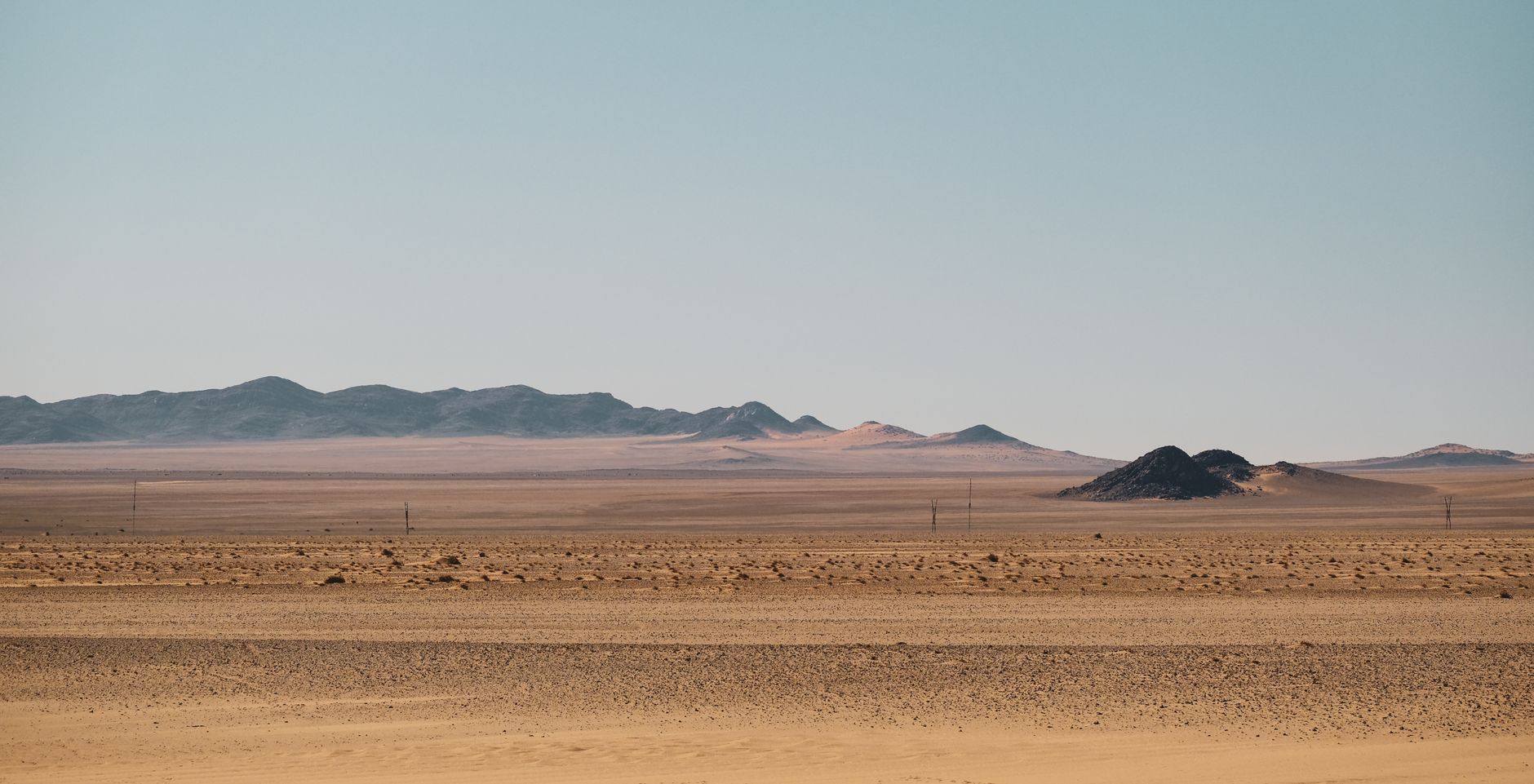
Beacon tower and Gobi horizon at Yangguan
Getting there
There is no regular city bus to the pass. A seasonal tourist shuttle runs from Dunhuang's bus station, but most visitors either charter a car or join a Dunhuang "west-line" day that strings Yangguan together with Yumen Pass and the Yardang badlands. By car it is roughly an hour each way along the G215. Because the sights are spread across empty desert, booking a car or tour ahead saves a lot of standing around in the heat.
Book a Dunhuang west-line desert tour
Yangguan, Yumen Pass and the Yardang badlands in one day
Some links are affiliate links; we may earn a commission at no extra cost to you.
When to go
April to October is the season, with spring and autumn the most comfortable; high summer bakes and winter bites. Go in the morning for cooler air and a quieter site, and carry water, sun cover and shoes you can walk up sand in. There is little shade once you leave the gate-town, so time the climb before the midday glare.
Highlights
- The Dundun beacon tower, Yangguan's 2,000-year-old sentinel
- Southern twin of Yumen Pass, fortified under Emperor Wu of Han
- The 'ancient battlefield' sands strewn with potsherds and arrowheads
- Museum on the Silk Road frontier and its travel-permit system
- Wang Wei's farewell poem and the 'Three Variations of Yangguan'
- Reconstructed Han-style gate-town to explore
Travel Tips
Climb to the beacon
Take the electric cart out, then walk up to the Dundun beacon tower for the full sweep of the old frontier and battlefield sands.
Pair it with Yumen Pass
If you are also seeing Yumen Pass, the joint Yumen and Yangguan ticket works out cheaper than two separate entries.
Bring the poem
Read Wang Wei's farewell couplet at the gate; the lines about 'no old friends west of Yang Pass' land harder on the spot.