Suzhou
Tiger Hill (Huqiu)
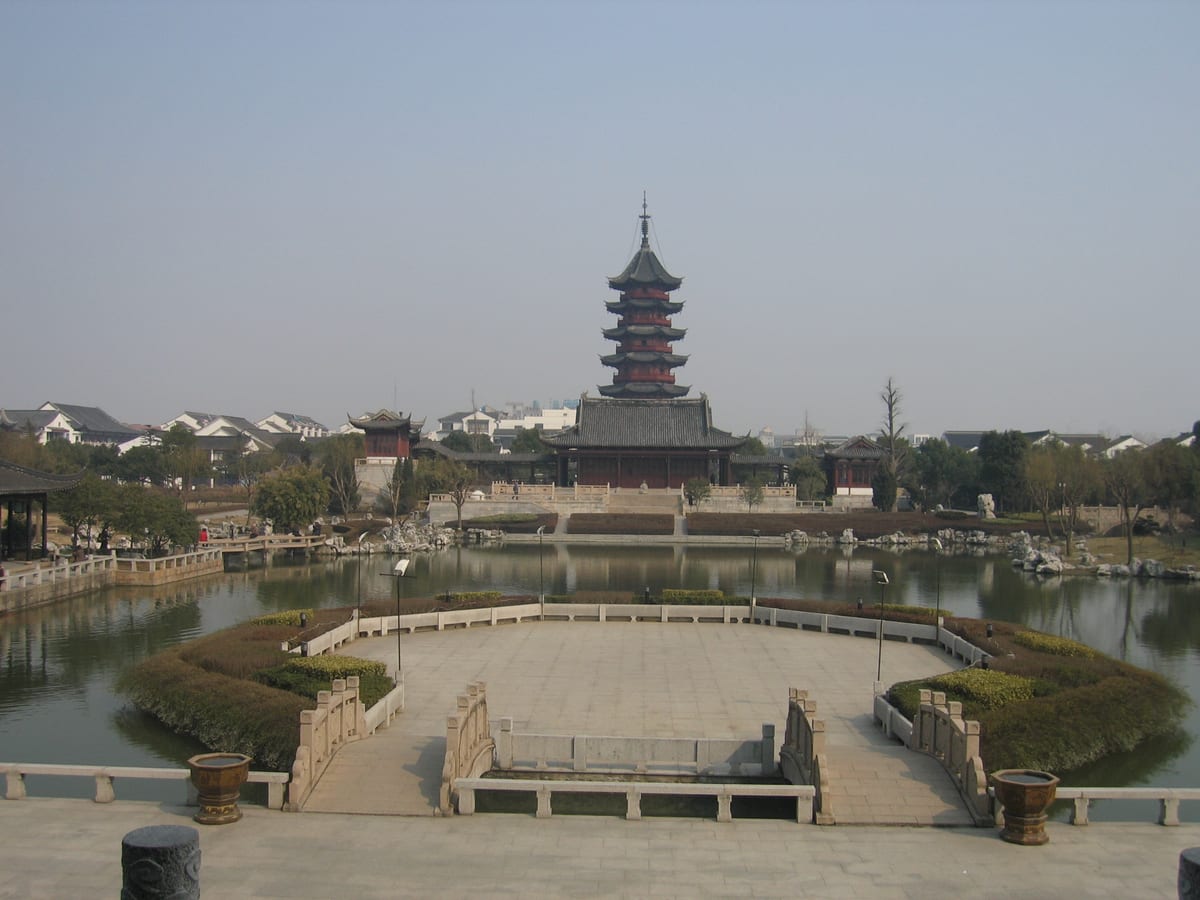
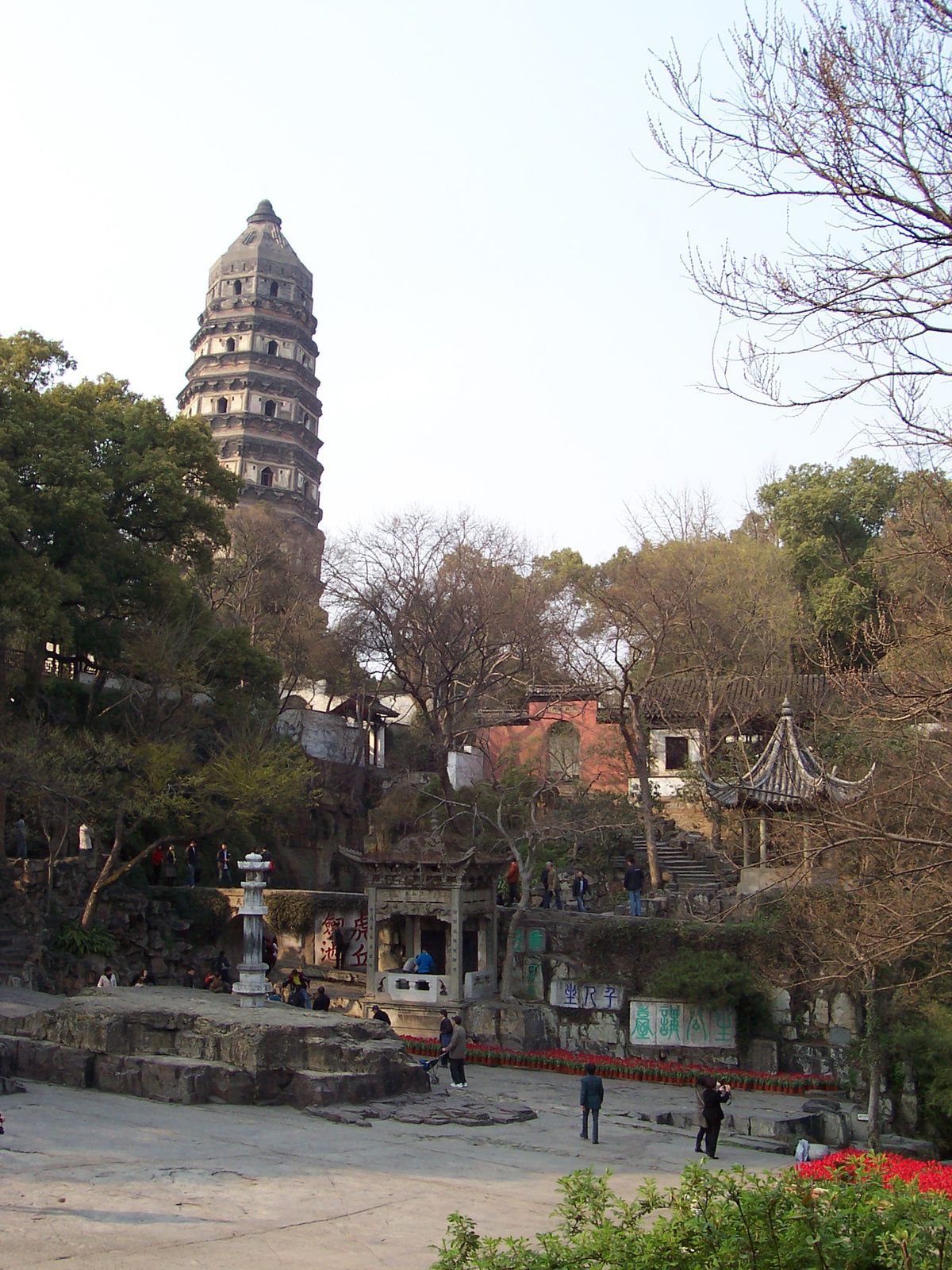
The tower on top of Tiger Hill (Huqiu) has been leaning for centuries: the Yunyan Pagoda, a seven-storey brick tower finished in 961 AD, stands 47 metres tall and tilts roughly three degrees off vertical, which earned it the nickname "the Leaning Tower of China." It is older than its Italian rival in Pisa, and it crowns a hill that packs 2,500 years of Suzhou history into one climb. The poet Su Dongpo is credited with the line that it would be a lifelong regret to visit Suzhou and miss Tiger Hill, and the city has been quoting him ever since.
Leaning Yunyan Pagoda crowning Tiger Hill
Swords, a tomb and a white tiger
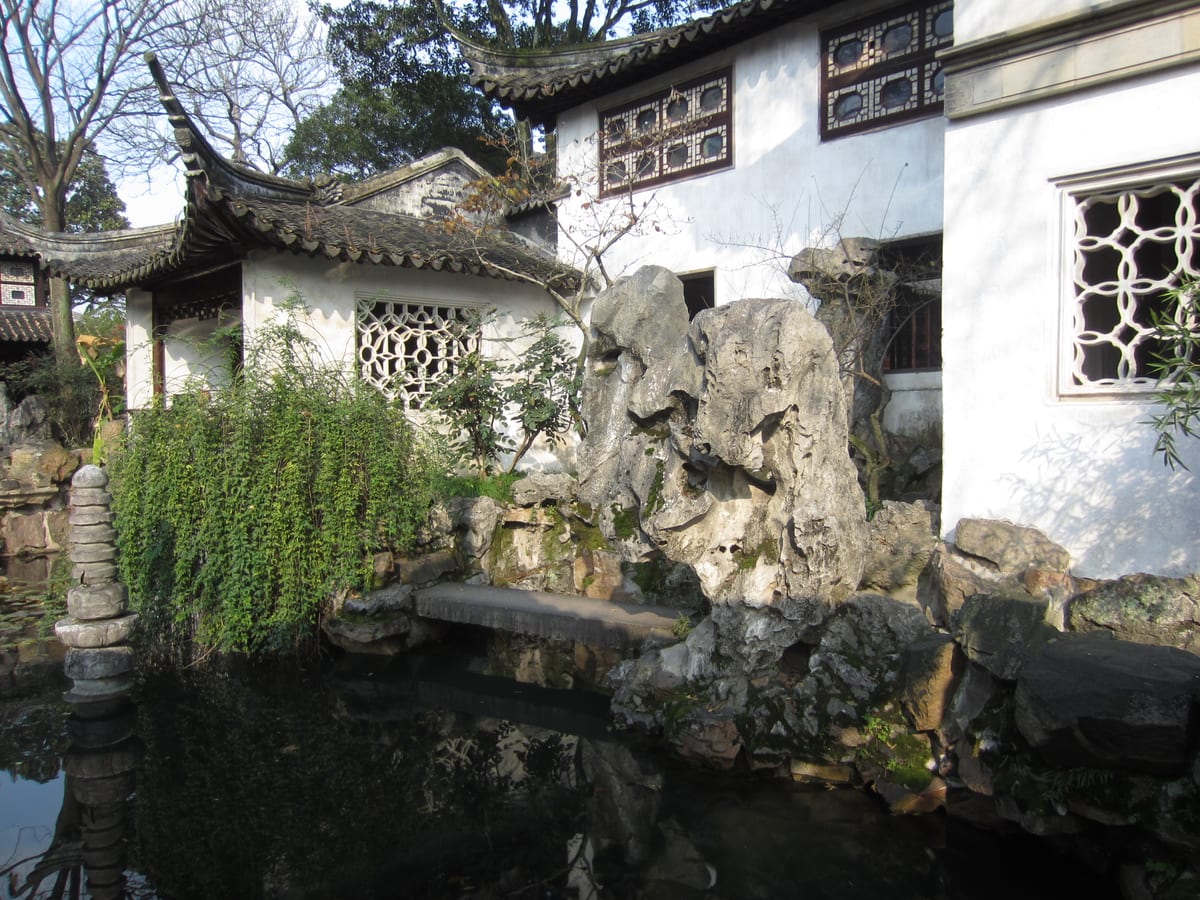
The hill's name comes from its founding legend: King Helü of the Wu Kingdom was buried here around 496 BC, and a white tiger is said to have appeared three days later to guard the tomb. Halfway up, the path passes the Sword Pool (Jianchi), a narrow cleft of still, dark water below sheer rock walls. Tradition holds that the king's tomb lies sealed behind it along with three thousand swords, and that draining attempts were abandoned for fear of undermining the pagoda above. Beside it spreads Thousand-Person Rock, a wide sloping shelf of stone where a monk is said to have preached so movingly that the rocks nodded.
The pagoda and the rest of the hill
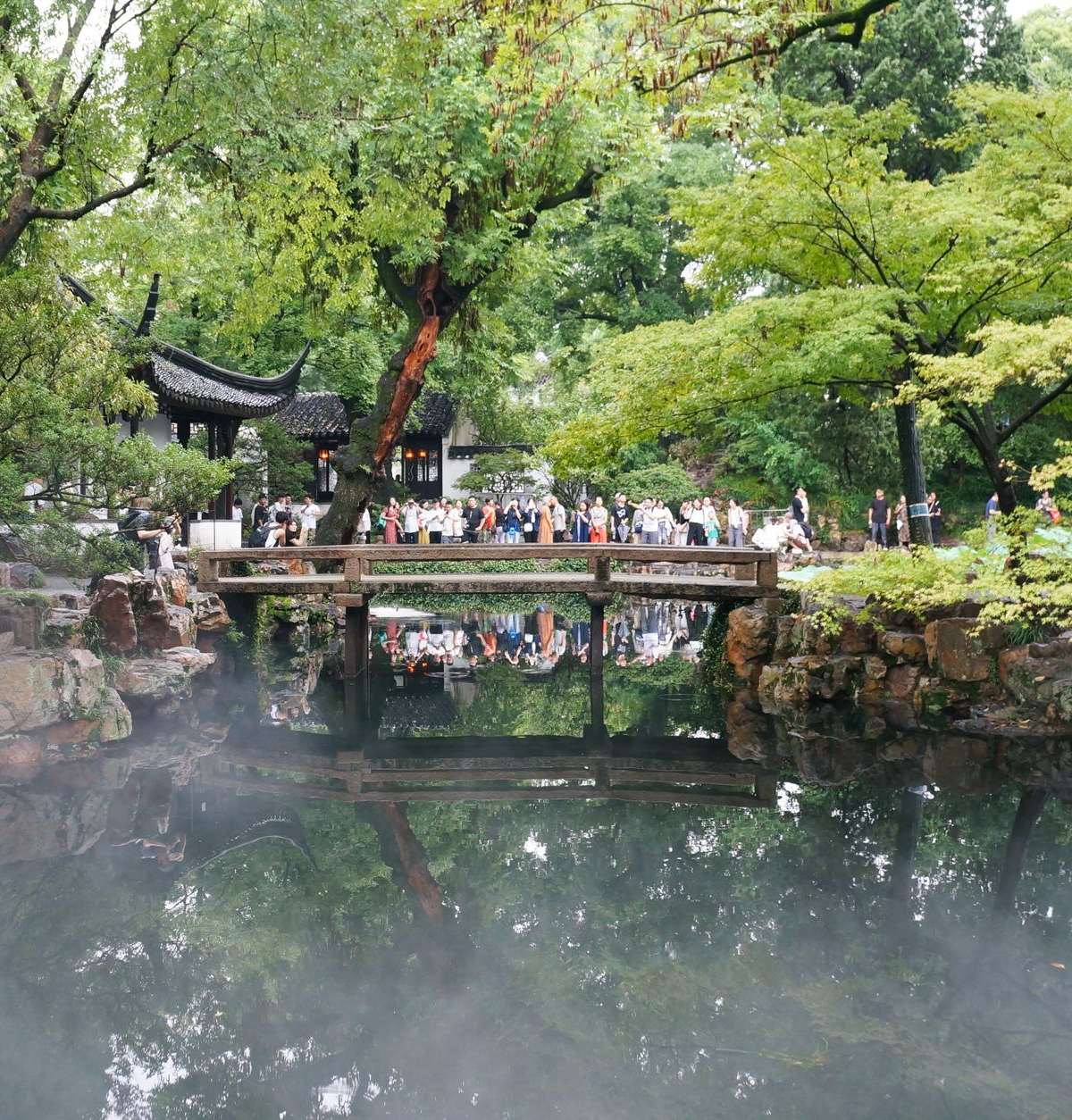
Up close the pagoda's lean is obvious against the treeline, and the brickwork, patterned to imitate timber architecture, has survived fires that took the wooden temple around it. You view it from the terrace rather than climbing inside. The slopes below hold pavilions, tea houses and a garden of Suzhou-style penjing (the miniature potted landscapes that predate Japanese bonsai), and in spring the scenic area often fills its lower paths with flower displays.
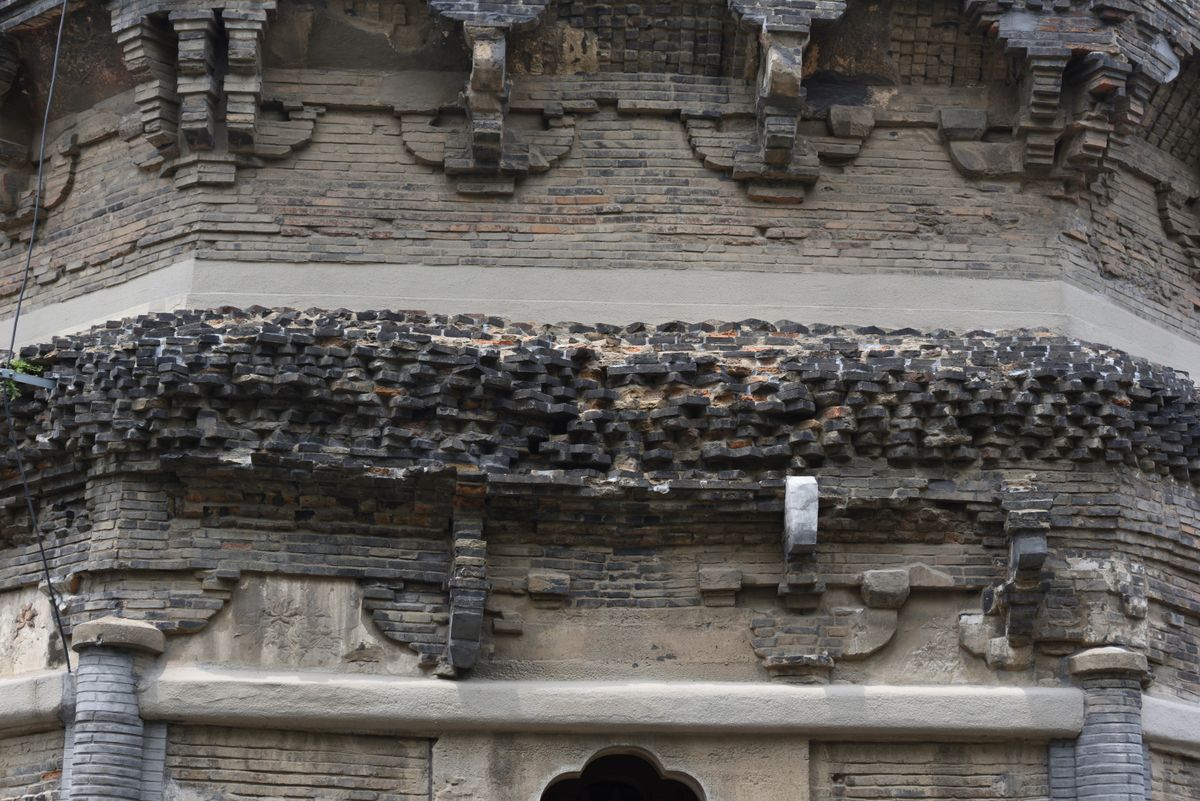
Yunyan Pagoda brickwork detail
Tickets and hours
Tiger Hill charges a standard scenic-area admission, priced by season (higher from spring through autumn); check the current rate before you go and bring your passport, since entry is ID-linked. You can buy at the gate or book ahead on Trip.com, which is useful on holiday weekends. Gates open around 7:30 am year-round; last entry is late afternoon, slightly earlier in winter, and summer or festival evening openings are sometimes added.
Arrive by canal if you can
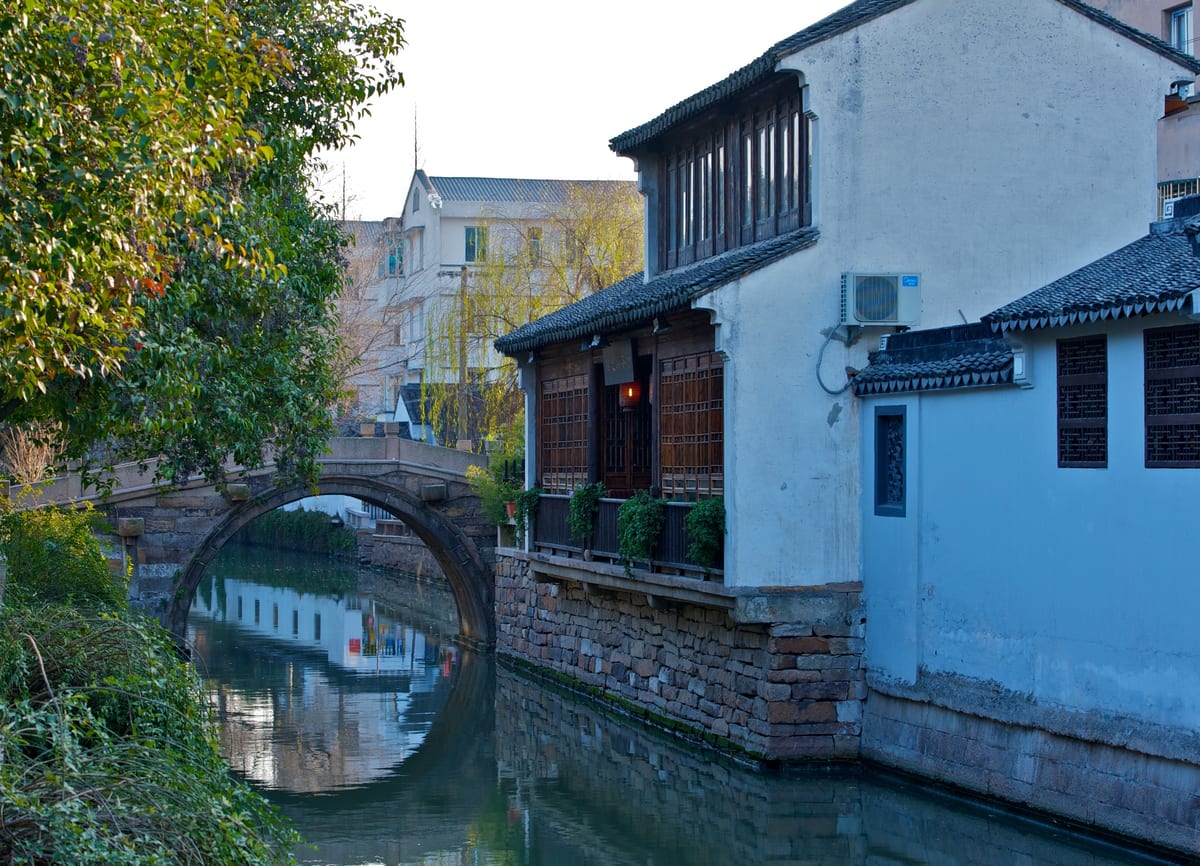
Tiger Hill sits about 5 km northwest of Suzhou's old city, an easy taxi or bus ride. The more memorable approach is the one the hill was given in 825 AD, when the Tang poet Bai Juyi, then governor of Suzhou, had the Shantang canal dug to link Changmen Gate to the hill: seven li of waterway, about 3.8 km, now lined by Shantang Street. Boats still run the canal, so you can pair a Shantang stroll or cruise with Tiger Hill for a natural half-day, ending back among the street's snack shops in the evening.
When to go
Spring and autumn bring the mildest weather and the best light; summer is hot and best handled early. Whatever the season, reach the pagoda terrace soon after opening for clear photos before the tour groups, and note that the stone paths climb steadily, so wear shoes with grip.
Highlights
- Yunyan Pagoda, the leaning brick tower finished in 961 AD
- The Sword Pool, a rock cleft linked to the buried tomb of King Helü of Wu
- Thousand-Person Rock, a vast sloping terrace steeped in legend
- Suzhou-style penjing garden, tea houses and classical pavilions
- The Shantang canal approach, dug in 825 AD under the poet Bai Juyi
Travel Tips
Climb early
Reach the pagoda terrace soon after opening to beat tour groups and get clear photos of the leaning tower.
Pair with Shantang Street
The Shantang canal was dug in 825 AD to link Changmen Gate to Tiger Hill; a stroll or boat along it makes the visit a natural half-day.
Bring your passport
Entry is ID-linked, and admission is priced by season, so check the current rate before you go.