Guangzhou
Sacred Heart Cathedral
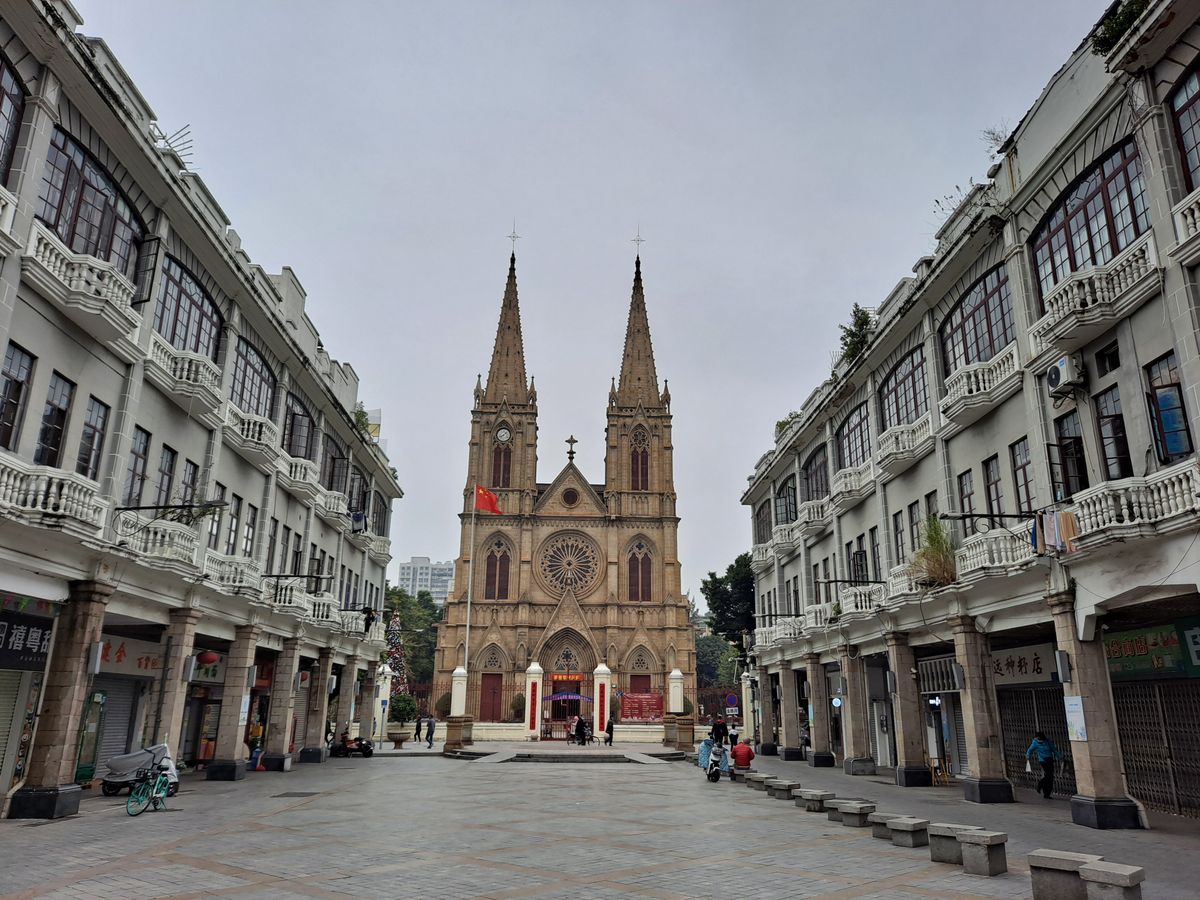
The Sacred Heart Cathedral, known to locals as the Stone House (Shishi), is one of the most remarkable pieces of European architecture in southern China. Construction ran from the early 1860s to 1888 (a foundation stone was laid in 1861, with the main building campaign usually dated 1863-1888) to a French Gothic Revival design, and it was built entirely of granite: walls, columns, spires and all, using Chinese craftsmen under a local foreman, Cai Xiao, who oversaw the stonework. That makes it one of only a handful of fully stone-built Gothic cathedrals in the world and the largest Gothic-style Catholic cathedral in China and Southeast Asia by floor area, at close to 2,900 square metres.
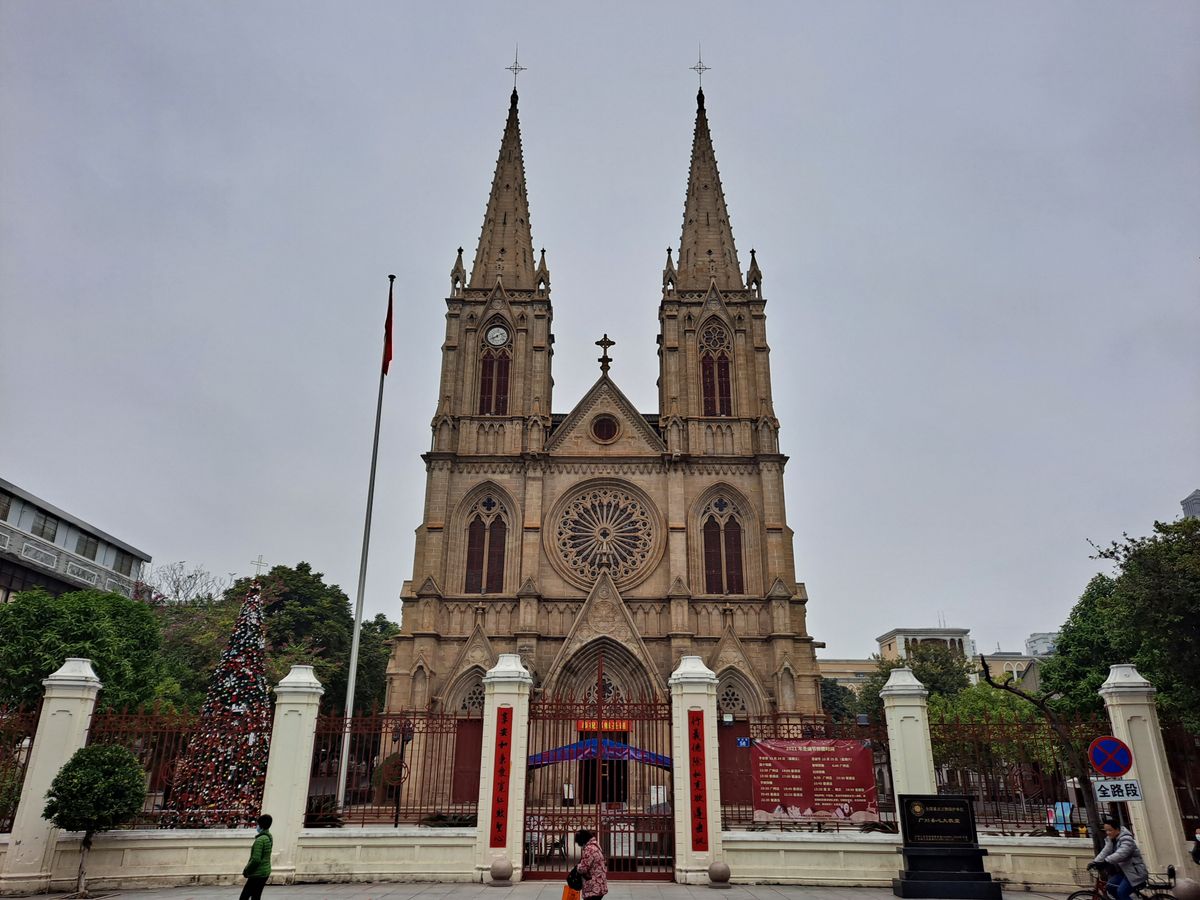
The granite Gothic facade of Sacred Heart Cathedral with its twin spires
What to see
The cathedral's twin spires are its signature feature, though published heights vary noticeably by source, commonly cited anywhere from about 52 to 58 metres, so treat any single figure with a little caution. Their pale grey granite is carved with the pointed arches, flying buttresses and rose window of classic French Gothic design. Step inside to a nave rising some 28 metres, lit by tall stained-glass windows and lined by 14 small side chapels, the cool stone interior a striking contrast to the busy Yide Road market streets outside. The building remains an active Catholic church, so services are held regularly; visitors are welcome to admire it respectfully outside of Mass times.
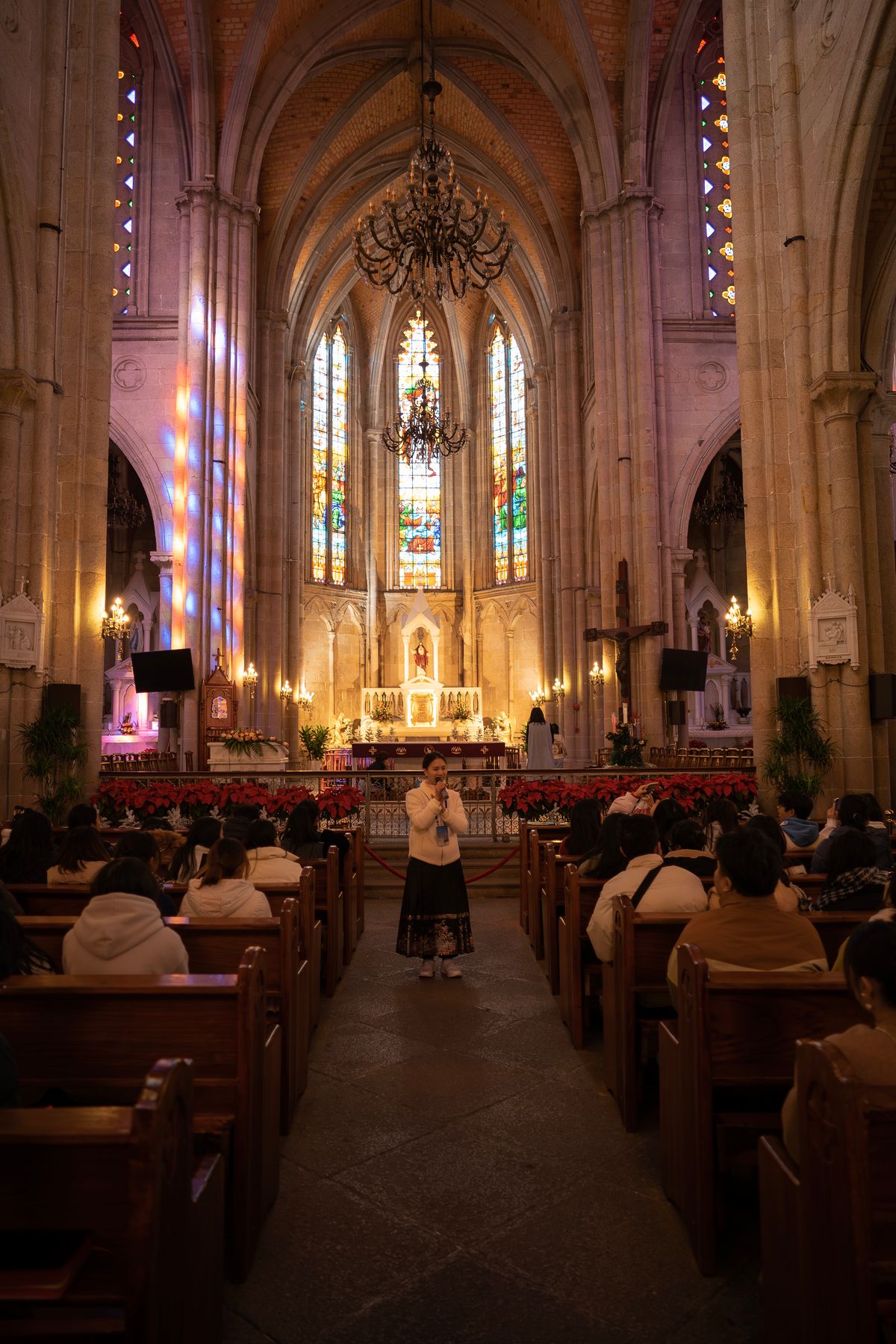
The illuminated interior nave of Sacred Heart Cathedral
Opening hours
The cathedral generally welcomes sightseers Tuesday to Sunday, with a midday closure on weekdays (roughly late morning to early afternoon) while it stays open continuously on Saturday and Sunday; it typically closes to visitors on Mondays and during services. Mass times are posted at the entrance; confirm the current schedule locally, as it can shift.
Tickets
Entry is free. Security checks are standard at the entrance, so carry photo ID.
Getting there
Take Metro Line 6 to Yide Lu Station; the cathedral, on Yide Road, is a short walk away, rising unexpectedly above the surrounding wholesale streets near Haizhu Square. It combines well with a walk along the Pearl River waterfront.
Best time to visit
Late morning lets sunlight pour through the stained glass and illuminate the nave at its best. The exterior is floodlit and especially photogenic after dark. Any season suits a visit, though the cool stone interior is a welcome escape from summer heat.
Practical notes
As an active church, quiet and modest dress are expected; photography is usually permitted but avoid disturbing worshippers. The surrounding Yide Road is famous for its dried-seafood and toy wholesale markets, worth a wander afterwards.
Highlights
- Twin granite spires, commonly cited at roughly 52-58 metres depending on the source
- One of the world's few entirely stone-built Gothic cathedrals
- Tall stained-glass windows lighting a soaring nave lined by 14 side chapels
- An active Catholic cathedral, its main building campaign dated to 1863-1888
- A floodlit, photogenic facade after dark
Travel Tips
Go late morning
Mid-to-late morning sun streams through the stained glass and lights the nave beautifully.
Respect the services
This is a working church: check posted Mass times, dress modestly and keep quiet inside.
Explore Yide Road
The wholesale markets around the cathedral are a lively, only-in-Guangzhou detour.