Xiamen
Hulishan Fortress, Xiamen
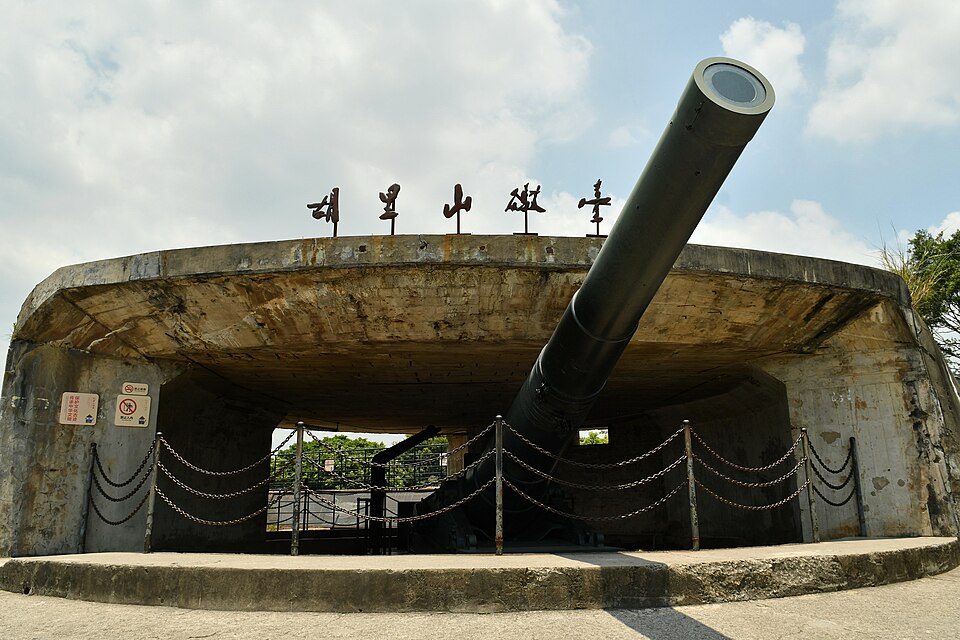
Hulishan Fortress guards the southern tip of Xiamen Island, where it has watched over the strait since 1894. Built in the last decades of the Qing dynasty as a coastal artillery battery, it is best known today for a single, astonishing object: a German-made Krupp cannon that the Guinness World Records recognised in 2000 as the largest and oldest 19th-century breech-loading coastal gun still in existence.
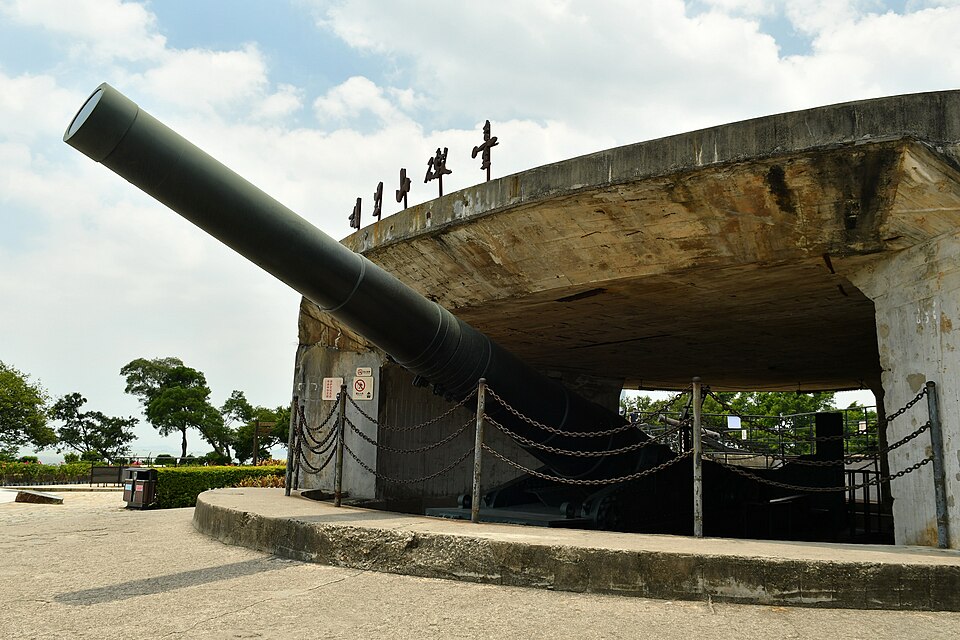
The giant Krupp cannon at Hulishan Fortress, under the fort's name plaque
The Krupp cannon
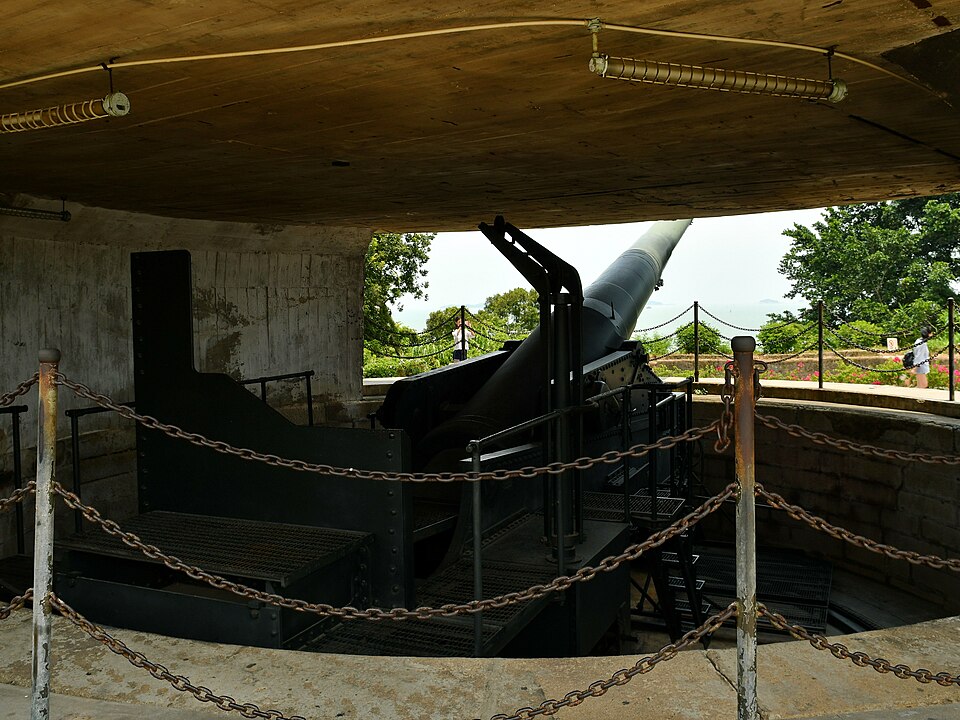
The 280 mm gun was ordered from the Krupp works in Germany and installed here in 1893. It weighs about 87 tonnes, measures nearly 14 metres long, and could once hurl a shell some 16 kilometres out to sea. Standing beneath the muzzle gives a real sense of scale, and of the firepower China was buying to defend its coast in the dying years of the empire. It originally had a matching twin: the second, western emplacement was destroyed during the Cultural Revolution, so the granite gun pit there now sits empty while this one survives as the sole original piece.
A side view of the Krupp cannon's massive barrel at Hulishan Fortress
What else to see
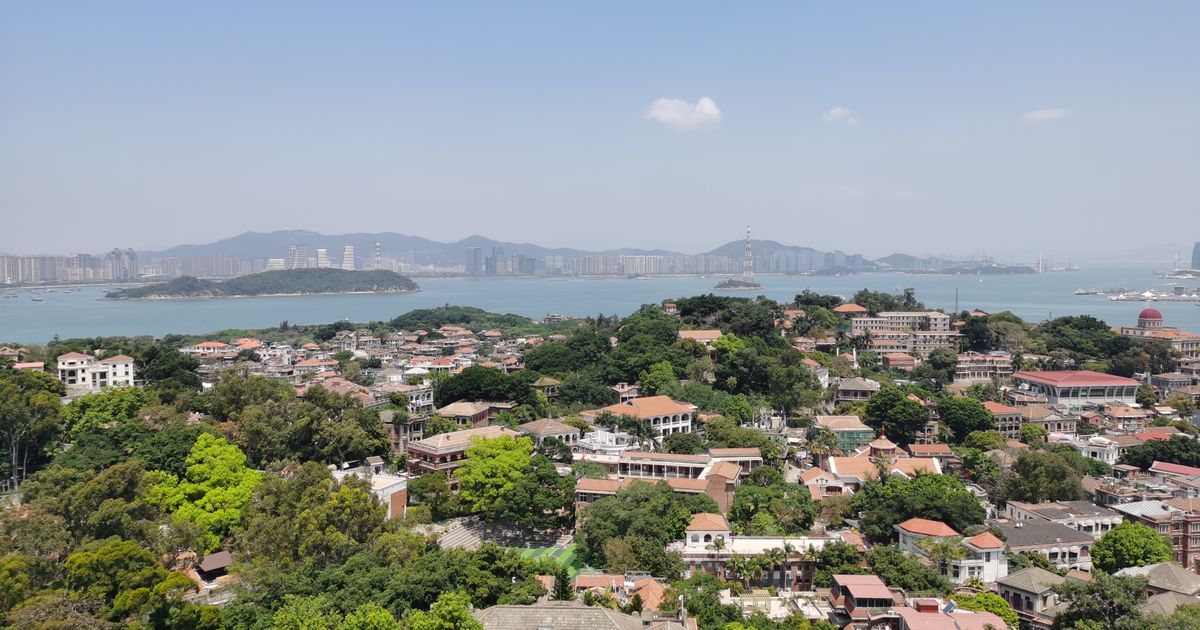
Beyond the headline cannon, the fort is a maze of granite ramparts, tunnels, ammunition stores, and command posts spread across roughly 13,000 square metres, with sweeping views across the water toward Kinmen (Jinmen). A small museum displays antique weapons. The site runs two kinds of costumed performances: a shorter "welcome ceremony" in the morning, and the better-known Qing-dynasty artillery drill, when actors in period uniform run formations and a simulated cannon-firing routine. Both are touristy but fun, especially for families, and times can shift with the season, so check the noticeboard at the entrance on the day.
The granite entrance gate of Hulishan Fortress
Visiting
Admission is a modest fee for adults, with cheaper student and senior tickets (ID required) and free entry for visitors under 18 with ID. Opening hours run roughly 08:00–18:00 in the warmer months and 08:00–17:30 in the cooler months, and ticket sales stop shortly before closing; hours shift around public holidays, so it is worth checking the fortress's own channels or a booking platform like Trip.com or Klook before you go, since both list current opening times alongside the ticket. Allow one to two hours. The fortress sits a short ride from Xiamen University and Zengcuo'an, so it slots neatly into a day exploring the southwest of the island. Wear sun protection, much of the site is open and exposed to the sea.
Highlights
- 1894 Qing-dynasty coastal artillery fort on Xiamen's southern tip
- A Guinness-record 280 mm Krupp cannon, ~87 tonnes and nearly 14 m long
- Granite ramparts, tunnels and gun pits with views toward Kinmen
- Costumed Qing military drill performance, usually twice a day
- A short hop from Xiamen University and Zengcuo'an village
Travel Tips
Time the drill show
The costumed Qing artillery drill usually runs around 10:00 and 16:00, with a shorter welcome ceremony earlier in the morning. Times shift a little with the season, so check the board at the entrance and arrive a few minutes early for a spot.
Tickets and hours
Entry is a modest flat fee for adults, cheaper for students and seniors with ID, and free for under-18s with ID. Opening runs roughly 08:00–18:00 in summer and 08:00–17:30 in winter, with ticketing stopping before closing; Trip.com and Klook both list current hours alongside the ticket if you want to check before heading over.
Bring sun protection
Much of the battery is open to the sea with little shade; a hat and sunscreen help, and allow one to two hours.