Xi'an
Drum Tower of Xi'an
For centuries Xi'an ran on a sound schedule: a bell struck at dawn to open the city, drums beaten at dusk to close it. The Drum Tower is the evening half of that clock. Built in 1380, four years before its twin the Bell Tower, it sounded the nightly curfew of the Ming city, and the pairing gave Chinese its phrase for the rhythm of urban life, "morning bell, evening drum".
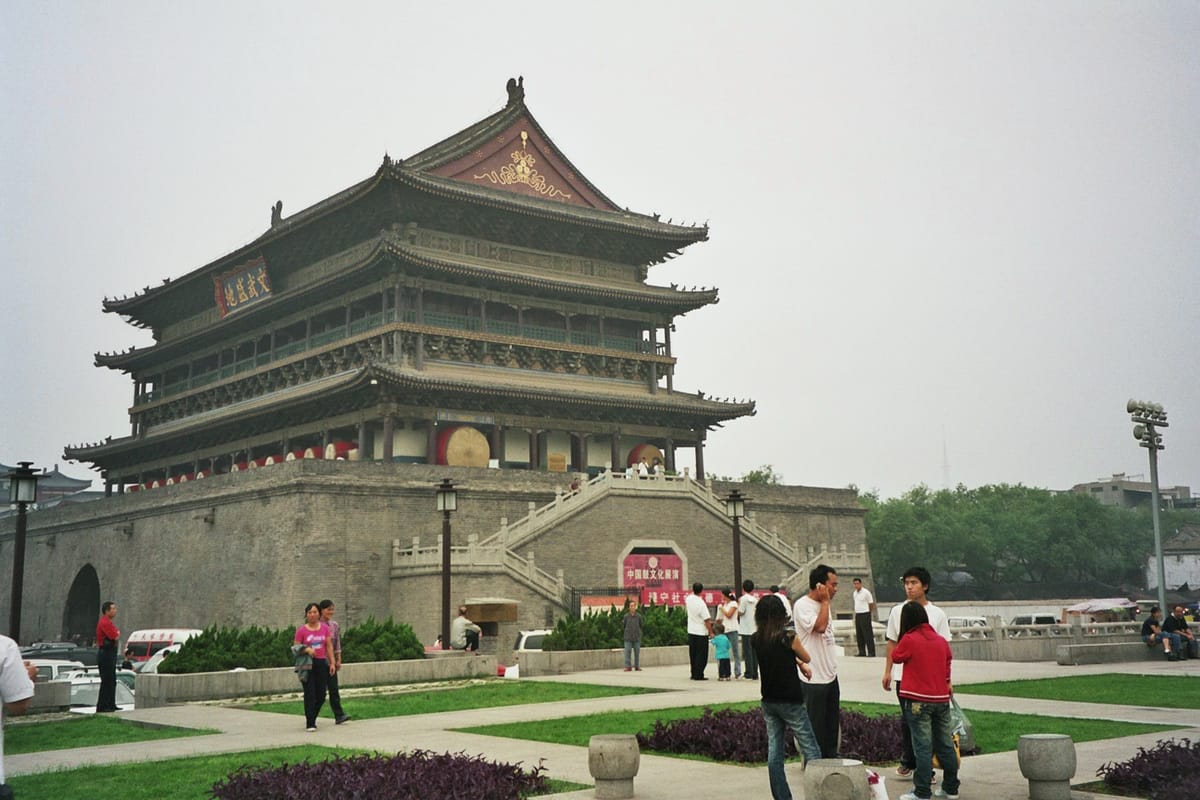
The two towers face each other across a broad square, close enough that you can photograph one from the balcony of the other. At 36 metres, the Drum Tower is the largest surviving drum tower in China: a long painted timber hall riding a high brick arch, with the balcony running the full length of it.
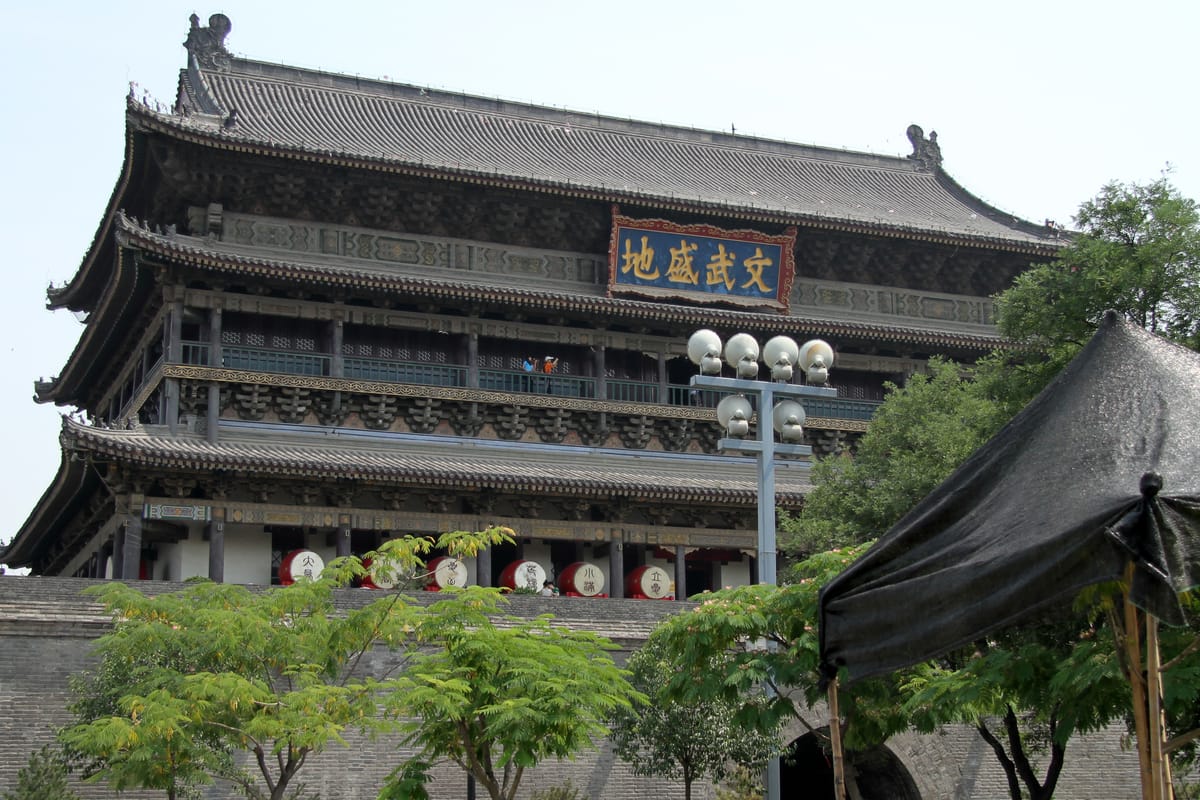
The Drum Tower's long timber hall and the great plaque above its arch
Two plaques with a hard history
Across the south face hangs a huge blue-and-gold plaque reading Wen Wu Sheng Di, "a land flourishing in arts and arms"; its northern counterpart says Sheng Wen Yu Tian, "the sound carries to heaven". Both are faithful replicas. The originals, each about eight metres long, were pulled down and burned during the Cultural Revolution, and the copies you see today were rehung on 29 April 2005 after a long city campaign to restore them. Few signs mention this, and it is one of the more telling details in the building.
The drums
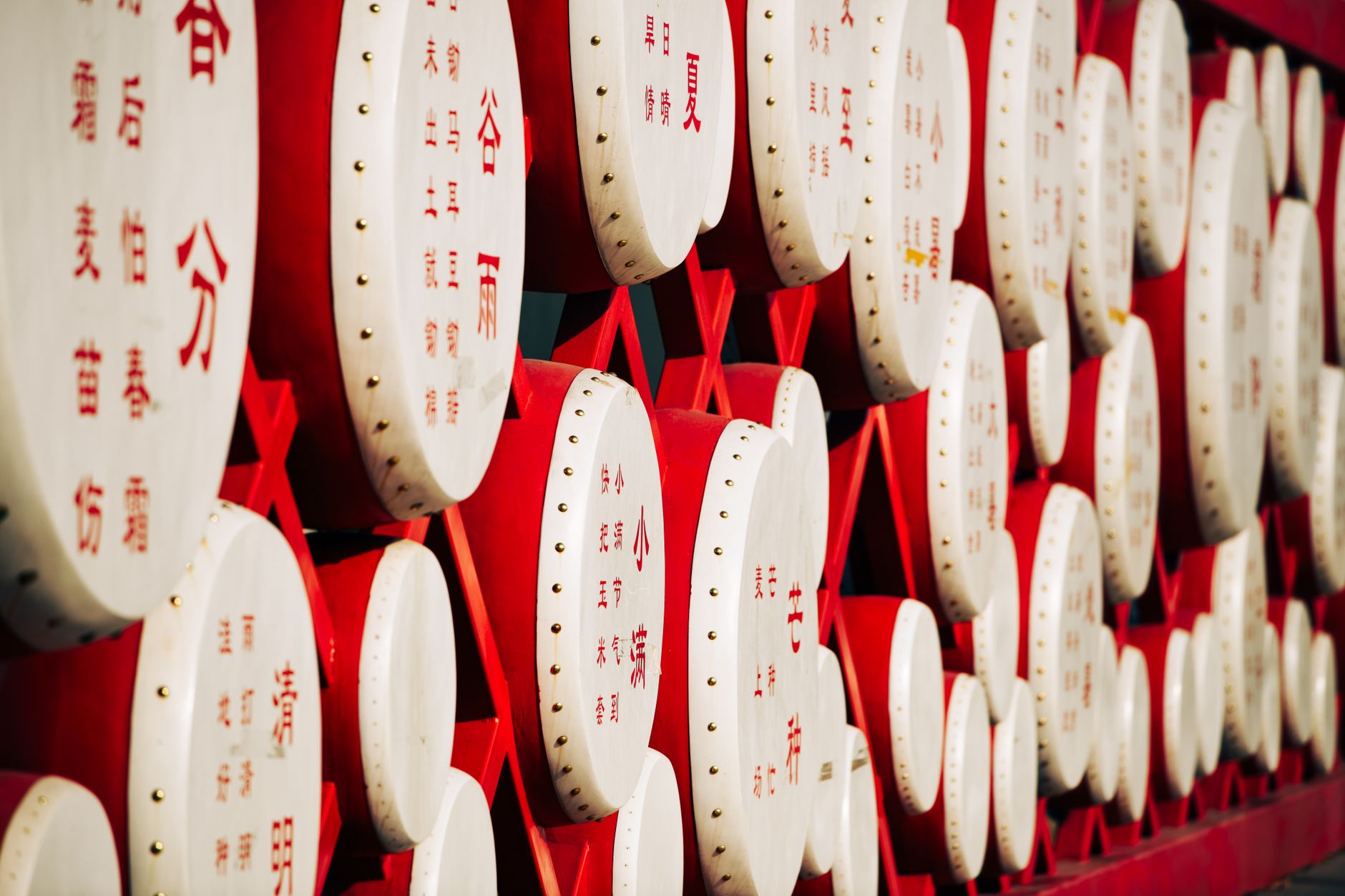
A rank of huge replica drums lines the upper balcony, each painted and named, and short drum performances run several times a day inside the hall, around ten minutes of controlled thunder per show. Look for the Wentian Drum on the east side: made in 1996 from a single ox hide, its body measures about 3.4 metres across, and it was the largest cowhide drum in the world when it was made. Inside, a small collection of antique drums and Ming furnishings fills the painted hall.
Getting up and in
Take Metro Line 2 to Zhonglou (Bell Tower) station, leave by Exit B and walk west for about six minutes. Doors open at 8:30 and close mid-evening, later in summer than in winter, with ticket sales ending before closing time, so check the current hours if you are cutting it fine. Tickets are sold at the door, singly or as a combined Bell-and-Drum ticket that covers both towers for a small saving; the combo is the obvious choice since the towers are a short walk apart. Apps such as Trip.com and Klook also sell entry if you would rather sort it in advance. Ask at the desk for the day's performance times.
Then into the Muslim Quarter
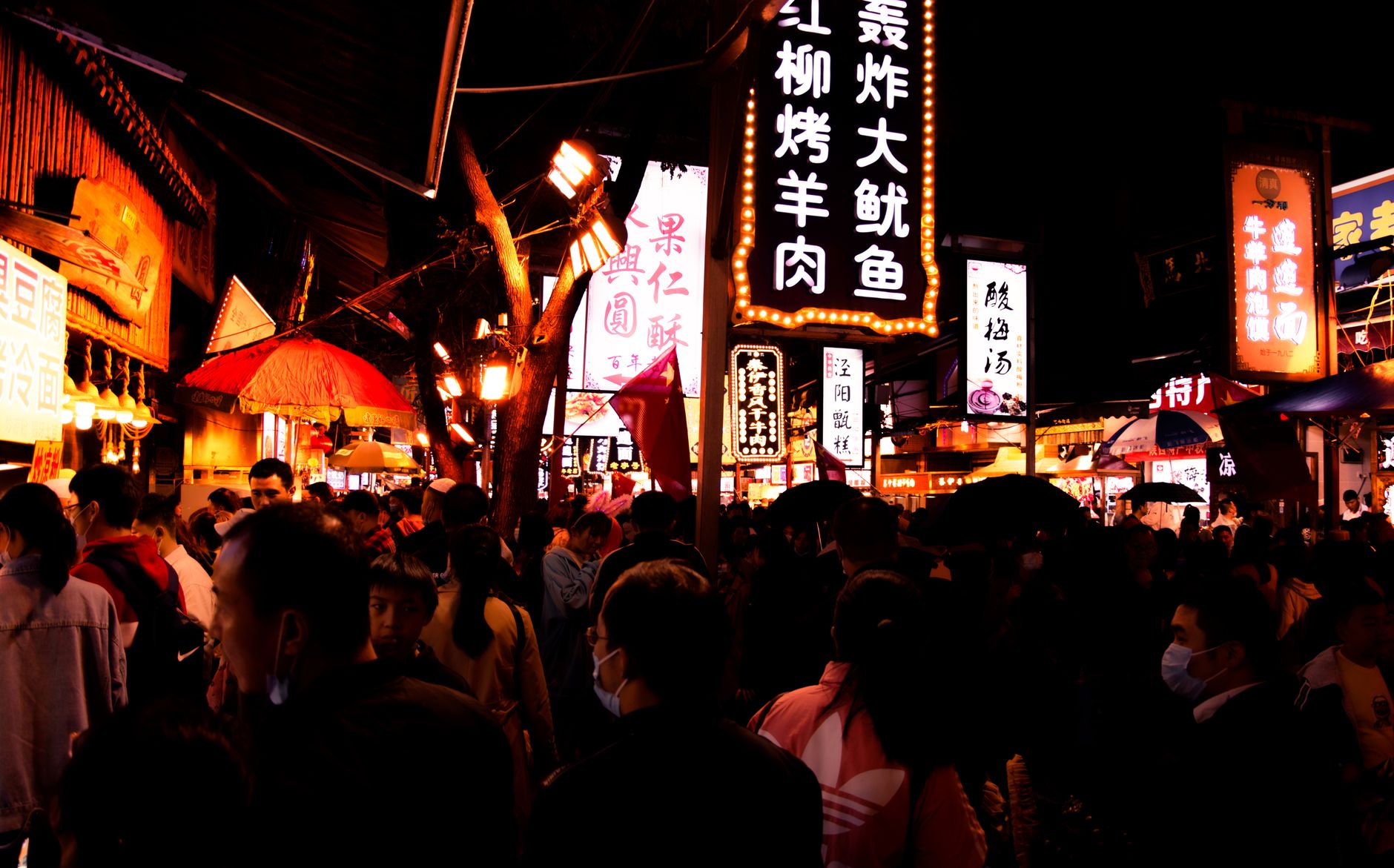
The tower's north side opens onto Beiyuanmen, the lantern-strung lane at the heart of the Hui Muslim food district. The natural sequence is an early-evening one: climb the tower, catch a drum show, watch the floodlights come on, then walk off the back of it into the smoke and noise of the snack street for dinner.
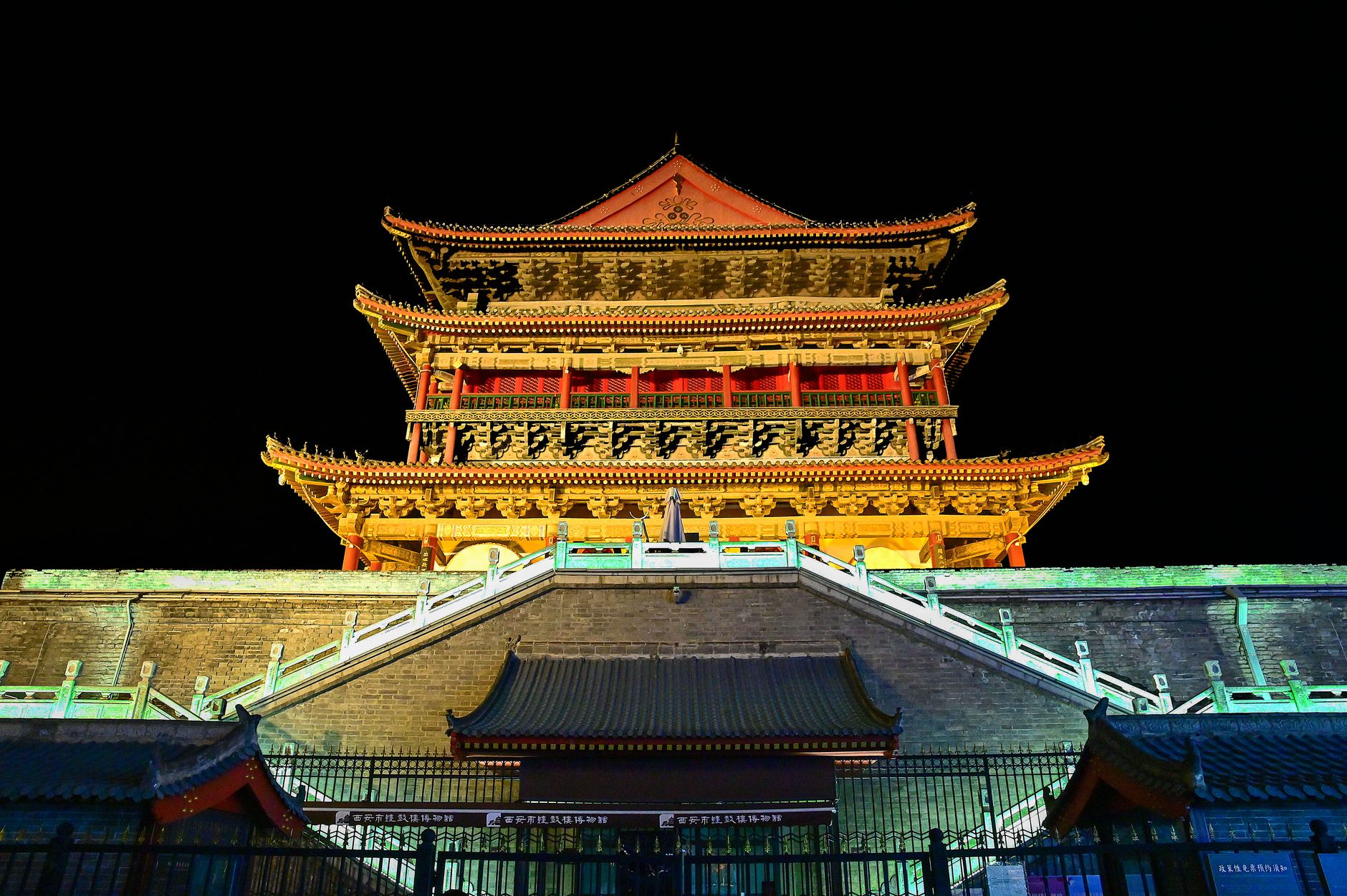
The Drum Tower lit in red and gold after dark
Highlights
- Built in 1380, four years before its twin the Bell Tower
- At 36 metres, the largest surviving drum tower in China
- Its giant plaques are 2005 replicas; the originals burned in the Cultural Revolution
- A balcony rank of painted drums and short daily drum shows
- Six minutes on foot from Zhonglou metro station on Line 2
- Opens straight onto Beiyuanmen, the Muslim Quarter's food street
- Floodlit red and gold after dark
Travel Tips
Catch a drum show
Short drum performances run several times a day on the upper floor, roughly ten minutes each. Ask at the ticket desk for the next slot.
Pair with the bell
The combined Bell and Drum ticket covers both towers for a small saving, and they face each other across one square.
Make it an evening
Climb late in the day: tower, drum show, floodlights, then dinner in Beiyuanmen, the lantern-lit food lane behind the tower.